


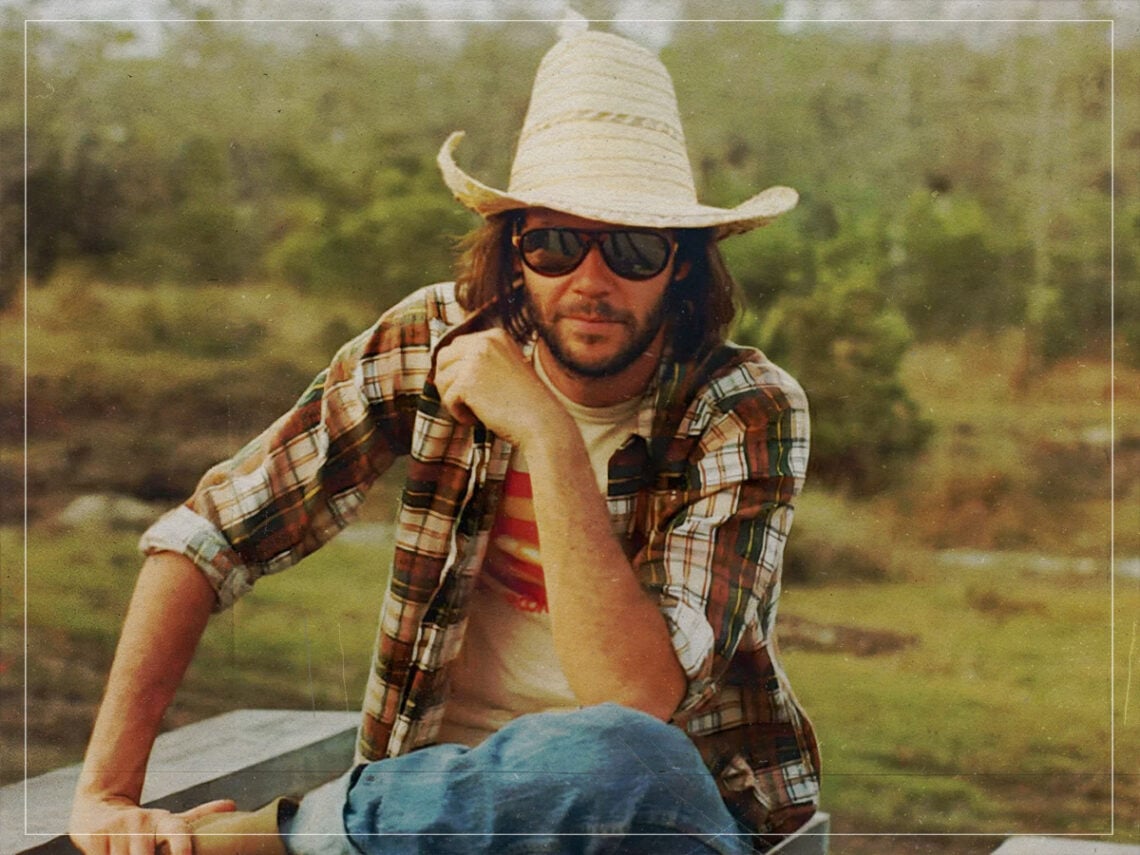
“I wasn’t living up to my potential”: The one person to put Neil Young in his place

Every idol needs someone to keep them humble. Without a voice of reason or a voice of critique around them, genius syndrome can take hold where an artist falls into this belief that anything and everything they do is great. It’s a false friend that has seen the downfall of so many amazing musicians as they slowly start to put out worse and worse material. Neil Young could have been a victim of that, but someone stepped in.
Really, everyone needs someone to take them down a peg. It’s arguably part of what a truly good friend does. A good friend is there to keep us on track in an honest and productive way, not just to stroke our egos and let us go on blindly. A true supporter doesn’t just thumbs up and green-light everything; they’re not afraid to say when they think something doesn’t live up to the standard.
That’s why the role of a collaborator is such a delicate tightrope. For the people around musicians who help them work and help bring their vision to life, it’s a tricky balancing between overstepping into someone’s creative freedom but also providing necessary, and sometimes harsh, feedback. Especially for artists hitting that kind of untouchable, god-tier level of greatness where the whole world is seemingly celebrating them, a good friend and collaborator acts like a grounding rod, even if sometimes that means delivering some tough critique.
In the 1970s, after Neil Young had split from Buffalo Springfield and stepped into his successful solo career, as well as working in Crosby, Stills, Nash and Young, he was on top of the world. In the rock-folk scene, he was a hero and a true leader. Both his work in the band and his early solo albums, After the Gold Rush and Harvest, were golden, and everyone treated him like Midas.
That’s the danger zone. That’s the moment Young could have got lazy or seen his quality dip. But if there was ever a moment that it did, his friend caught it. “We get on great now, but at a certain point, Jack [Nietzsche] made the call on me that I had copped/sold out,” he told Mojo, recalling how his friend and collaborator stepped in with some harsh feedback.
Nietzsche was a hugely respected name. He was first known as Phil Spector’s right hand man but by this point, he was a force in his own right. He’s worked with Young repeatedly, first in Buffalo Springfield, then on his solo debut, and then repeatedly on through his work with Crazy Horses and solo projects. So Nietzsche had a great view and understanding of Young’s talent and ability, and perhaps could see it slip before anyone else even noticed a change.
“Maybe it was something I did in the early ’70s, during Harvest or Goldrush – I don’t know when exactly it happened, but somewhere along the line it happened,” Young said, still unable to see what Nietzsche did. But to his collaborator, it was clear enough to have to say something. “It was his opinion that I wasn’t living up to my potential even at that early stage,” he explained.
But while the tough talk caused a fall out at first, Young came to appreciate Nietzsche’s boldness. He later recognised how necessary it was as he said, “He was one of the guys who could see how fucked up I was compared to what I could really do.” While artists more commonly spit at the word ‘critic’, Young saw Nietzsche’s role as one as a positive thing, stating, “He was one of my earliest critics. He was a trailblazer in that respect.”
