


The one musician Tony Banks considered a musical God: “You’ll always be prog God to me”

Anyone considering starting a progressive rock band usually looks for someone at the top of their game.
While the likes of Pink Floyd may have been able to create foundational prog-rock epics out of only a handful of chords and a broad imagination, acts like King Crimson were interested in dreaming even bigger, putting together different time signatures and strange altered guitar tunings to create sounds that no one had even considered before. While Tony Banks may have been right alongside those legends as the keyboardist for Genesis, he believed one legend was untouchable.
Before the band started properly, though, Banks was still hashing out his various musical ideas at boarding school. Forming the crux of the group alongside singer Peter Gabriel and Mike Rutherford, the band would see their first album flop, only to re-emerge a few years later with the album Trespass.
Marking the first time the band started to flirt with progressive rock, many of Banks’ melodic flutters would become an integral part of their sound later. Although Banks would end up turning the progressive rock scene inside out with songs like ‘Firth of Fifth’ and ‘Supper’s Ready’, other keyboardists had already been shaping the rock world for generations.
For Banks, progressive rock was as much about possibility as it was technique. The genre encouraged musicians to think beyond conventional song forms, treating composition like a canvas rather than a template. That mindset appealed to Banks early on, allowing him to explore harmony and texture without worrying about traditional pop constraints. Still, even as he developed those ideas, he was acutely aware of the players who had already pushed the instrument to its limits.
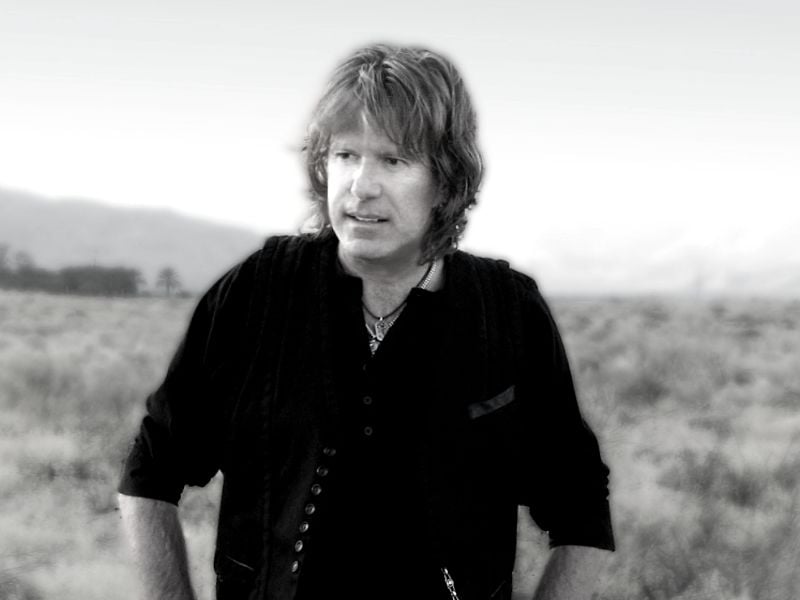
Among that group, Emerson stood apart because of his sheer fearlessness. Where others hinted at classical influence, Emerson attacked it head-on, turning the keyboard into both a melodic and percussive weapon. His performances felt theatrical and dangerous, blurring the line between virtuosity and spectacle. For a young musician watching from afar, that combination was impossible to ignore.
Outside of the soulful players like Ray Charles and Stevie Wonder at the time, Rick Wakeman was also making waves in the music scene, only for him to explode with the band Yes. While Wakeman could make the keyboard sing in a way few could match, it paled compared to what Keith Emerson was doing in Emerson, Lake and Palmer.
While prog was known to be a noncommercial genre, the trio were making something closer to a rock and roll version of classical music, making songs that felt like symphonies blaring out of Emerson’s synthesiser. Although Banks had a healthy respect for Wakeman, it was Emerson who would be the reason why he got interested in music.
When talking about the impact of his heroes to Classic Rock, Banks recalled that Emerson could practically do no wrong in his eyes, stating, “I met Keith at the Prog Awards [in 2012]. Rick Wakeman was getting the Prog God Award, and when I said goodbye to Keith, I told him: ‘You’ll always be Prog God to me!’ After The Beatles and all that stuff, he was one of the reasons I ended up in a band”.
Even though Banks had found his own creative voice on his instrument, it’s easy to see where he got many lessons. Regarding the sonic textures he got from the keyboard, it’s easy to hear a solo like ELP’s ‘Lucky Man’ as a foundational piece of Banks’s musical vocabulary, always playing over the barline to create extended melodic statements that kept everything interesting.
Both musicians would also be considered trailblazers later on, being ahead of the game with synthesisers as the 1980s gave way to the futuristic soundscapes from the instrument. Progressive rock may have been about songs that stressed musical excellence, but Banks still lives in the shadow of what Emerson brought to the scene.
