


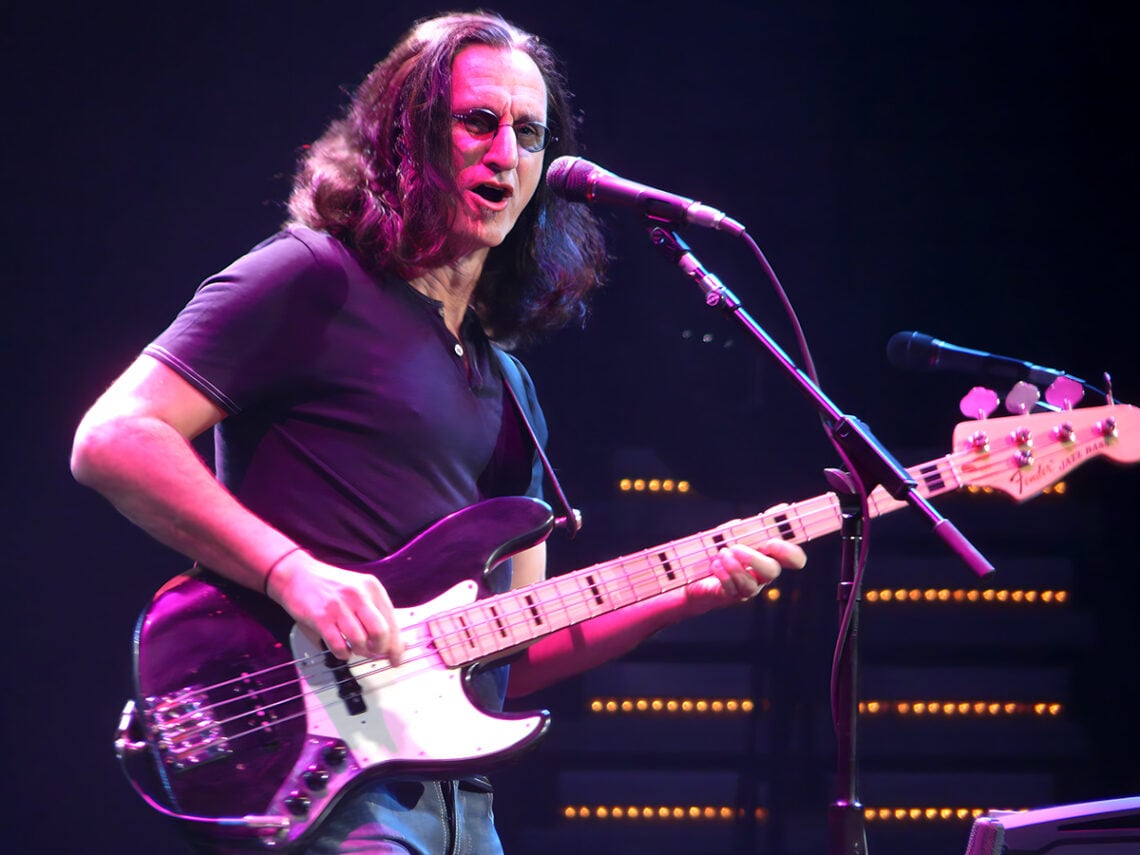
The one band that Geddy Lee said created a “totally new sound”

It was bound to take a lot for someone to impress any of the members of Rush.
Each member was a master of their instrument, and even some of the biggest prog bands would have had difficulty keeping up with their songs, but Geddy Lee always had to take his cues from somewhere when cutting his teeth.
But even if there were allusions to bands like Led Zeppelin or Genesis in how they structured their tunes, there’s no real reference point for where some of their albums went. A Farewell to Kings and Hemispheres are among some of the most cerebral albums that they had ever made, and while prog-rock had been no stranger to out-there concepts, hearing a band still managing to kick ass after crawling far up their own ass feels almost impossible for anyone else to pull off.
And a lot of that comes down to the way that Lee played. He knew that playing a four-string didn’t mean that he had to play simpler lines, and looking through Rush’s catalogue, he was always interested in using the bass in an unconventional way. Sometimes it would be a lead instrument on their tunes, and other times he would fade into the background and make instrumental pads while he played keyboards.
Considering how divisive the band’s 1980s period was, Lee realised that many fans wanted to hear them kicking out the jams like they did in the early days. It wasn’t exactly about returning to the same era as their self-titled record or anything, but when looking back at their favourite records, both Lee and guitarist Alex Lifeson realised how much their influences rubbed off on them.
It was clear that bands like Yes shifted the equation in terms of progressive music, but countless artists were innovating in the pop sphere before them. Led Zeppelin had kicked the door down for something new and inventive on the charts, but in The Yardbirds, Lee found the kind of band that could take music in a thousand different directions whenever they performed live.
Although the band did get a little bit poppy with songs like ‘For Your Love’, Lee thought seeing Eric Clapton, Jimmy Page, and Jeff Beck work in that context shifted music on its head, saying, “[That’s] back when pop, particularly in England, could be a platform for experimentation and innovation. Beck, Page, Clapton and some other Brits really discovered a totally new sound. They figured out how to get a pop angle on the blues by electrifying it, and it became a profound way for guitarists to speak through music.”
Even though all of them started with the basics of blues, both Lee and Lifeson had grown well beyond the traditional pentatonic tropes when working with Rush. Lifeson brought a lot more edge to the group by being their resident Jimmy Page, but whereas Lee was talking about The Yardbirds making their guitars speak, Lifeson’s solo on a song like ‘La Villa Strangiato’ saw his six-string communicating in a much different way.
The Yardbirds may have been lightning in a bottle during each phase of their early years, but Rush was the next logical step for people who wanted songs that challenged them a little bit more. Many bands could make songs go on for ages as jam sessions during the British blues boom, but Rush were the kind of group that wanted to create songs with multiple movements that took the listener on a journey.
