


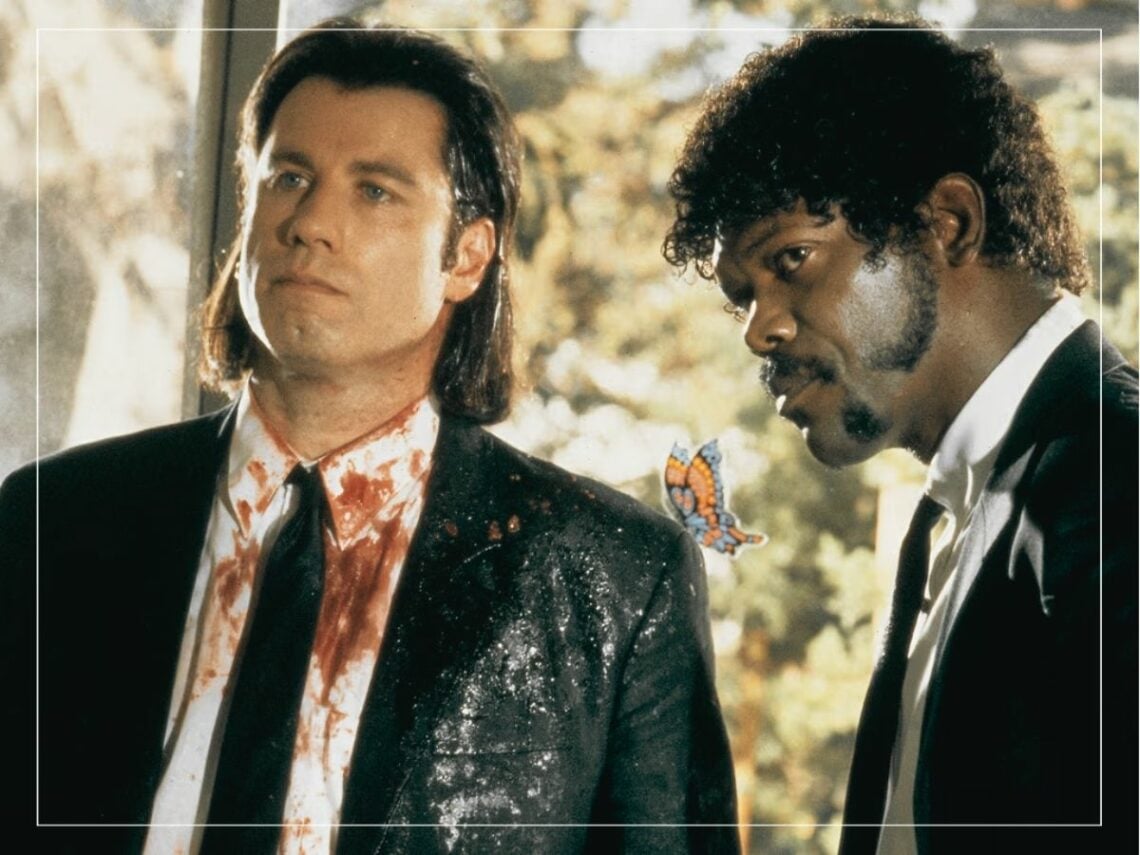
The on-set mistake left in Quentin Tarantino’s ‘Pulp Fiction’

Quentin Tarantino isn’t known for his haphazard approach to filmmaking.
The director is, according to those who have worked with him, something of a stickler when it comes to actors going off-script. Considering his screenplays feature some of the most impressive passages of dialogue in modern cinema, you can’t blame him for wanting to stay clear of actor improvisation. One thing is certain: Tarantino has always been meticulous. But even he has allowed certain mistakes to slip through the net unnoticed.
That fastidious reputation is part of what has come to define him. Tarantino’s films are constructed with the precision of a record collector curating a mixtape, each needle drop, pause and line reading placed with deliberate intent. The idea that something accidental might survive the edit suite feels almost at odds with the mythology that surrounds his process.
To be fair, Tarantino isn’t completely anti-improvisation. In his movie Once Upon A Time In Hollywood (the director’s favourite of his own films), he allowed Leonard DiCaprio to improvise an entire scene. It comes after Rick Dalton returns to his trailer after a day of shooting for Lancer, the new Western he’s working on. Having embarrassed himself by forgetting his lines, Dalton has the meltdown to end all meltdowns.
Explaining how the scene came about during a Q&A session at Tarantino’s New Beverly Theater in Los Angeles, the director said: “It wasn’t in the script…that whole section kind of evolved as we were shooting the movie.”
He continued: “Leo had a whole thing at some point where it was like, ‘I need to f* up during the Lancer sequence. And when I f* up during the Lancer sequence, I need to have a real crisis of conscience about it and I have to come back from that in some way.’ My response is, ‘Wait, you’re going to f*** up my Lancer sequence?’ (Everyone laughs) ‘That’s my western, all right? I get two for one in this movie!” [Quotes via Slashfilm]
Such scenes are rare in Tarantino movies. One of the other films to include a partly-improvised sequence is Pulp Fiction, in which John Travolta shows off his dance moves with Uma Thurman, many of which, the actor later revealed, were improvised on the spot.
Yet these fleeting moments of looseness often lend his films an unexpected vitality. When performers are granted a sliver of freedom within his tightly wound frameworks, the result can feel electric rather than unruly. It suggests that even a director as exacting as Tarantino understands that spontaneity, when carefully contained, can sharpen rather than dilute his vision.
The 1994 picture also includes a couple of mistakes that were left in the final cut, the most frequently cited of which are the bullet holes that appear behind Jules and Vincent before they’re even shot at. Many fans have argued that the continuity error was a deliberate choice by Tarantino; others remain adamant that he failed to acknowledge the flaw.
However, there are other aspects of that scene that were deliberately crafted to appear inconsistent. Take the altered dialogue in the film’s first and final scenes. Honey Bunny’s opening line, when she incites the initial robbery, is altered in the last scene, though it is written as being the same in the script. The alteration was accidental, but Tarantino decided to keep it in as he felt the mistake demonstrated how the narrative point of view had shifted from Pumpkin and Honey Bunny to Jules and Vincent.

Never Miss A Take
The Far Out Quentin Tarantino Newsletter
All the latest Quentin Tarantino content from the independent voice of culture.
Straight to your inbox.