


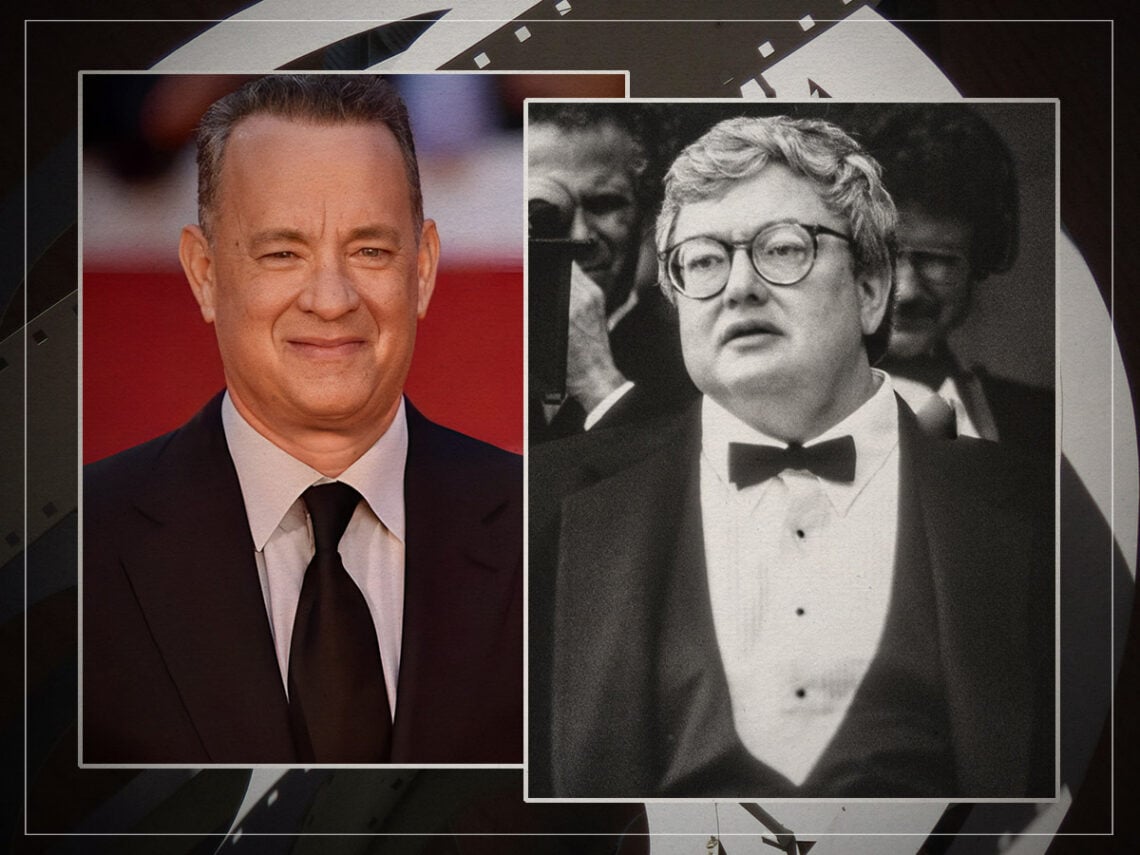
The Tom Hanks movie that blew Roger Ebert’s mind: “I knew I would need to see it again”

Cinema is a remarkable medium because, at its best, it can convey themes, messages, and ideas through imagery in a way that words often can’t. Sometimes, seeing a truly inventive, unique film with weighty ideas can become more than just an intellectual experience, elevated by powerful visuals and performances.
Roger Ebert’s experience of watching one of these films in 2012 practically rewired his brain. However, the critical community he was such an integral part of was extremely polarised about the movie, with some dubbing it one of the best films of the year, and others dismissing it as one of the worst. It takes an especially ambitious and challenging movie to provoke such a reaction, and that is precisely what the Wachowski sisters gave the world with Cloud Atlas. In fact, its ambition was what made star Tom Hanks sign up in the first place.
“They told me they wanted to make a cross between Moby Dick and 2001: A Space Odyssey,” Hanks told Metro. “That’s really different from, ‘You’re a cop with a dog who solves crimes.’ I said, ‘Man, oh man, I’m in. Just tell me where to show up.'”
In truth, Hanks could have had little idea what he was truly getting himself into, because Cloud Atlas seemed almost scientifically engineered to baffle large portions of the populace. It is an epic sci-fi tale occurring in six different time periods, with the same cast members playing various characters in different eras, all connected by having the same soul.
The film was based on a supposedly unfilmable 2004 novel by David Mitchell, and even Hanks admitted to many of its spiritual ideas flying over his head on first viewing. However, he also claimed it’s the only one of his films he has watched more than once, which puts it in rarefied air. “I’ve seen it three times now and discovered, I swear to God, different, profound things with each viewing,” Hanks gushed.
Charmingly, Ebert felt the same as the movie’s star when he first laid eyes on the film. Despite being a critic who loves a watertight plot that proceeds like clockwork, Ebert was stunned by Cloud Atlas’ narrative ambition, and didn’t mind that its befuddling elements meant he’d need to watch it multiple times to truly unlock its mysteries. Even more incredibly, though, the more he watched it, the less he felt he understood – but he didn’t see this as a bad thing.
“Even as I was watching Cloud Atlas the first time, I knew I would need to see it again,” Ebert wrote in his four-star review. “Now that I’ve seen it the second time, I know I’d like to see it a third time — but I no longer believe repeated viewings will solve anything.”
The legendary Chicago Sun-Times critic compared the movie to Winston Churchill’s famous description of Russia as “a riddle, wrapped in a mystery, inside an enigma”.
Still, he argued that the film’s true strength came from its ability to beguile and fascinate from scene to scene, era to era. “On my second viewing, I gave up any attempt to work out the logical connections between the segments, stories, and characters,” Ebert confessed. “What was important was that I set my mind free to play.”
Ultimately, Ebert believed Cloud Atlas was a work of daring, visionary genius from the Wachowskis, even if it was as likely to prompt a viewer to say, “I don’t know what in the hell I saw” instead of a simple, “That was great.” Some may love it, some may hate it, and others may not know what to make of it, but Ebert felt it was a stirring “demonstration of the magical, dreamlike qualities of the cinema,” and that was more than enough for him to award it top marks.
