


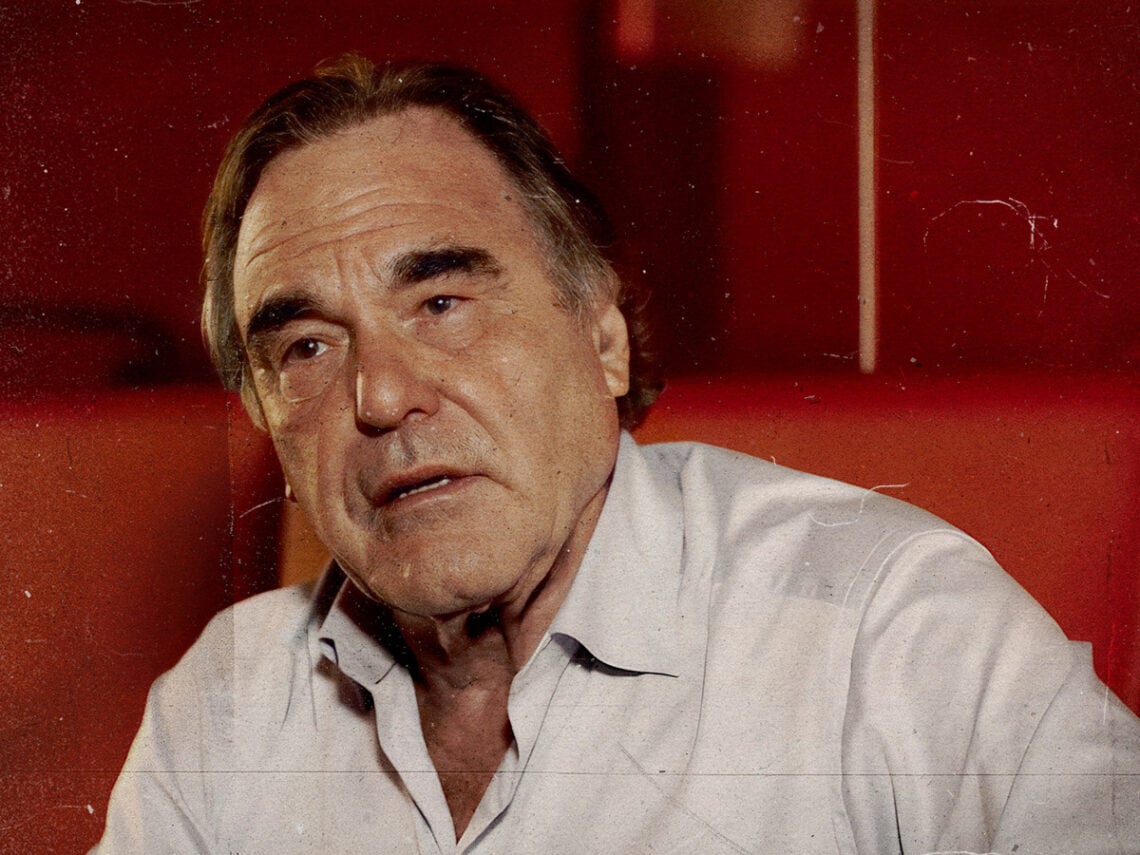
Oliver Stone on how Harvey Weinstein “robbed” Tom Cruise of an Oscar

Even though he has four Academy Awards in his trophy cabinet, Oliver Stone remains aggrieved that he failed to direct Tom Cruise to one of his own, believing the actor deserved the most prestigious accolade the industry had to offer.
By the time Born on the Fourth of July was released in December 1989, Cruise was already a certified A-lister, but it was his transformative and immersive turn as Ron Kovic in the biographical anti-war drama that turned a lot of heads and indicated there was an incredible dramatic performer underneath the megawatt grin, natural charisma, and box office drawing power.
The film was nominated for eight Oscars in total – with Stone winning the ‘Best Director’ trophy while David Brenner and Joe Hutshing shared the prize for ‘Best Editing’ – but the filmmaker maintains the conviction that nefarious machinations robbed his leading man of the ‘Best Actor’ gong.
It was Cruise’s first-ever nomination, and he found himself as part of a stacked field that included Henry V‘s Kenneth Branagh, Driving Miss Daisy‘s Morgan Freeman, Dead Poets Society‘s Robin Williams, and My Left Foot‘s Daniel Day-Lewis.
While it’s difficult to argue that the latter didn’t deserve the ‘Best Actor’ statue for another fiercely committed method performance as Christy Brown, Stone nonetheless insisted that Harvey Weinstein may have been the deciding factor in Cruise’s incredible work in Born on the Fourth of July being overlooked.
“I think he robbed Cruise of the Oscar, frankly,” Stone said to The Independent of the intense campaigning and lobbying that saw Weinstein’s Miramax throw around its financial clout to push Day-Lewis to the forefront of the Academy’s consideration.
The Weinstein-backed company gained no small amount of notoriety for its relentless awards season campaigning that regularly resulted in major upsets at the Oscars, with the most prominent example coming when Miramax’s Shakespeare in Love beat Steven Spielberg’s Saving Private Ryan to scoop ‘Best Picture’ to the surprise of almost everybody in Hollywood.
As Stone would acknowledge, though, “The press loved him. Don’t forget, they loved him in the 1990s,” intimating that Weinstein’s penchant for schmoozing the right people at the right time often gave him an advantage right when the Oscars race was starting to heat up.
An Oscar is the only major accolade missing from Cruise’s distinguished career, with further nominations for Jerry Maguire and Magnolia – as well as a ‘Best Picture’ nod for producing Top Gun: Maverick – continuing to paint it as the one that keeps on getting away.
Born on the Fourth of July still arguably endures as his single finest performative work of cinema, and as much as Day-Lewis is one of the all-time greats who was typically excellent in My Left Foot, Stone harbours the sentiment that politics were in play.
