


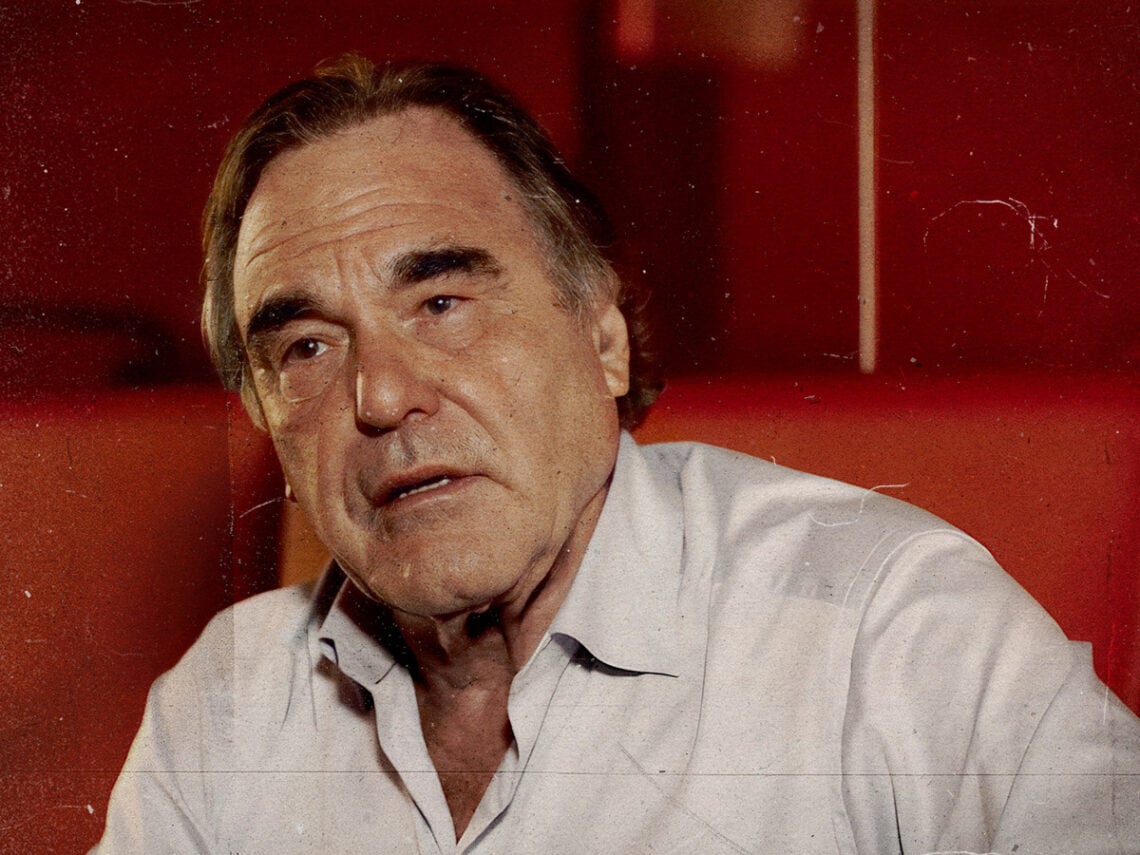
The Oliver Stone movie that scared the censors: “I had to go back five times to get this through”

Controversy can come in all shapes and sizes, something Oliver Stone has become keenly aware of and very familiar with during a career that’s regularly found him under fire from a variety of different angles.
Not that he cares, with the filmmaker one of Hollywood’s most famously outspoken personalities, but even he’s been forced to go back to the drawing board to satiate the censors. Whether he’s peddling conspiracy theories as fact or hanging out with dictators, being a people-pleaser has never been at the forefront of Stone’s thinking as either a person or auteur.
Regardless of how opinionated a director may be, though, they still want their movies to be seen by the widest possible audience. Stone also achieved that several times over, with his hot streak from the late 1970s to the early 1990s firmly establishing him as one of the most powerful creative minds in Hollywood.
Between 1979 and 1996, he won four Academy Awards in three different categories from a total haul of 12 nominations, gifting the world with the likes of Midnight Express, Conan the Barbarian, Scarface, Platoon, Wall Street, Born on the Fourth of July, JFK, and Nixon as a writer, director, and producer.
Several of those films proved contentious in their own way thanks to Stone’s outspoken political beliefs, but it wasn’t any of his governmentally inclined pictures that rankled the Motion Picture Association of America four times over. That being said, there was still backlash.
Classic prison drama Midnight Express won Stone an Oscar for ‘Best Adapted Screenplay’, with the story following Brad Davis’ Billy Hayes, an American national caught by the local authorities while trying to smuggle drugs out of Istanbul, leading to a four-year prison sentence that ends up having another three decades tacked on.
The film was accused of painting Turkey, its citizens, and its judicial system in an unfavourable light, but that wasn’t where the issues arose. Instead, Stone revealed to Roger Ebert that helmer Alan Parker’s decision to shoot Davis biting the tongue right out of a prison guard’s mouth in extreme closeup with a point of repeated discussion.
“The MPAA didn’t understand, and they were very tough,” he admitted. “I had to go back five times to get this through.” When asked why he faced such major pushback, Stone believed it was a combination of that graphic scene and the movie’s overarching themes. “I think it was just an overwhelming abundance of violence and chaos,” he mused. “I think the chaos upset them more. It scared them.”
Hopefully, nobody actively wants to see another person’s tongue getting ripped out on the big screen, regardless of what the movie is about, but Midnight Express‘ tongue-biting sequence must have been a lot more disturbing in the initial cut if it took five attempts for the MPAA to approve of the version that ended up in the film.
