


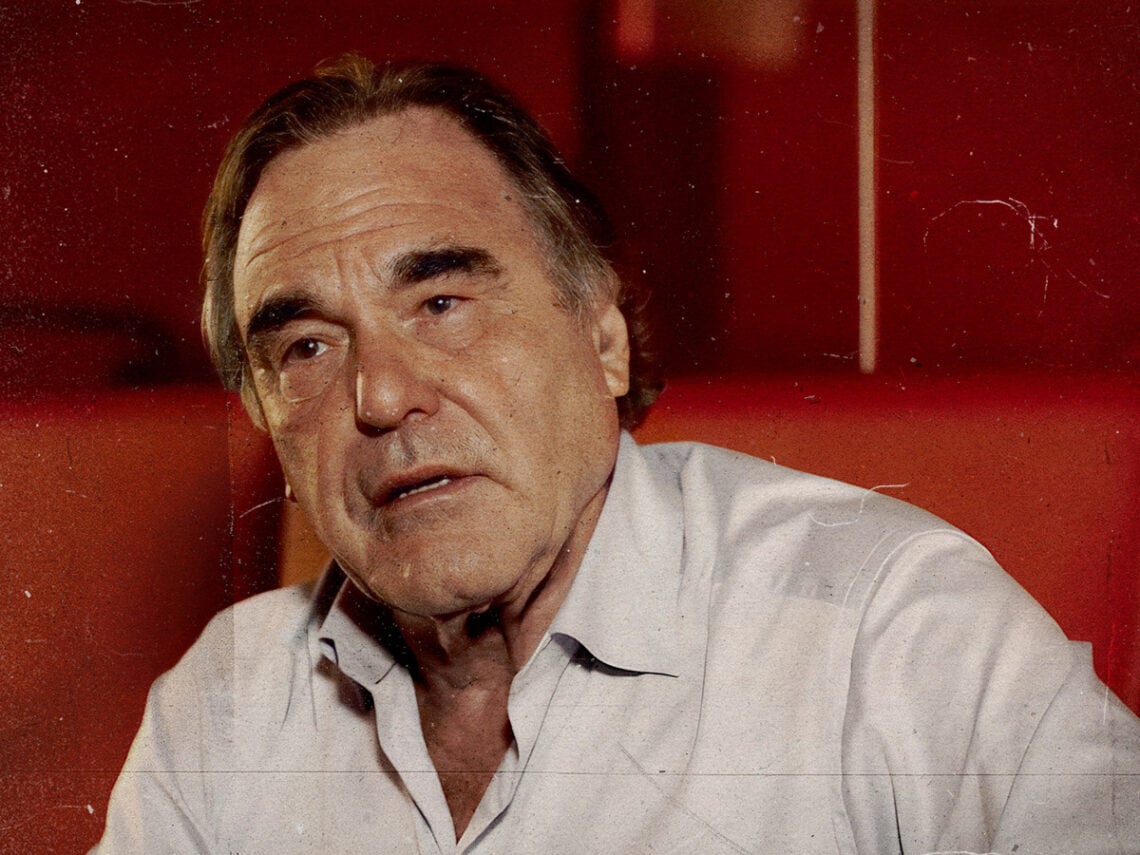
Oliver Stone explains his admiration for Roger Ebert: “He was very supportive”

When legendary film critic Roger Ebert passed away in 2013, the tributes came flooding in from far and wide, and from those who loved and hated him.
In the history of film criticism, few have made a name for themselves as resolutely as Ebert, the late presenter and writer who famously appeared alongside Gene Siskel on the 1980s show At the Movies, where they’d review the latest releases. Contrasting each others’ personalities perfectly, Ebert was the ‘good cop’ to Siskel’s harsh ‘bad cop’, with the tension between the pair often bursting out in an impassioned debate.
The frank critic was never afraid to make an enemy, but mostly the film community saw him as a stalwart figure and always took his reviews and opinions to heart. One such tribute came from the infamous director Oliver Stone, whose films span Platoon and Natural Born Killers to Snowden and The Doors, and his positivity and admiration for Ebert is unrelenting. Like many filmmakers, Ebert’s reviews plagued Stone’s filmography, but he ultimately wouldn’t be without it.
Speaking to Matt Zoller Seitz for Ebert’s publication, Stone said: “Roger was very supportive of what we were doing, or trying to do. He was very supportive again, at a difficult time, a few years later when Natural Born Killers came out. At that time he was very supportive of my films.
“He came to Hammond, Indiana, when we were shooting Natural Born Killers with his wife, Chaz. They spent much of the day watching us film a courtroom scene that wasn’t in the final movie, a scene where Woody Harrelson stabs Ashley Judd through the heart with a pencil.
Reminiscing on this scene, Stone continued: “I liked that scene. I wish we’d left it in! But it was a stopper, you know, in the middle of the movie, because of logic. But who cares about logic in a movie like this? I should have left it in!” You can tell where Tarantino got some of his filmmaking style from…
Back to the question, Stone said: “You ask me what made him [Ebert] different from other critics. What marked Roger was love. A sense of love for this craft, a love for movies, and for watching movies, that was deep and spiritual. That’s why he loved Marty [Scorsese] so much, because Marty was very spiritual about it, like a priest. Roger had a bit of that. Even if he didn’t care for a film, he would write his review in a way that did not excoriate the filmmaker, it seems to me.”
So, perhaps we should all take a leaf out of Ebert’s book, if we haven’t already. To be such a notorious film critic yet keep filmmakers on side and execute strong opinions with tact, that’s real talent – and of course, we all love film as a craft.
