


“This was a moment for rebirth”: Oliver Ackermann on A Place to Bury Strangers, ‘Synthesizer’ and Death by Audio

Few bands of this century can claim to be as singular as New York‘s A Place to Bury Strangers. Led by the innovative guitar maestro Oliver Ackermann, who also runs influential effects pedal company Death by Audio, the group’s prismatic wall of sound has continued to evolve over the years and earned them many notable acolytes. Despite members coming and going, Ackermann dextrously steers the ship, taking them to new reaches with every album.
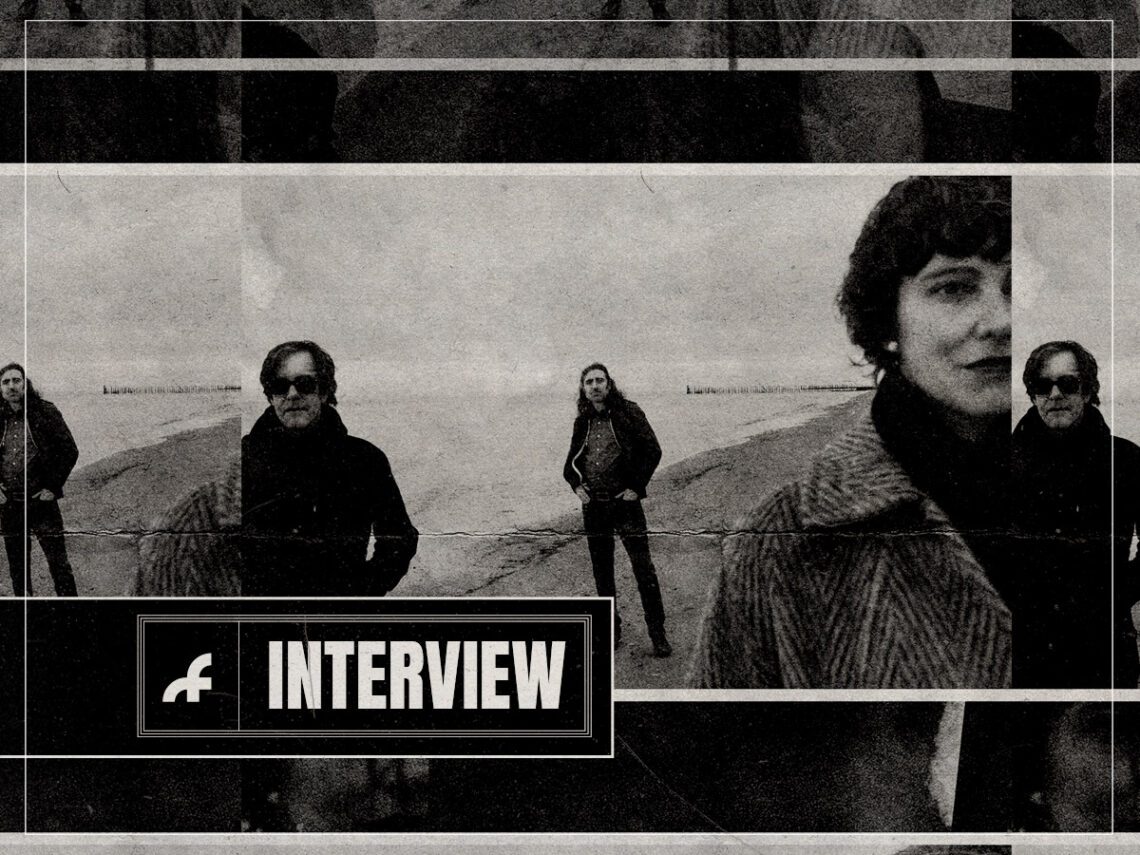
In October, the new-look group released their seventh album, Synthesizer. Featuring bassist John Fedowitz and his wife, drummer Sandra, alongside Ackermann, the record has seen A Place to Bury Strangers refresh their approach, with it a clangorous, glitchy and spirited body of work that has the idea of coveting spontaneous, natural sounds – like those that haphazardly occur in the practice room – at its core. This, along with continued experimentation with electronic flavours, confirmed once more that Ackermann’s innovations know no bounds, with the addition of the Fedowitz’s helping him move past changing lineups, the pandemic, and the like.
After our first call was cancelled due to a last-minute soundcheck, I spoke to Ackermann over Zoom, and he was in great spirits about Synthesizer and A Place to Bury Strangers. It’s been “really cool” that fans have lapped up the record, he says, as naturally, when bands start playing new material to the world, there’s always a slight worry that people might not enjoy it as much as the more classic stuff. Ever the realist, he knows how it can go. As a lifelong music fan, he’s been on the other side of the barriers and grimaced when artists have tested the waters with fresh sounds.
The fans aren’t the only ones digging the new stuff; Ackermann is too, and perhaps this is one reason, alongside the wildly accomplished and forward-thinking compositions, that it has gone down such a treat. “I love it; I think it’s great,” he says with a contented smile. The frontman maintains that when you’re in a bubble of a band working hard on a project and not accepting any outside influence as they did, by the time it comes to release, you’re in a strange headspace, as such one-track one-track-mindedness can alter perception. It becomes all you know, so when people enjoy it as much as they have, you have to give your head a wobble and see the wood for the trees.
Surprisingly, following that trail of thought, Ackermann clarifies, “I don’t get sick of it.” Although the trio tirelessly endeavoured to bring Synthesizer to life, he also had other creative irons in the fire, as he always does, meaning it can take a year to record an album. However, there’s a point: if, by the end of such an extensive period, the songs stand up, and excitement remains, he knows he’s on the right path. “All those songs that I was tired of by the end of the year I was working on didn’t make it on the record,” he adds.

Ackermann has always been an innovator at the forefront of music, and Synthesizer affirms this, from the kaleidoscopic fusion of analogue and digital sounds to the fact the packaging can be turned into an actual synthesiser. Not only this, but the way the record’s motivation was to capture raw collaborative sounds and its success in doing so affirms that he’s more than plainly a musician. There’s a clear ethos, whether that be punk or something else entirely.
“I’ve always been fond of promoting these kinds of things if you can,” he explains, saying that as people are inherently individualistic, naturally, they bring different things to music, in creation and the way they listen to it. “That’s really interesting,” he notes, and this fascination courses through the album.
“It just seemed like the right time to do this stuff. This band has been built up and broken down so many times and re-imagined and reformed. This was just the natural approach for how this sort of record would be made,” he continues. “There was a time in which all of these things that I was holding onto, you know, this idea that punk music had to be made a certain way or something… it was time to throw some of that stuff out of the door and embrace more electronic stuff – not have so many walls or rules.”
In this way, Synthesizer can be understood as Ackermann and the new-look lineup refreshing the blueprint of A Place to Bury Strangers. “Yeah, it’s probably something to do with my brain being melted; it’s the only thing left, you know?” he laughs.
Ackermann is also sure that the pandemic affected this latest approach. He describes February 2022’s See Through You as “a really heavy record for me” and reflects that “it kind of crushed me in a way.”
“And so, this was a moment for rebirth, reimagination, excitement and all these things. It seemed in New York – I don’t know what it was like where you are – but maybe the world was going to end during the pandemic. It was really dark and crazy and fucking nuts – surreal – like living in a dream,” he recalls, before reasoning, “To have made it out the other side, I’m sure we all have a lot of issues and problems, but also, celebrate when you can and what you can do.”
While creativity provided the only outlet for sanity and structure for many during the pandemic, as millions were tragically dying across the world and we were forced into our homes, the way we viewed music altered. Ackermann recognised having an array of maddening conversations with himself, “I remember walking around one day thinking, would I even know if I’ve gone crazy at this point?” That’s a situation many can relate to.
That’s the confusing thing about music; it’s hard to tell whether what you’re making is really good or terrible, and the pandemic only blurred the lines further. Offering his shrewd perspective, Ackermann says, “It’s one of the things I love about music, there’s no set standard” or barometer of success, as you might have in sport, with metrics such as distance or height. He states: “Music can touch someone in a way, and there’s not even necessarily a rhyme or reason. You can’t just say a word and that works, or write this exact beat and that works. I love that.”

Ackermann reveals that the Fedowitz’s were key to the success of Synthesizer. Not only did he and John grow up together and discover their favourite music simultaneously, but the couple’s positive attitude was also vital to refreshing the band. Everyone knew what they wanted from the process, and there was no fighting over concepts, ideas or sounds. The milieu was “filled with excitement and thrill for the journey”, making it very straightforward and, as he says, “very cool”. He likens the pair to musical partners, where “you can excite each other by DJing all night long.”
I couldn’t let Ackermann go without asking the big question: how on earth does he double up being the boss of A Place to Bury Strangers and Death by Audio? “With lots of help from people,” he admits, typifying the affable modesty that emanates from him, rare for someone of such consequence. He points to his partner Heather, who he notes practically runs Death by Audio, and A Place to Bury Strangers manager Steven Matrick, who makes the logistical side work so he can focus on creativity as much as possible. It was Matrick who I spoke to reschedule during the soundcheck clash.
“You still have to be there to make the decisions, push things forward, and keep it positive,” Ackermann clarifies. “Things get to be insane, and both of these companies or any sort of company, need a lot of love to get going. It’s definitely a maniac’s task to take on multiples of these companies, but they happened to find the right maniac to do it.”
Despite being so humble, Ackermann is surely satisfied deep down that both of his primary creative endeavours have been so influential. Not only does he have many notable fans of his music, but the likes of Lou Reed, Radiohead, Arctic Monkeys, U2, Nine Inch Nails and many more have used his hand-made pedals. That’s not bad going.
Ackermann is “beyond satisfied,” but he tries to avoid such subjects because he can’t comprehend them. All he’s ever wanted to do is create things he thinks are cool, and the fact that people love them makes him truly honoured.
“Dude, it’s fucking nuts. I’m just a kid who grew up just as any other kid, blasting Nine Inch Nails in my car, smoking weed, hanging out at the river, it’s just mind-blowing,” concludes the leader of New York’s loudest and most innovative outfit.
