


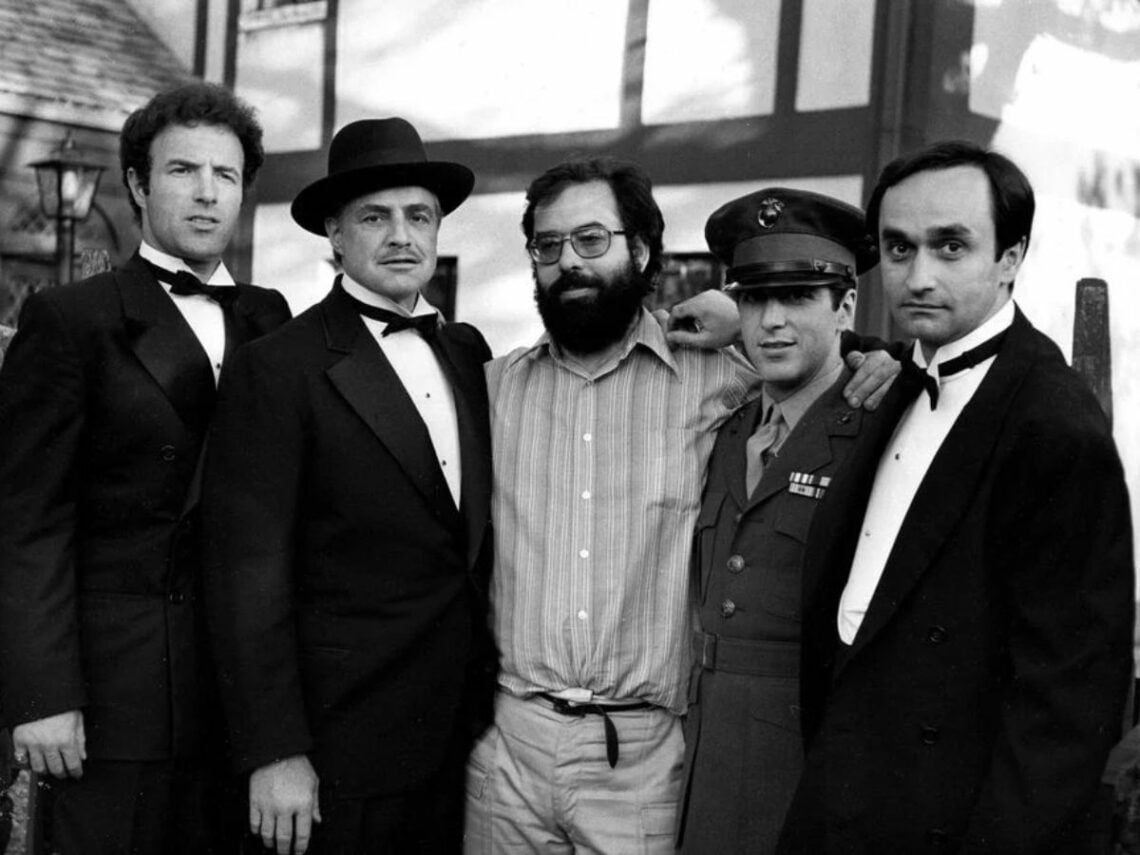
How “older brother” Marlon Brando saved Al Pacino from ruin in ‘The Godfather’

Few roles are iconic and forever relevant as Al Pacino’s performance as Michael Corleone in Francis Ford Coppola’s first film in The Godfather series. Michael is the son of mob boss Don Vito Corleone, and the trilogy of films charts his rise to the top of the bloody crime family, from wanting to stay out of the family business to replicating his father as the head of the criminal organisation.
Discussing how he got the role in Coppola’s iconic film with The New York Times, Pacino admitted it was something of a “façade” because several “great actors were auditioning” for the role of Michael. “But here’s the secret,” he added. “For whatever reason, he wanted me, and I knew that. You could feel that. And there’s nothing like that when a director wants you. It’s the best thing an actor could have, really.”
He went on to explain how Michael’s character resonated with his own life at that point. Michael was a newcomer to living in the mob, while Pacino himself was an unknown name in the film industry. “He’s not showing up a lot. He’s there but not quite showing up,” he said. “I guess a lot of it was just building up to that one speech where he says, ‘I’m going to go get those guys’, and they all start laughing at him.”
Pacino continued, “I was thinking that this is a character that could be very effective if he comes out of nowhere. That was my vision for it. And I felt it was mapped out for me when I read the script.” Whatever Pacino felt about how he wanted to portray Michael, it certainly worked, as he delivered one of his finest performances.
Most important of all was that the experienced cast of the film provided all the advice that Pacino needed to get his big break. “I will tell you, they couldn’t have been more comforting, all of them,” he said. “I was young, I was unknown, and they were so comforting. There was a love there.”
But the biggest inspiration on set came from Marlon Brando, who became something of a “brother” to him. “They understood it, Brando especially,” Pacino said. “They were becoming those older brothers and advisers that they play in the film. Those kinds of emotions and colours in them came out, both in the performance [and] also in life. They mesh.”
It was also Brando who inspired Pacino to boycott the Academy Awards ceremony that year, although he also put it down to the fact that he was in a “rebellious” stage of his life. “I was at that stage in my life where I was somewhat, more or less, rebellious,” he said. “I don’t think Bob [De Niro] went to one of them. Marlon didn’t go. Look, Marlon gave back the Oscar. They were rebelling [against] the Hollywood thing. That kind of thing was in the air.”
