


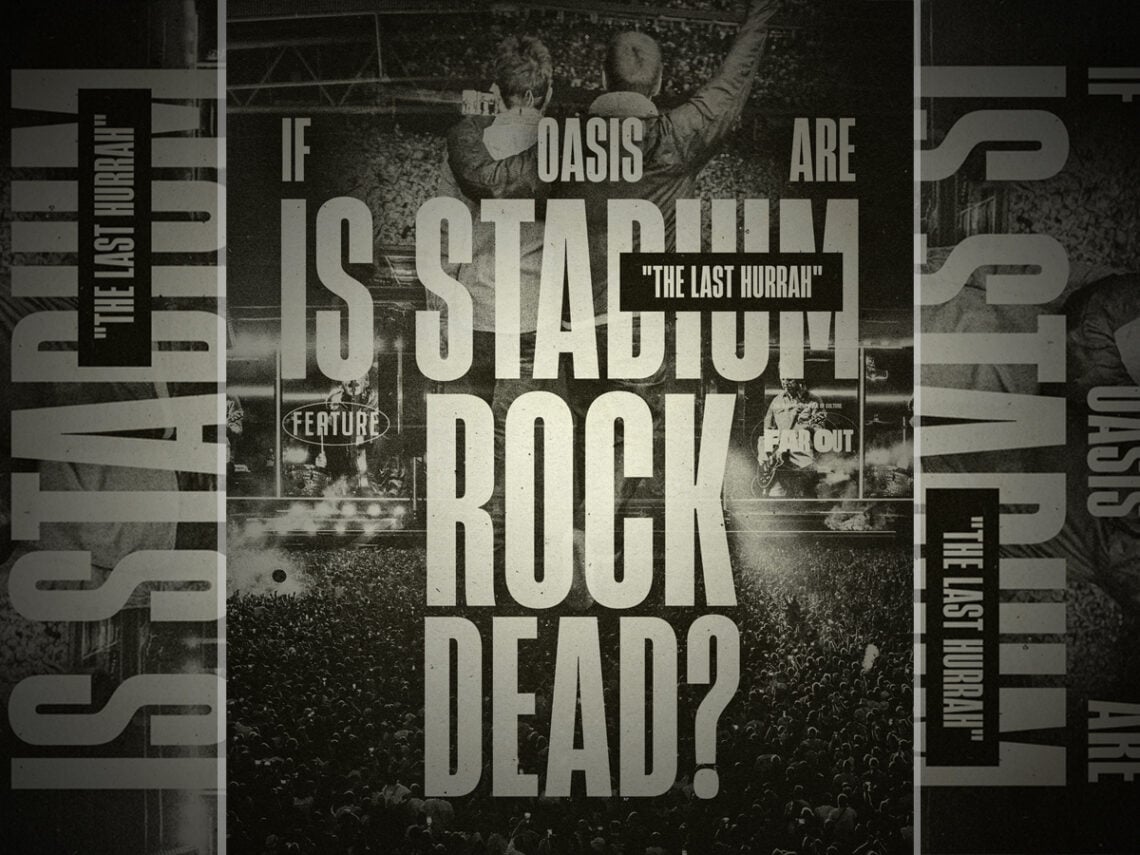
Oasis are “the last hurrah”: Is stadium rock dead?

There is no gig more high-profile than the Oasis reunion tours taking place this year, and if you ask around, everyone who has been within earshot of these shows has nothing but positive feedback. It’s rare that you have such a massive gig where nobody has anything negative to say about it.
Don’t get me wrong, we at Far Out had plenty of negative things to say about these Oasis reunion shows in the build-up to them. They contradicted their stance as a “working-class band” with the excessive price of ticket sales, and they looked spineless when they failed to take accountability for said prices. They also missed the chance to potentially introduce the world to the next Oasis by not having a smaller band in their support slots.
We stand by these comments. But even we aren’t so stuck in our ways that we can’t recognise a great fucking gig when we see one, and these Oasis shows have been great fucking gigs.
Regardless of your opinion on the band itself, you’re well aware of how famous they are, how many fans they have, and how much they mean to people around the world. As such, even if you don’t like their music, it’s hard to feel anything but happy seeing videos of these shows with grown men letting floods of tears stain their Fred Perrys.
The world seems grimmer than ever, so the fact that people have been granted a momentary release from it in the form of a band from Manchester is incredibly moving. Though the success of these gigs brings up a different question: Will we experience anything like them again?
It feels like people have been speculating about the death of rock music ever since the 1960s, but now it really does feel as though it could be on its last legs. Well, no, let me rephrase that. Rock music isn’t going to die; it’s too much of an intrinsic part of music to ever fully dissipate, but we may well be seeing the end of rock music that can fill stadiums in the same way that bands like Oasis do.
Think about it—how many rock bands do you see selling out arenas anymore? And of those bands that do, how many released their debut album in the last ten years? The fact is that the way people make and subsequently consume music is changing. Artists don’t write songs with stadiums in mind, and therefore, there are very few modern tracks that translate to such a big space.
The modern rock bands that people like take the genre and use it to establish their own niche sound. That’s not a criticism; it’s imaginative and paves the way for some great music, but that great music isn’t the kind that will capture the imagination of millions. Instead, they become legends in their own subsections, massively respected, but with a reach that can maybe sell out an O2 Academy as opposed to Wembley Stadium.

Oasis was the reunion that people were waiting for. Their music was so epic, and their break-up and continued rivalry so notorious, that the idea of a reunion always seemed like an unlikely dream, lingering in the distance, close enough to see but too far away to touch. When it was announced, and now that these shows have gone ahead, it feels like we’re experiencing a real milestone, one that the optimists look at as something which sets the bar, but that the pessimists will see as the last hurrah.
In an exclusive quote provided to Far Out, Benefits seemed to agree with the latter, admitting that while reunion shows might sometimes look like a cash grab, we live in an age where those stadium shows are dying out, and therefore both the artist and the fan should be able to enjoy them while they’re young enough to. In that sense, they welcome the Oasis reunion, and every other one for that matter.
“It feels odd that a load of acts from a quarter of a century are back and that the UK’s gig listings occasionally look like a page from Melody Maker in 1997,” they said, explaining, “Over the last decade or so, there’s been lots of debate about where the next festival headliners are going to come from, and you can’t help but feel that the fervour around all of this knocks that discussion back into touch yet again. But maybe it’s for the best, and it’s all a bit of a last hurrah? A final flourish of a much-cherished age, a last chance for a last dance.”
The duo continued, “There’ll always be the ‘not as good as they used to be’ or ‘I was there when they played to ten people at the Dog and Duck’ crowd but sod ’em, just enjoy it for what it is, sing your lungs dry, whether that’s the Sex Pistols, the Stones, Oasis, Guns N’ Roses, Reef or Space. Let’s be honest, it’s infinitely better than them going down the jukebox musical route.”
Benefits certainly have a point: While these shows might well and truly represent the end of the stadium rock era of music, they should still be something cherished and held close. We can tend to overcomplicate music at times. Sometimes, it just has to be fun, and that’s what Oasis is delivering to the hundreds of thousands on their current tour.
So, with that, keep going to the gigs, keep singing to the point you lose your voice, reminisce, remember the first time you heard that song, the bigger implications its had on your life, on the lives of those around you. Get the daft haircut, wear the aviators and the bucket hat, buy the overpriced merchandise and beer, do all of that and more. Enjoy yourself! Because Christ, we might not see anything like this again.
