


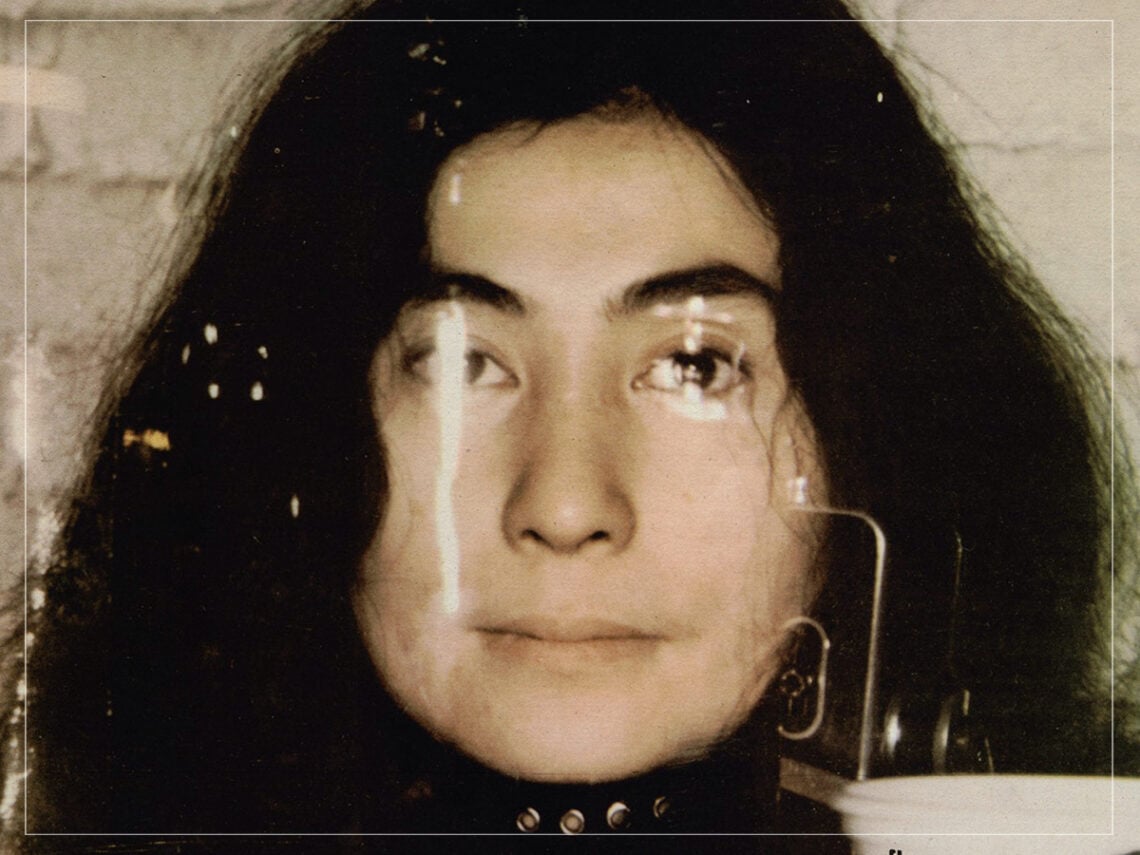
Nudity and alien language: Yoko Ono’s bizarre film, ‘Fly’

It defies all reason that somehow, Yoko Ono and John Lennon were the most famous couple of the age. They were the antithesis of ‘mainstream’. Yet, from their bed-in for peace to the billowing ‘Imagine’ and strange nude cover shoots, they ruled the roost of a revolution in their own very weird way.
Not even Nostradamus would’ve prognosticated such a fate for young Yoko Ono. She was born in Tokyo in 1933 to a relatively wealthy family. Her father was a former classical pianist, but when Ono arrived, his job as a banker meant that she was often hot-footing between America and her homeland as a child. This itinerant upbringing meant that she frequently found herself thrown into a wild world of cultures, but often on the fringes of them rather than at the centre. She wasn’t shackled enough by the schoolyard status quo to know what was mainstream and what wasn’t.
This outsider status soon came to the fore when the Second World War thrust her life into turmoil. Towards the end of the war, her father was working in Hanoi and soon became a prisoner of war. This meant that Ono and her family had to trade goods for food in Tokyo, where starvation was rampant. During this dystopian urban existence, Ono claimed her “aggressive” attitude and understanding of an “outsider” status began to take shape.
By 1946, Ono was able to continue her creative studies and soon enough in she became the first woman ever to enter the philosophy program at Gakushuin University. However, a few things lasted long in Ono’s early life, and soon enough, she left university and headed towards the bohemian downtown of New York City.
Therein, her life took its own bohemian form when she was introduced to the works of her heroes Arnold Schoenberg and Alban Berg, and the realisation that you bring your pariah status into your art landed like a nonconformist bomb. “I was just fascinated with what they could do,” she once said. “I wrote some twelve-tone songs, then my music went into [an] area that my teacher felt was really a bit off track, and….. he said, ‘Well, look, there are people who are doing things like what you do, and they’re called avant-garde.’”

She soon entered the famed Fluxus movement, and her art stretched beyond music to ever weirder extremes. When she eventually met John Lennon, this had an irrevocable impact. “I thought it was fantastic,“ he said of her work. “I got the humour in her work immediately. I didn’t have to have much knowledge about avant-garde or underground art, the humour got me straightaway.”
Soon, he would be the frontrunner of the avant-garde world. So, his shivering stiffy might seem somewhat bizarre, tedious and unnecessary, but it derives from the same sense of experimentation that brought the world ‘A Day in the Life’. However, one of the first things he started doing alongside Yoko Ono was, as per her Fluxus outlook before him, to look at art in a holistic way, escaping ‘just’ making music and venturing into films.
The pair began making odd minimalist films. There was also Smile and Two Virgins, which were both recorded on the same day in a Kensington garden. They essentially superimposed their faces on top of each other for 19 minutes while experimental psychedelia from the accompanying Two Virgins album plays in the background. Self Portrait, a 42-minute depiction of Lennon’s semi-erect penis. Then there was Up Your Legs Forever, which featured almost 400 pairs of legs. And, most controversially, Rape, in which a random female was incessantly stalked by a cameraman.
However, perhaps the oddest was Fly. A million miles away from Jeff Goldblum’s rather maximalist effort, Yoko Ono’s little movie had nothing to do with Franz Kafka’s concept of folks becoming Muscidaes. Or, at least, not on the surface. No, her film was far simpler and yet far more confusing as a result. The only thing that happens in the 25-minute short is a continuous extreme close-up of a fly wandering over the naked body of the film’s star, Virginia Lust, a locally hired model.
Accompanied by Ono’s own fly noises/soundtrack, the left is up to the fly’s own whims. “I just want the camera to always concentrate on the fly, so the film is about a fly,” she says in the behind-the-scenes footage, perhaps indicative of her intent—female nudity is so often a stop-the-press presence that subverting this by letting a pesky, ubiquitous fly relegate it to the background is perhaps a statement about acceptance and liberation over objectification and sexualisation. However, with a film so minimalist, you can pretty much make up any given premise.
As it happens, your mind might even wander to the most obvious questions as you watch: how did they get the fly to remain on her body? It turns out there were multiple live flies in the room, and under hot lights, they simply naturally gravitated to Lust’s body, ensuring at least one was filmable at any given time. Meanwhile, Lust did a great job of laying still. This has since given way to allegations that she was in some way sedated, but Lust has never substantiated this.
What exactly the film means remains somewhat of a mystery, but even that further typifies Yoko Ono’s strange, enigmatic ways.
