


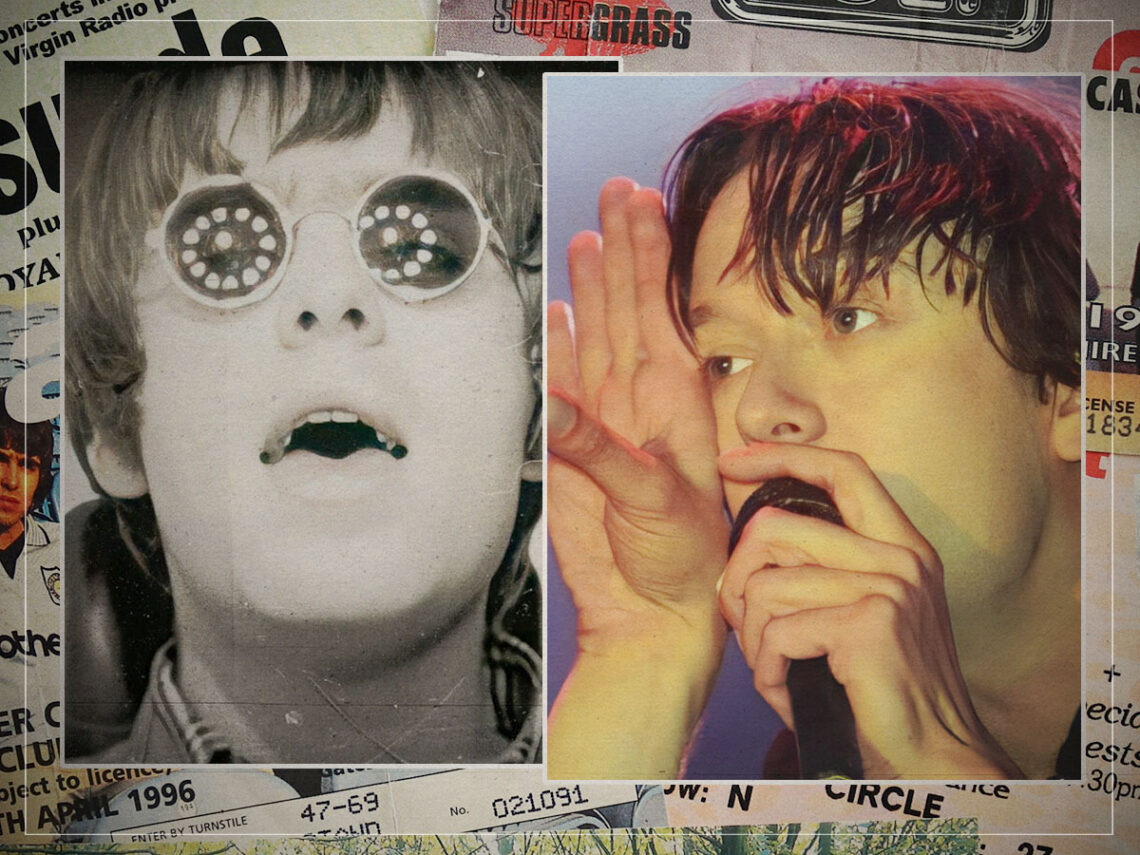
The novelty act that stopped Oasis and Pulp from reaching number one

Everyone knows that chart success isn’t a measure of greatness. Success in sales doesn’t always correlate with a song or an artist’s legacy. Some of the most timelessly beloved tracks ever made were commercial flops when they were released, just as how so many number-one hits are now long forgotten. But still, if you were a culture-shaking band, like Oasis or Pulp, which created a whole musical moment with Britpop, being blocked from the top by a novelty act would sting.
It was 1995 – arguably the pinnacle year for Britpop and, in turn, one of the most exciting years in guitar music history. Especially in the UK, it was an electric year. For the first time since The Beatles and the British Invasion moment, it felt like the whole world was hooked into the British scene again. Thanks to the Britpop crowd, the UK was back in the lead as the ultimate forerunners in rock music, who had everyone hooked into bands again.
It was a moment that stole the spotlight back from the pop obsession of the 1980s. Obviously, it was still around. At the same time as the Britpop moment, pop music was hitting new levels with the likes of NSYNC, Spice Girls and Backstreet Boys. Around this time, rave culture was also at its height, getting people interested in genres like garage or electronic music. But, in the charts, rock was dominating.
It was the year of the Battle of Britpop when Blur and Oasis fought it out for the number one spot. Released in the same week, the fight between Blur’s ‘Country House’ and Oasis’s ‘Roll With It’ and the mass cultural obsession that surrounded their head-to-head sales fight prove how major this moment in music was. These weren’t just songs coming out; suddenly, rock music was leading the way in pop culture and mass media conversation.
Or, at least, that’s how we remember it. We remember the 1990s as an incredible era for bands where rockstars suddenly became kings again, and audiences couldn’t get enough of their sound. We see figureheads like the Gallaghers, Damon Albarn, Jarvis Cocker and Brett Anderson as being on top, at the top of the pyramid and the leaders of the pack. But not once, but twice, they were usurped by a gag.
The first takedown came in May. Pulp had been working away for a long, long time, but His ‘N’ Hers had finally seen them break through. As they prepared to follow it up with A Different Class, ‘Common People’, the album’s first single, was and still is the band’s opus. It’s a song that perfectly captures not only Cocker’s ethos and energy as an artist but undeniably exists as one of, if not the best, songs the band have ever made.
But yet, the track was kept from the number one spot by Robson and Jerome, a novelty duo of two actors singing covers. Performed on their TV show and then released as a single, the band’s cover of ‘Unchained Melody’ took the top spot that week in May 1995 – keeping the band from the closest they ever got to number one when they landed at second place.
Then it happened again. In November of that same year, when this duo were still kicking about singing covers on TV, they also blocked ‘Wonderwall’, Oasis’ most well-known and widely beloved song, from reaching number one. Once again, the track peaked at number two because this fad band bagged the top spot with a cover of The Drifters’ ‘Up on the Roof’.
As I said, chart success isn’t an accurate measure of legacy. But given the looming nature of both of these culture-shaking tracks, the fact that they lost out to two actors singing poor versions of other people’s songs must have hurt.
