


What was Richard Linklater trying to achieve with ‘Nouvelle Vague’?

In 1973, François Truffaut made Day for Night, a comedic exploration of the filmmaking process, even playing the director himself, and when Jean-Luc Godard saw it, he sent a letter to his former friend, the very pal who’d come up with the story for his debut feature, Breathless, to express his disappointment, scrawling, “Yesterday I saw Day for Night. Probably no one else will call you a liar, so I will”.
Godard took his anger out on Truffaut with the message, even requesting money from him to finance a movie, “so that viewers don’t think that films are only made your way”; he was evidently a complicated artist.
The filmmaker could be a real shit, to put it plainly, and this is something that remained true until the end (you only have to think back to that segment from Agnes Varda’s 2017 documentary Faces Places), but he was also an undeniably great filmmaker who, like it or not, changed cinema forever. His legacy is undisputable, even though he was a tough nut to crack; how he managed to get a crew to stick around to make his first film is beyond me.
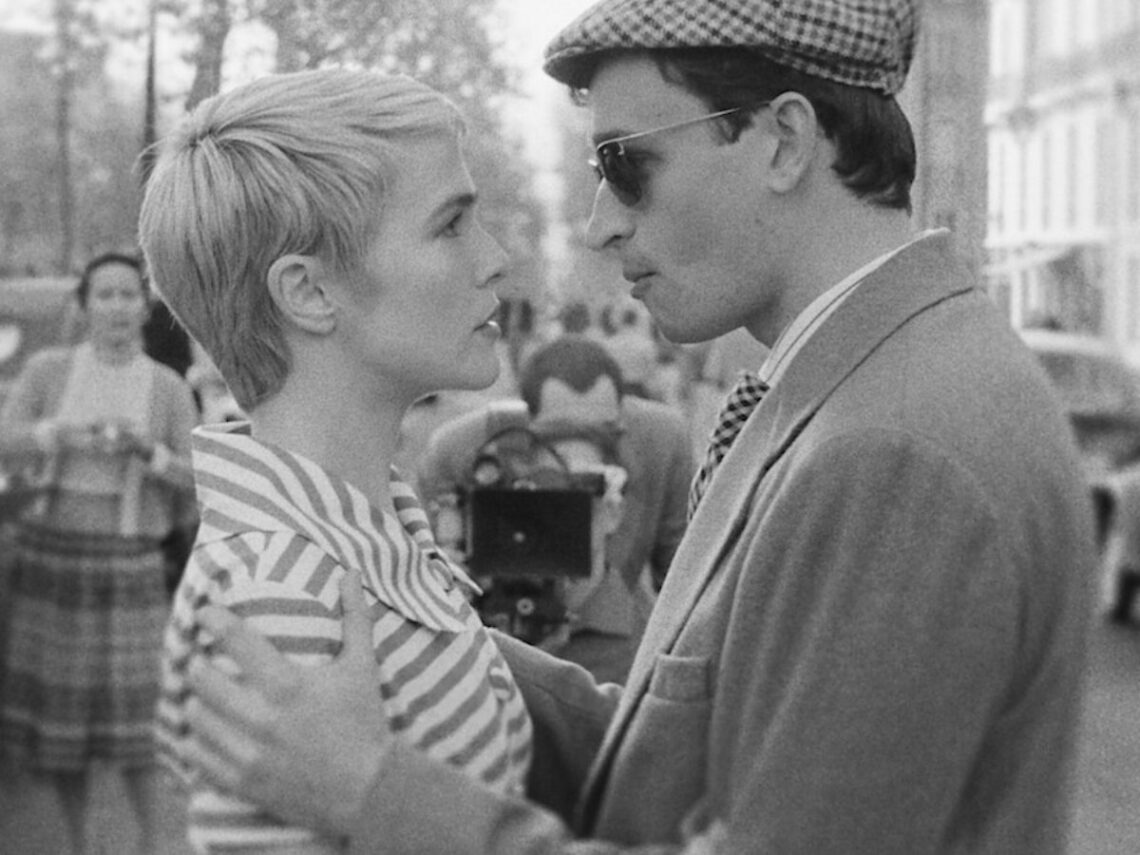
This challenge to get his debut feature off the ground is the focus of the new Netflix release (oh, the irony), Nouvelle Vague, an admittedly charming exercise in nostalgia and cinematic celebration from Richard Linklater, which sees Guillaume Marbeck transform into the French New Wave titan, looking almost identical. It’s an enjoyable film, where you might find yourself excitedly gasping when you see your favourite filmmakers appear on screen, but is it really necessary?
Linklater has long been indebted to the French New Wave, and you only have to watch five minutes of Before Sunrise to see the influence of someone like Éric Rohmer, one of Godard’s earliest collaborators and Cahiers du cinema colleagues. However, Nouvelle Vague feels like the MCU for cinephiles: an accessible document of an era that did much more for cinema than this film ever will.

You might see obscure French filmmakers pop up on screen and delight in their recognition, but there’s nothing groundbreaking about this film, which requires prior dedication to the French New Wave to be appreciated. It looks fantastic, with the smoky scenes of Parisian streets and cafes really taking you back to a bygone era, yet this doesn’t hide the fact that we’re watching a reconstruction of events, a pseudo-documentary which blurs the line between fact and fiction.
Like Day for Night, Nouvelle Vague humorously dissects the process of making a film, in this case, a genuine classic rather than an imaginary romantic melodrama. Truffaut’s film has a much more enduring quality, though, while Linklater’s film seems to be missing a strong mission statement other than merely documenting the artistic process of a director who has already been the subject of a biopic (and plenty of biographies).
Perhaps Linklater should’ve shifted his focus to a lesser-known member of the French New Wave, or at least attempted to show the creation of Breathless with a lot more experimentalism (how many times must we see Godard piss people off and shut down a day’s work after two hours of doing very little?). Those moments start to get predictable, because if you’re watching Breathless, you probably already know what Godard was like, and what gives Linklater the authority to tell the story of a film’s creation that he wasn’t even around for, anyway?
Godard certainly would’ve hated Nouvelle Vague, but that doesn’t automatically make it a bad film. Rather, what makes it a slightly middling effort, somewhere between celebration and critique of a man who just knew how to wind people up in his quest for artistic success, is its pretty straightforward approach to telling the story of Breathless.
Not much is explained prior to the film’s events, so if you don’t know much about the French New Wave, you’ll probably find yourself a bit lost. You’re better off just watching the original film, following it up with Day for Night (sorry Godard) and then throwing in some of Agnes Varda’s work about the act of filmmaking, like The Beaches of Agnes, for good measure. This one is best left to the diehard French New Wave fans, who finally get to experience the feeling that Marvel lovers live for when their favourite character cameo in an end credits scene.
