


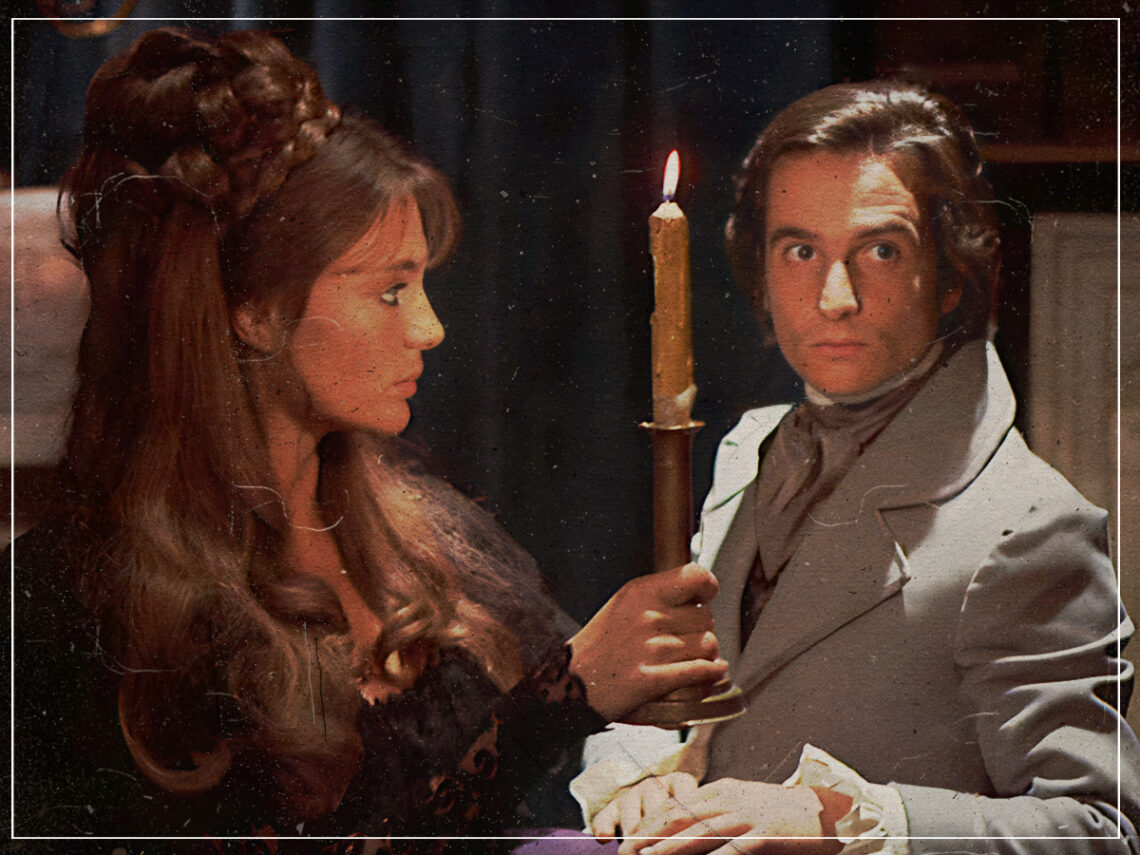
François Truffaut – ‘Day For Night’

“Shooting a movie is like a stagecoach ride in the Old West. At first, you hope for a nice trip. Soon, you just hope to reach your destination”. These are the words spoken by François Truffaut in his meta comedy Day for Night, an ode to the highs and lows of filmmaking. Released in 1973, Truffaut’s cinematic love letter came 14 years after he impressed critics with his debut feature, The 400 Blows, which helped kickstart the French New Wave.
With over a decade’s worth of success under his belt, by the early 1970s, Truffaut was in a position to make a movie about his experience as a filmmaker, choosing himself to play the director. In Day for Night, he stars as Ferrand, the mind behind Meet Pamela, a cheesy romantic drama starring a mix of actors, including a British star and an ageing French icon. These actors prove to be a recipe for chaos, as forces clash, romantically and professionally, making the production of Meet Pamela far from plain sailing.
However, Truffaut, imbuing his movie with plenty of good humour, highlights the joys of filmmaking in spite of the frustrations which may occur. Day for Night is easily the director’s funniest film, emanating playfulness and celebration. For example, in one sequence, Ferrand finds himself increasingly exasperated by Valentina Cortese’s Severine, an Italian actor who cannot master her scene correctly. As she finishes her dialogue and turns to the door, she repeatedly grabs the wrong handle and instead opens the cupboard.
Showing glimmers of inspiration from the likes of Charlie Chaplin and Buster Keaton, the scene is a simple idea which could quickly become tiresome, yet it is executed perfectly, and you cannot help but laugh at Severine’s hopelessness. Elsewhere, the crew humorously try to direct a cat, with one of the men declaring, “We’ll shoot the scene when you can find a cat that can act!” These small, seemingly unimportant moments that define the making of a film are given attention in Day for Night, highlighting how a scene as trivial as a cat licking a saucer can cause stress on set.
With Truffaut starring as the film-within-a-film’s director, he revels in meta references, such as a shot of some movie books revealing titles like ‘The Films of Jean-Luc Godard’, one of his former friends and collaborators. Moreover, Jean-Pierre Leaud stars as Alphonse, the same name given to his baby son in Truffaut’s ‘Antoine Doinel’ series, of which he is the star. Paying attention to the figures and films that shaped him into a successful director, Truffaut’s movie acknowledges his place in cinema legacy, which he clearly couldn’t be more grateful for.
Ferrand’s musings on cinema allow Truffaut to express his own thoughts on the medium. He discusses the pressures of making movies, seemingly referring to his experience as one of France’s most acclaimed directors. In one scene, he says, “Before starting, I hope to make a fine movie. The problems begin, and I aim lower! I hope to make the movie, period! Halfway through, I say to myself… ‘You could’ve worked harder, given more. You can still make up for it.’ And I start trying harder to bring the film to life.”
Day for Night doesn’t have a strict plot. Instead, we weave between the trials and tribulations that affect the characters, from disastrous romantic affairs to an actor announcing an unexpected pregnancy, forcing the crew to find a last-minute replacement. While there’s new life on the way, one member of the production dies, reflecting the natural play of opposites that occurs on set. Through the stress of filmmaking comes great joy, even if some sacrifices have to be made to create a good movie.
Following in the tradition of films about filmmaking, such as Federico Fellini’s 8½, Day for Night is a celebration of the cinematic medium. Through montages of the crew and actors working together, along with the impassioned musings on the art form, the beauty of movie-making is illuminated in front of us. As Ferrand, Truffaut asserts a statement that sums up the sentiment behind the whole film, “Cinema is king!”
