


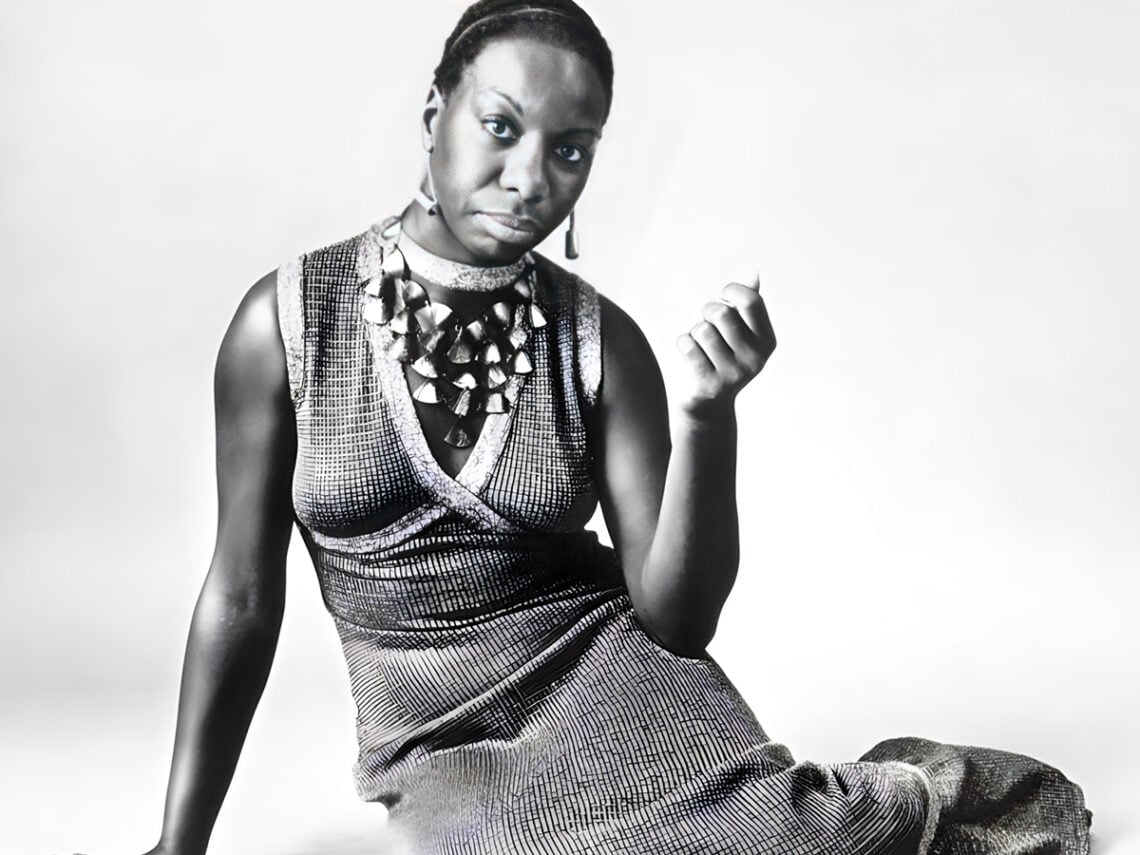
Did Nina Simone write ‘Revolution’ in response to The Beatles song?

‘Revolution’ is perhaps one of the most controversial tracks by The Beatles, espousing a non-violent revolution and expressing concern over rising levels of Maoist rhetoric in counter-culture movements.
Written by John Lennon and largely influenced by student activism, anti-Vietnam War protests and, in particular, the Mai 1968 student protests in France, ‘Revolution’ is characterised by a distorted guitar sound and socially conscious lyrics. Although there are three main versions of the song, ‘Revolution’ was released first as the B-side for ‘Hey Jude’ before two versions -‘Revolution 1’ and ‘Revolution 9’ – featured on side four of the White Album.
The track received criticism from members of the New Left, who saw Lennon’s pacifistic lyrics as complacency when there was a need for direct action. “But when you talk about destruction, don’t you know that you can count me out,” was a criticism of the sometimes violent tactics used by Maoist activists who did not believe everything would simply “be alright” without any interference, as Lennon suggests in ‘Revolution’.
The 1960s was a period of great social and cultural change and whilst some of that came from anti-war protests, a big issue present throughout the decade was that of civil rights. Being such a vastly important subject, the civil rights movement was often discussed and brought to attention by prominent artists such as David Driskell, Gil-Scott Heron and, of course, Nina Simone.
Simone’s 1964 track ‘Mississippi Goddamn’ was written in response to the racially motivated murders of Emmett Till and Medgar Evers in Mississippi and was described by Simone as her “first civil rights song”. As a socially conscious artist involved in the fight for civil rights, Simone penned numerous further protest songs during the ’60s, including ‘Revolution (Pts. 1 and 2)’, which was written as a direct response to The Beatles track of the same name.
The single failed to gain much traction, something Simone spoke about later. “I don’t get it. It’s about a revolution, man: not just colour, but everything,” she said.
The song was featured on her album To Love Somebody, which was not her most successful record, either critically or commercially. Despite this, the track is notable for its criticism of Lennon’s pacifistic idea of revolution. In her version, Simone asserts, “I’m here to tell you about destruction, of all the evil that will have to end”, suggesting that if social change is going to happen, then it will do so by force and rebellion. It is an interesting look at how a rich white man’s idea of revolution is contrasted by the reality of Black Americans fighting for civil rights.
Lennon seemingly got on board with this view, as is suggested by the lyrics to his 1971 solo track ‘Power to the People’. In a Rolling Stone interview that same year, he praised Simone’s ‘Revolution’, saying” “That was very good–it was sort of like ‘Revolution’, but not quite. That I sort of enjoyed, somebody who reacted immediately to what I had said”.
So, despite its lack of commercial success, Nina Simone’s response to ‘Revolution’ certainly made a cultural impact.

Never Miss A Beat
The Far Out Beatles Newsletter
All the latest stories about The Beatles from the independent voice of culture.
Straight to your inbox.