


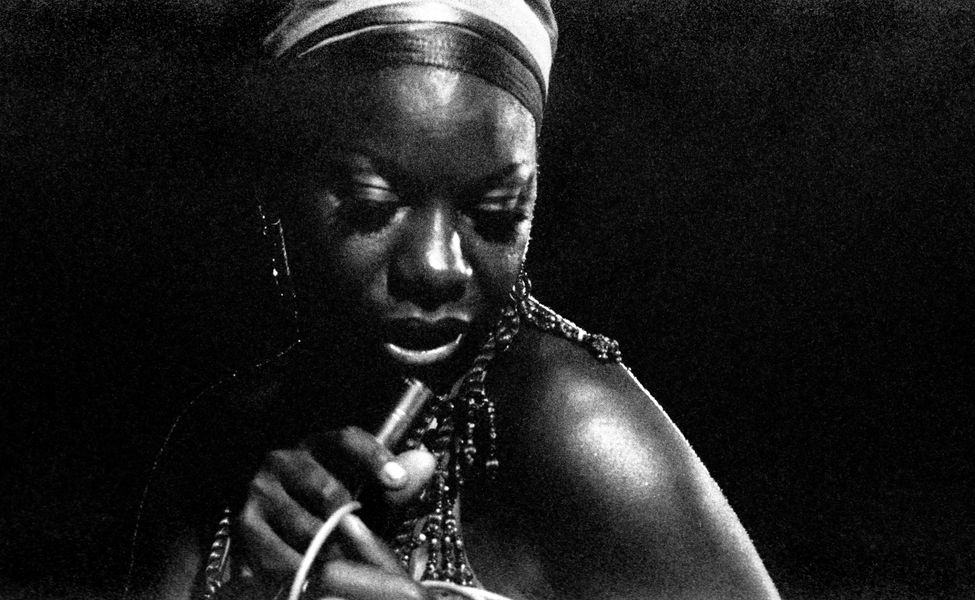
Nina Simone – ‘It Is Finished’

The late American legend Nina Simone was so much more than a singer-songwriter. A forthright edge of sociopolitical commentary invariably accompanied her unique journey through folk, jazz, soul, gospel and blues. As an activist for the Civil Rights Movement, Simone used her platform and music as a conduit for positive change. Her heaviest involvement in the movement occurred between 1964 and ’74, a period bookended by her early album Broadway-Blues-Ballads and today’s focus, It Is Finished.
As the title suggests, Simone’s 1974 album marked the end of an era: an end to her militant activism and a farewell to her record label and the US at large. Indeed, after recording It Is Finished, Simone left the country for Barbados. The move was intended as a step back from a frenzied and tiring lifestyle. The brazen freedom fighter had become weary amid personal and social problems, and although consisting exclusively of covers, the album reflects this chapter with precision.
Although the album was recorded during live performances, Simone’s vocal virtuosity hits each peak with perfection – something many artists require a few takes in the studio to achieve. This is immediately apparent upon spinning the album as we hear a soul cover of the Steppenwolf classic ‘The Pusher’. This cover ostensibly notes the drug problem she sought to escape in 1974.
Following a radiant yet anguished rendition of the traditional gospel hymn, ‘Kumbaya, My Lord’, titled ‘Com’ By H’Yere Good Lord’, Simone offers her lungs to ‘Funkier Than a Mosquito’s Tweeter’. The track was originally written by Alline Bullock, the older sister of Tina Turner, for Ike and Tina. In Simone’s reimagined version, gone are the funky bass licks, which make way for an equally rhythmic and propulsive Afro-beat.
Proceedings then take a more placid turn with the pensive ballad, ‘Mr. Bojangles’. The song was originally recorded by country artist Jerry Jeff Walker in 1968 and popularised by Nitty Gritty Dirt Band. Simone gives due poignancy to the lyrics, which tell the true story of a homeless street performer who had been arrested in 1965 amid a police sweep of vagrants. Walker met “Mr. Bojangles” in jail after being arrested for public intoxication.
Later, Simone gives a live spin on ‘I Want a Little Sugar in My Bowl’, a dirty blues classic first recorded by Bessie Smith in 1931. Simone had more famously recorded her studio version of the track as part of her 1968 album, Nina Simone Sings the Blues. Once again, Simone delivers an accomplished vocal and piano performance, yet one finds it difficult not to pine for the studio version, which benefits from hearty vibrato and a touch of brass.
Rounding the album out with more overseas influences is ‘Dambala’, a tranquil trip East adorned with sitar pulses and Simone’s rippling piano runs. The haunting cover of Bahamian musician Exuma’s original 1970 single candidly faces the topic of slavery, “On the seventh day, God will appear/ On the seventh night, satan will be there/ You slavers will know/ What it’s like to be a slave”.
After a duet cover of The Everly Brothers’ ‘Let It Be Me’, a translated rendition of French singer Gilbert Bécaud’s ‘Je t’appartiens’, Simone closes It Is Finished with an altered version of Exuma’s ‘The Obeah Man’. ‘Obeah Woman’ is one of Simone’s most passionate performances on the album, marking a page turn to the next chapter, with Obeah referring to spell-casting and healing traditions in the Caribbean.
It Is Finished sits proudly as one of Simone’s most evocative and enjoyable live albums. Despite a lack of original material, the carefully collated tracklist connotes several facets of the singer’s life and passion across a medley of musical styles. Fortified at all angles with highs, lows and bitter-sweet reflections, the album bows out gracefully with a fitting homage to Exuma.
