


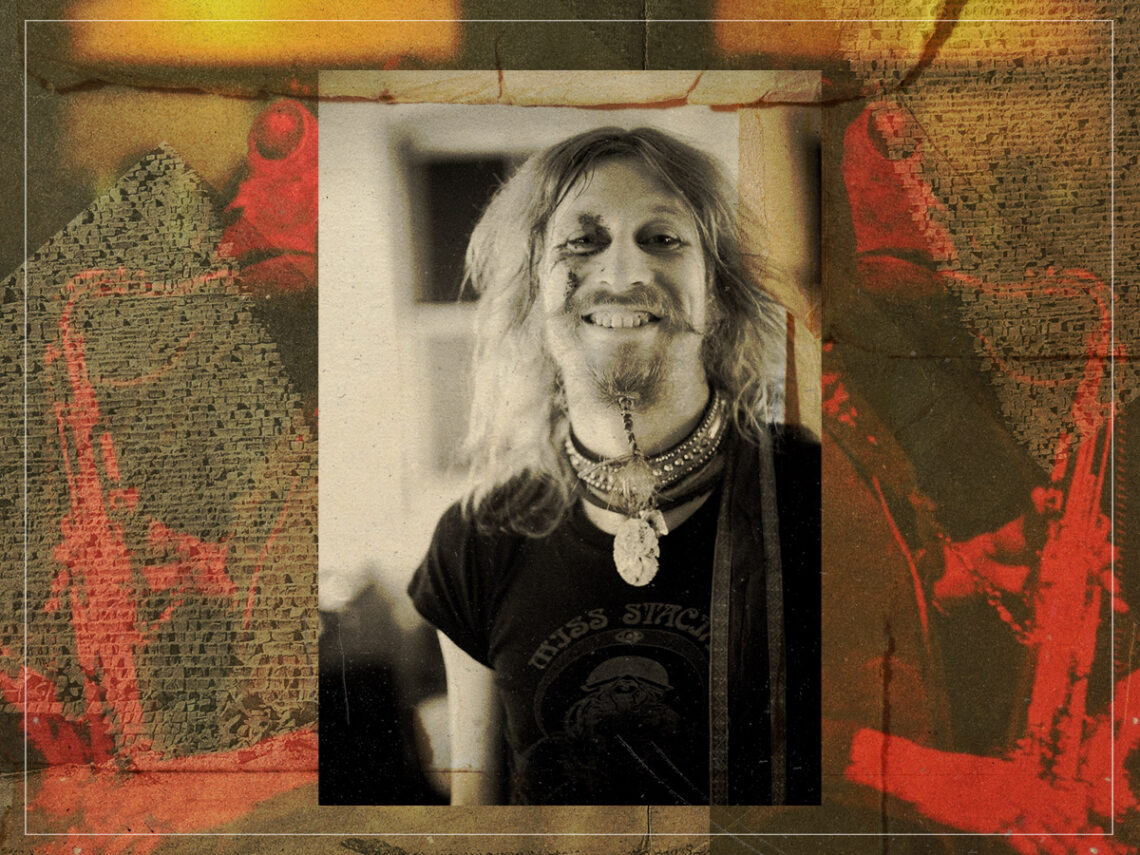
Nik Turner’s creative ventures in the Great Pyramid of Giza: “I grew up on mythology”

There was always a raw, street-level grit to Hawkwind’s pioneering brand of space rock. While progressive rock in the early 1970s drifted into the self-indulgent excesses of its own grandeur—and before The Dark Side of the Moon saw Pink Floyd cut through the theatrical bombast of Yes and Emerson, Lake & Palmer—Dave Brock and his ever-changing lineup of acid-fuelled misfits, including future Motörhead frontman Lemmy, the flamboyant dancer Stacia, and sci-fi visionary Robert Calvert, forged a cosmic onslaught that was as hard-edged as it was psychedelic.
Bridging the gap between hippies and punks, their unique sound was immortalised on the Space Ritual live album. Or, as Lemmy once wryly put it, “…like Star Trek with long hair and drugs.”
An essential component of Hawkind, both visually and sonically, was flute and saxophone player Nik Turner. Joining the band while playing Dutch circuses in 1969, Turner’s trippy woodwind and far-out clobber (notably donning a full alien lizard during their Hall of the Mountain Grill tour) cut a powerful presence on early albums like In Search of Space and Doremi Fasol Latido, the ethereal flute blasts percolating among Brock’s electric solos and Dik Mik’s psych-electronics. After his dismissal from the band for allegedly playing over the members, Turner’s affinity with mythology guided him toward an even deeper creative plain of mystical esoterica.
Invited to a trip to Egypt in the winter of 1976, Turner arrived in Cairo to find his companion had been deported. With nowhere to go, Turner climbed The Great Pyramid of Giza southeast of the city in the middle of the night. Feeling a spiritual affinity with the ancient wonder of the world and Cairo’s uncanny rain pour as he played his flute, charging him with creative energy, Turner managed to befriend a local cafe owner who knew the Pyramid guards. After some negotiation, Turner, for the price of a single admission, was granted three hours in Pharaoh Khufu’s tomb to record his flute in the arcane acoustics of the Pyramid’s bowels, documented by Gong’s Steve Hillage.
“I’ve always been interested in mythology. I grew up on mythology with stories like Jason and the Golden Fleece. I’ve always been interested in ancient ruins. To me, it’s all very fascinating,” Turner told Vandala in 2014.
Heading to Wales’ Rockfield Studios with Hillage to shape the Pyramid tapes into his first solo album, Xitintoday (pronounced as ‘Exit into day’) was released in 1978 and proved to be a much moodier cut than anything heard in Hawkwind. Explaining, “It was about this character who is on Venus, and he goes into a pyramid there, and he meets the crew of this inter-dimensional machine. Then the crew is actually Egyptian gods. The guy goes in there, and he has to know all these spells and the god’s names and stuff. He comes through, and he has his heart weighed, and he meets all the gods.”
Influencing a host of lysergic-soaked punks across the 1980s, Chrome’s Helios Creed approached Turner for a ‘remix’ of sorts to Xitintoday. This resulted in 1993’s Sphynx collaboration, which led to touring dates with Genesis P-Orridge and Jello Biafra.
Possessing a divine relationship with the band he’ll always be associated with, Turner always expressed his sense of otherworldly presence, whether a member or not, right up until his death in 2022: “I’m more about that spirit than Hawkwind. I sort of perpetuate that vibe and that alternative attitude; that’s what Hawkwind was and what we stood for, and I was part of it, and I think I still am.”
