


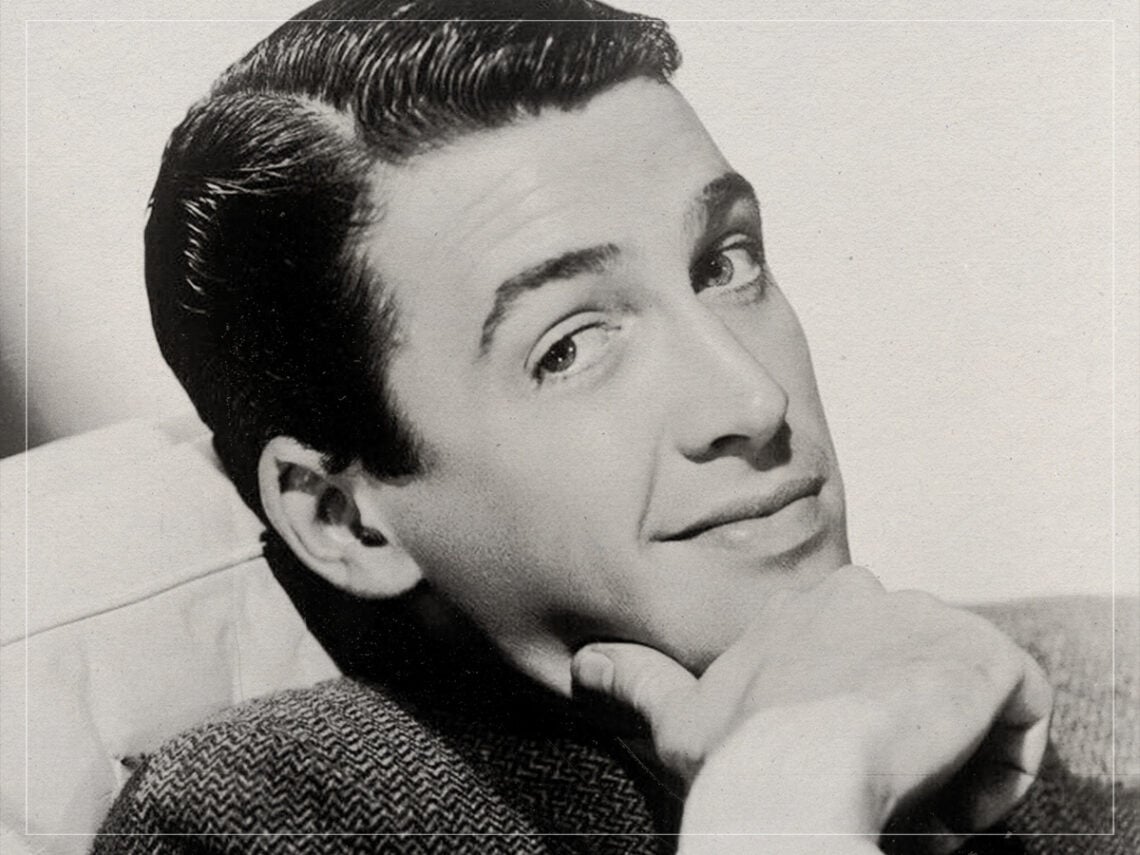
The nightmare role James Stewart called “the toughest job an actor ever had”

James Stewart was an undeniable icon of the New Hollywood era, appearing in everything from screwballs like The Philadelphia Story, festive staples such as It’s A Wonderful Life and The Shop Around the Corner, and a handful of Alfred Hitchcock classics.
With the latter, he found a solid creative partnership which would carry him through movies like Rear Window, Vertigo, and, most daringly, Rope. Released in 1948, Rope was a unique film for Hitchcock because he decided to experiment with the formal elements of the narrative, shooting the movie to appear as though it was one long, uninterrupted take.
To achieve this, cuts were seamlessly made so that audiences couldn’t tell that they weren’t actually watching one continuous take, although many long takes (much longer than the average scene) were still filmed. Based on the play of the same name, Hitchcock brings plenty of tension to this murderous tale, in which two friends host a dinner party while the corpse of a man is hidden in a trunk holding the spread of food on top.
It wasn’t going to be easy, but Hitchcock thought the film would work best if it condensed the action into this pressurised environment, where drama could give way at any minute. Confined to a small apartment, the array of guests, including Stewart’s Rupert, are unaware of their guests’ grisly ‘work of art’, as they put it.
However, Stewart found shooting the film a great challenge, and he reportedly claimed that he felt miscast in the role. He might’ve excelled more in the likes of Rear Window and Vertigo, but Stewart still gives an unforgettable turn in Rope, which has since been noted for being laden with homosexual undertones – something rather revolutionary for a movie made in the ‘40s.
According to Hitchcock, Stewart called the movie “the toughest job an actor ever had,” citing the fact that he “had to hang around the set 18 days before making a bona fide entrance for the rolling camera,” as part of the challenge.
Adding, “It was the final dress rehearsal for reel three in which Jimmy makes an entrance while Farley Granger is playing the piano. The piano stopped and silence ensued, as all eyes went to Stewart. He just made it into the room and was ready to open his mouth. ‘Just a minute,’ I said. ‘I’d like you to make your entrance differently.’ Jimmy punched the air in a defeated gesture. ‘Hey, look,’ he complained, ‘I’ve waited three weeks for this!’”
Stewart didn’t want to mess up his performance because that would mean having to do more takes, which isn’t easy when you’ve got other actors who all need to give equally good performances, too, so the pressure was on. Working in such a way certainly wasn’t the most ideal method of shooting a film, but Stewart put his faith in Hitchcock.
These long takes took their toll, some of which lasted up to ten minutes at a time. It’s one thing doing a take that long on stage, but when you know the performance is forever going to be immortalised on film, there’s a different kind of pressure at work. The actor didn’t necessarily regret the performance, but he certainly found it the most challenging role of his career.
