


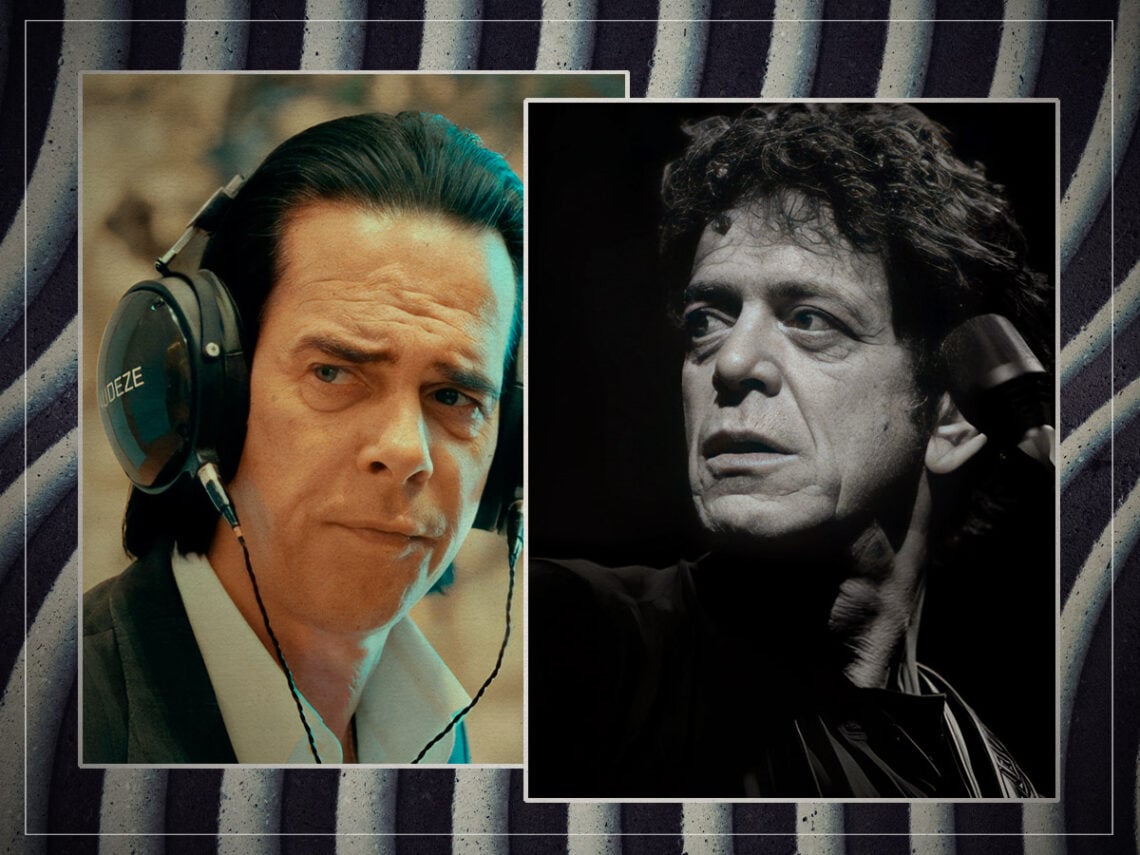
“Lou just wept”: the night Nick Cave brought Lou Reed to tears

Nick Cave is probably quite used to the idea of people tearing up to his music at this point. Over the course of his career, he’s released several astonishing albums with a sense of poignancy to them, with themes of grief, loss and existentialism pervading much of his most recent material following the loss of two of his sons.
However, it’s not exactly new territory for the Australian singer-songwriter to be exploring, and early on in his career with The Birthday Party and later with The Bad Seeds, he has always approached uncomfortable topics in ways that provoke a strong reaction from listeners. There are times when this has led to outright repulsion, and there are times when he’s even embraced joy in moments of pain and sadness, always eliciting responses in the extreme.
One of his greatest musical and lyrical influences has always been Lou Reed, and in the past, he’s lauded his hero for the way he always stuck to his artistic principles and never faltered when it came to pushing boundaries. In an interview for Channel 4 following the former Velvet Underground singer’s death in 2013, Cave said that “there was something that Lou started when he did his stuff, which was that kind of punk ethic that he still held true to himself until the end.”
In his later years, Reed himself would be someone who Cave brought to tears, although it wasn’t through one of Cave’s compositions that he welled up with emotions. In fact, it was Cave’s repurposing of a Velvet Underground classic that Reed felt emotionally raw from hearing, and the power that he felt in this new interpretation was something that he probably never expected to react to in such a way.
In 2011, while Cave and close collaborator Warren Ellis were working together on the soundtrack for the crime drama Lawless, which Cave also wrote the screenplay for, their producer, they had had the bright idea of encouraging bluegrass artist Ralph Stanley in to record a rendition of ‘White Light, White Heat’ for the closing credits. “Ralph Stanley was, to say the least, highly suspicious of the project,” Cave later revealed in his 2022 book, Faith, Hope and Carnage. “Ralph didn’t much like venturing out of his zone, shall we say.”
However, what Cave didn’t expect was for his producer, Hal Willner, to arrive at the studio along with Reed himself after having recorded Stanley’s parts, and his reaction was perhaps the greatest compliment that Cave could’ve received for his idea. “Warren and I were working in a studio in LA, and Hal comes in with Lou, and Lou sits down and we play him the Ralph Stanley version of ‘White Light, White Heat’,” Cave explained. “Lou just wept, right there on the sofa. It was such a beautiful, amazing moment, because we didn’t know Lou well at that time.”
As such a formative figure in Cave’s musical life, rendering Reed a quivering mess is perhaps not the exact way he would have expected to get to know him, but it would certainly have assisted them in establishing a much closer bond in Reed’s final years.
