


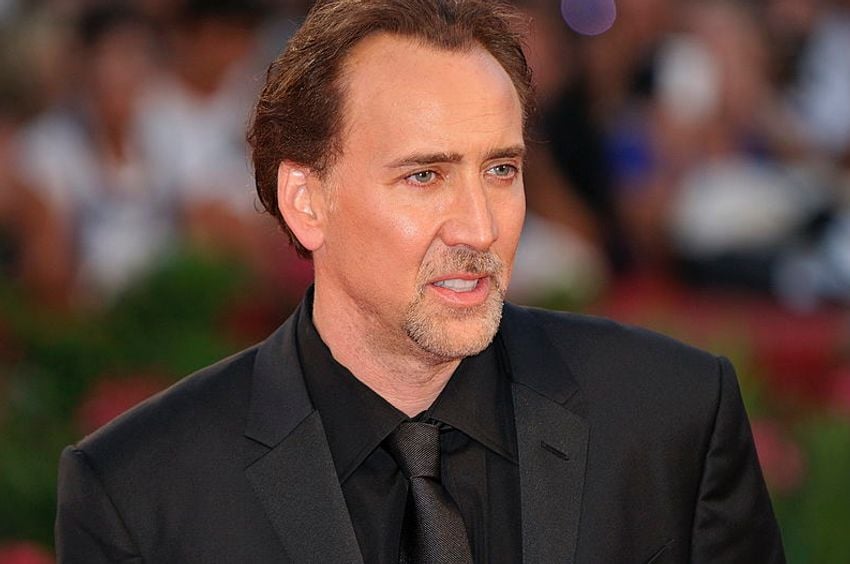
How Nicolas Cage channels famous pieces of art in his most iconic performances

Nicolas Cage has amassed a cult following since his career began in the 1980s. Journeying through critical successes, mainstream hits and career slumps, Cage’s status as one of mainstream cinema’s most unforgettable actors was solidified in 2022’s The Unbearable Weight of Massive Talent, where he played a fictionalised version of himself.
The nephew of Francis Ford Coppola, Cage changed his name after a bit-part role in the 1982 project Fast Times at Ridgemont High led to cast members constantly quoting his uncle’s films. Furthermore, despite starring in several of Coppola’s films early in his acting career, such as Rumble Fish and The Cotton Club, Cage didn’t want people to associate him with nepotism.
The late 1980s saw Cage give breakthrough performances in the Coen Brothers’ Raising Arizona and Norman Jewison’s Moonstruck alongside Cher, which earned him a Golden Globe nomination. When Cage starred in Vampire’s Kiss, the actor was criticised for his over-the-top performance, with The New York Times critic Vincent Canby arguing that the film was “dominated and destroyed by Mr. Cage’s chaotic, self-indulgent performance”. In response to such claims, Cage has said: “When they say that to me, I say, ‘You tell me where the top is and I’ll tell you whether or not I’m over it.'”
However, Cage’s extravagant performance was the perfect match for David Lynch’s Wild at Heart. The actor played the leading role of Sailor Ripley, who he described as “a kind of romantic Southern outlaw”. Furthermore, he claimed that he was “always attracted to those passionate, almost unbridled romantic characters, and Sailor had that more than any other role I’d played.”
When playing Sailor, Cage channelled what he called “art synchronicity,” which he has also used in other roles throughout his career. He said: “I was a big believer in something I called ‘art synchronicity’, which was that what you could do in one art form, you could do in another art form.”
Cage shared: “It was my aunt Talia Shire who first said to me, ‘Naturalism is a style.’ You can get abstract, you can get photorealistic, you can get impressionistic.” Therefore, the actor has experimented with different acting styles over the years, avoiding strict adherence to specific techniques such as naturalism.
“Stanislavski said the worst thing an actor can do is imitate,” he said. :Being a bit of a rebel, I wanted to break that rule. So I tried with Wild Heart a Warhol-like approach to the Sailor Ripley character.” Cage’s performance as Sailor is simply unforgettable, from his performance of ‘Love Me’ by Elvis Presley to his iconic line: “This is a snakeskin jacket! And for me, it’s a symbol of my individuality and my belief in personal freedom.” He claims that the “magnificent, iconic collages Andy Warhol would do with Elvis or James Dean” mainly influenced his performance.
Similarly, Cage has applied art synchronicity to other roles, such as Ghost Rider. He said: “I’d experiment with the effects of painting, like Edvard Munch’s ‘The Scream’. […] I’m definitely trying to channel that expression during the transformation scene.”
Adding: “In movies like Prisoners of the Ghost Land or even Face/Off or Vampire’s Kiss, I was experimenting with what I would like to call Western Kabuki or more Baroque or operatic style of film performance. Break free from the naturalism, so to speak, and express a larger way of performance.”
Cage’s unique approach to acting has essentially paid off. Despite some box-office bombs and critically-panned movies littering his filmography, his recent efforts, such as Pig and Mandy, have cemented his cult following.
