


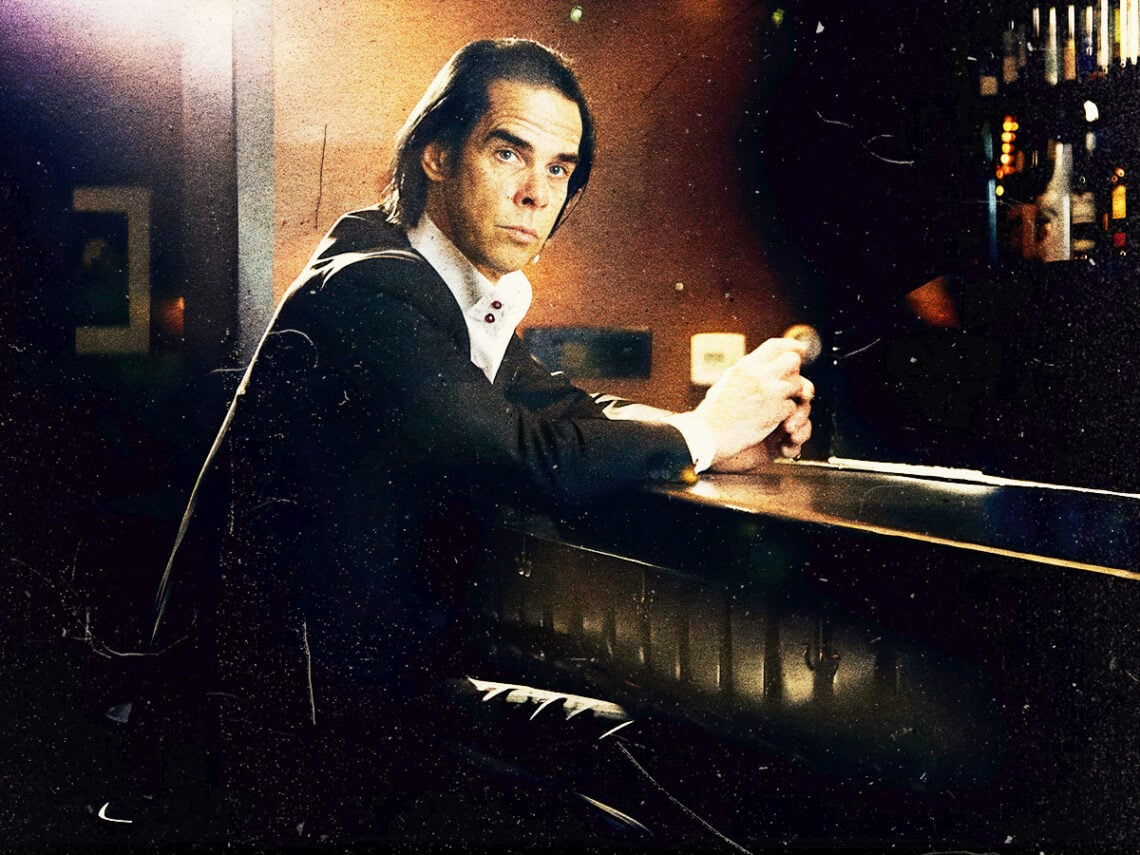
Nick Cave discusses his favourite poems

In the years following its emergence, the fusion of punk and poetry has effortlessly intertwined. Nick Cave, akin to trailblazers like Patti Smith, Lydia Lunch, and even John Cooper Clarke, contributes profound lyrical substance to a genre brimming with intense emotions.
During times of distress, Cave has become an unexpected source of counsel, offering words of wisdom akin to an unlikely agony uncle. Therefore, there are many instances where the Bad Seeds frontman has delved into his favourite poets and poems, shedding light on his creative inspirations. Cave’s approach to songwriting also often embodies a poetic sensibility, with his lyrics reflecting a rich depth of emotion, narrative complexity, and vivid imagery.
He values the power of language and the ability of poetry to evoke profound emotions and ideas. Cave’s fondness for poetry is evident in his songwriting and personal interests, and he has previously cited the likes of William Blake, Arthur Rimbaud, and John Berryman are among the poets he has previously discussed referenced in interviews and discussions.
Perhaps his appreciation for the art is also a reason why he finds it a challenge to narrow his favourites down to just one—when asked about his favourite poet or poem, he responded: “I don’t have a favourite poem as it changes daily. I do have three poets on the go at the moment, though, who are all bringing me an enormous amount of insight and pleasure.”
Those three poets included the Persian lyric poet Hafiz, “who my friend, the sculptor, Thomas Houseago, calls ‘the great trickster’,” along with Rainer Maria Rilke and Lucille Clifton, who was introduced to him by his “email-pal”, journalist Suzanne Moore.
“I now happily own a massive volume of Clifton’s collected works,” Cave admitted. “I read, at random, one of her amazing poems each day. New Year’s Day gave me this poem, and it couldn’t be more appropriate for me, as a writer who yet still feels that ‘early lunge toward language’.”
As a writer himself, he’s drawn to Clifton’s ‘The Birth of Language’, a profound piece of poetry that showcases Clifton’s ability to shape presence with abstract imagery as much as the words themselves. Beginning strongly with “and adam rose / fearful in the garden / without words / or the grass,” the piece is in perfect fitting with Cave’s love for deep art that warrants multiple revisits.
Cave also cherishes Duino Elegies, a collection of poems by Rilke, particularly one line where Rilke talks of his gifting spirit as a terrifying angel being “perilous behind the stars”. Discussing Hafiz, he explained that Houseago introduced him to Daniel Ladinsky’s book, A Year with Hafiz, which comprises a collection of poems by Hafiz himself. He shared one poignant line in particular where Hafiz “talks of his role as a poet to be little more than shaped potential brought alive by the creative spirit”, which is: “I am the hole in a flute that the Christ’s breath moves through.”
