


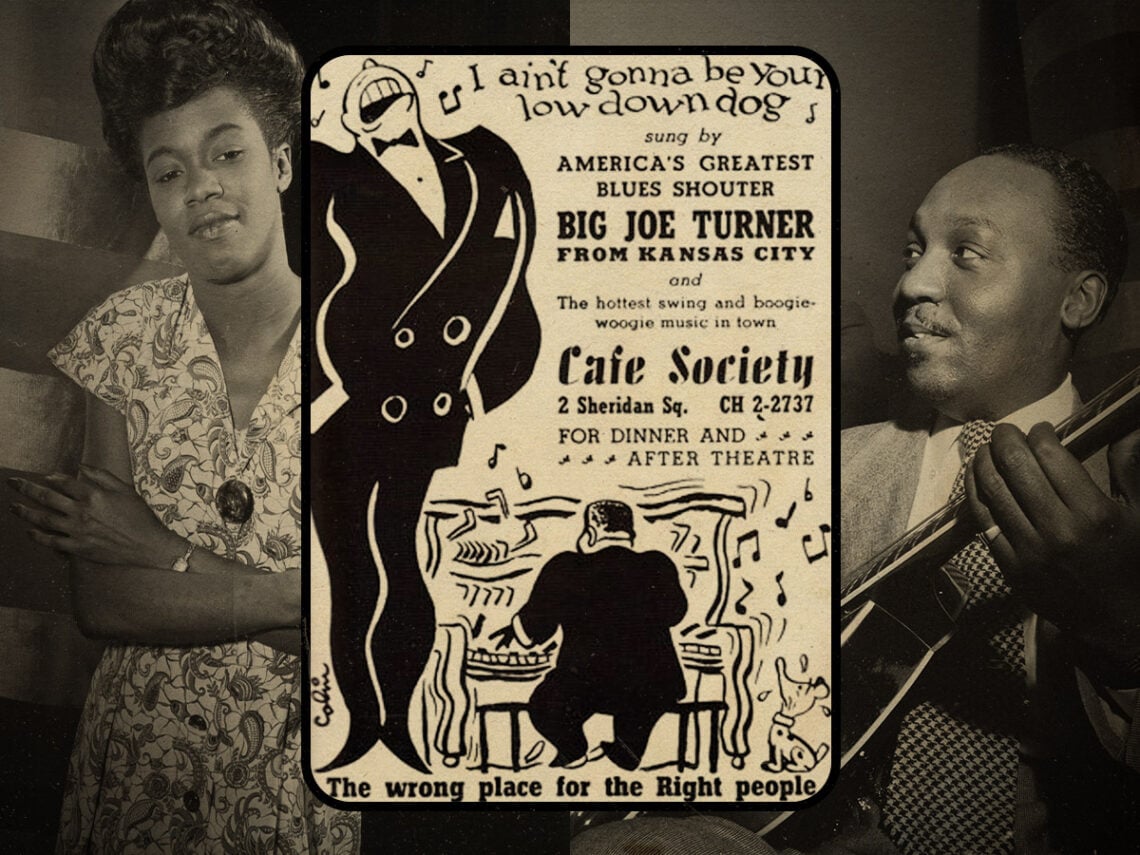
Cafe Society: the story of New York’s first integrated nightclub

The New York club scene is something shrouded in legend, hedonism, and a sense that anything at all can happen. That’s the way it always has been, and always will be.
While the perception of a forward-thinking utopia can have its certain limits, it’s not without precedent when it comes to the legacy of a venue like Cafe Society, where racial integration was not a fight left to the 1950s and ‘60s, but a norm that began all the way back in the 1930s. It really was that simple.
For Barney Josephson, the club’s founder, that mantra became clear to him after he had seen political cabaret shows across Berlin and Prague, and he wanted to transfer that vision of society right into the heart of the States. And what better way to do it than the methods of blues and jazz?
Of course, the obvious statement in this was that those genres hinged on the heart of Black culture, but that was the whole plan that Josephson was gearing towards. His aim was not to change the world, but just to make the point of integration known through the power of music, because there are few tools more powerful.
Cafe Society certainly was bold in its approach – between its name poking fun at the elite of the city, and its tagline being “The wrong place for the Right people,” the capitalisation of the letter ‘R’ being completely intentional so as to display the club’s left-leaning political stance. It was a sensation and, naturally, word quickly spread.
This did not mean, however, that the founders of Cafe Society totally knew what they were doing. It was worth remembering that Josephson had come from the shoe trade, had no experience of running a club, and had borrowed $6,000 to even open the Greenwich Village space. Getting artists through the door was yet another hurdle.
Yet by virtue of having the gift of the gab and a subtle way of making connections, Josephson was introduced to John Hammond, an instrumental figure in producing and sourcing Black musicians, having already masterminded Billie Holiday’s first record. As such, in search of a platform for his artists, he was all too happy to send them to Cafe Society.

Subsequently, the things that went down there over the years were the stuff of legend. Holiday was handed the lyrics to ‘Strange Fruit’ in those halls for the very first time, performed it, and made it into a major powerhouse hit. Sister Rosetta Tharpe was a regular performer there, as was Joe Sullivan and a legion of others.
And although Cafe Society was not immune to its hardships, between financial battles and new locations, its legacy was one of inclusion, unity, and harmony well before its time. In many ways, as much as its haphazard approach to business could have been a recipe for disaster, it created a charm and allure that, in turn, also became an artistic hotbed. Cafe Society represented a better version of society than anyone could have ever imagined.
