


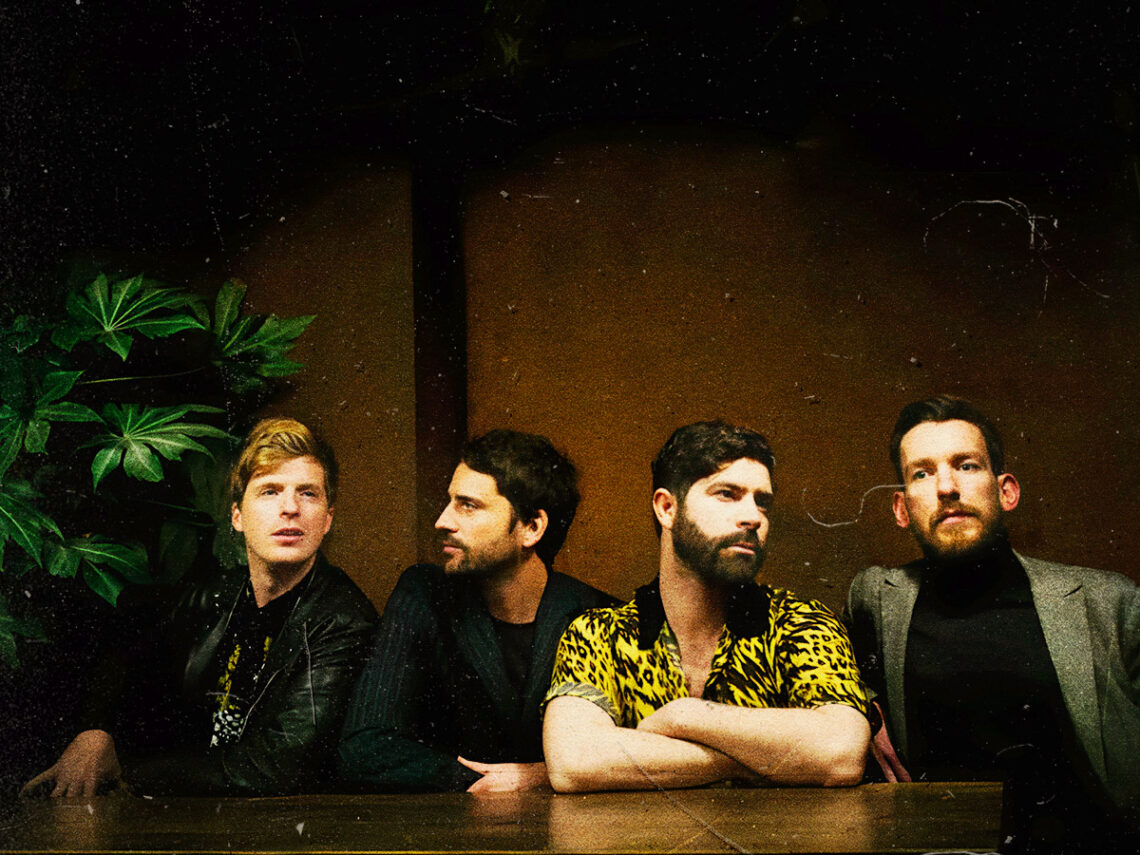
‘Neptune’: The Foals song described as an “out of body experience”

When British rock band Foals released Everything Not Saved Will Be Lost: Part 2 in 2019, it marked a stark departure from the project’s first installment and a venture into the more charged realm of paranoia-infused energetic rock.
This kind of immediacy was something the band signposted in the buildup with three lead singles, ‘The Runner’, ‘Black Bull’, and ‘Into The Surf’. ‘The Runner’, in particular, speaks for itself – the song leaves no room for any sort of slow burn with its indie-banger gravitational pull showcased from the outset.
The album also achieved a significant milestone by clinching the number one position on the UK albums chart, a feat made all the more intriguing by the fact that this accomplishment coincides with the album’s status as arguably one of their most daring and experimental endeavours.
Spanning over ten minutes and 18 seconds, the album’s closing track ‘Neptune’ stands as one of the band’s most audacious and exploratory compositions to date. Amidst the ethereal embrace of psychedelic synthesisers and layered backing vocals, a raw and unfiltered jam takes centre stage — an artistic experiment where the band delved into various sonic avenues before converging upon the definitive incarnation of the song. This culmination births a track that not only serves as the album’s climactic conclusion but also encapsulates Foals’ current sonic palette and the interplay of conceptual ideas that define the entire project.
The music video for ‘Neptune’ highlights this venture into the realm of the otherworldly, underscored by bold cinematography that captures the inherent paradoxes of beauty. It unfolds as a sequence of prolonged shots meticulously orchestrated by East and Foals’ frontman Yannis Philippakis. This visual journey is designed to accentuate not only the song’s crescendo but also to mirror the overarching climax of the entire album.
‘Neptune’ actually explores Philippakis’ own Greek heritage fictitiously via finding refuge on Neptune, alongside the longing to get away from the UK and its “white wards”. He explained: “It’s a kind of out-of-body experience where you’re leaving behind all the mess; there’s a sense of inescapable fate to it, where you’re wanting to pass on into a place that’s away from all this. And then whatever happens next, whether it’s in another record or whatever, will be what happens next. It felt like a fitting way to end a long journey.”
That isn’t the only theme touched upon, however: Philippakis also drew from notions of a digital afterlife and the morbidity and immortality of leaving behind social media accounts after death. “I got interested in when people die and their social media accounts are still there,” he told NME. “There’s something ghoulish but also immortal about that.”
Above all, however, ‘Neptune’ stands as an exercise in delving into apocalyptic motifs, each theme converging under this overarching notion. The accompanying music video artfully waltzes between contrasting aesthetics, all while cloaked in the veil of a world teetering on the edge of apocalyptic demise. The juxtaposition of blazing fires against the backdrop of serene natural beauty conjures a powerful visual paradox, and deep within the wider musical tapestry, the sense of urgency becomes abundantly clear.
A beautiful re-recorded version of the song was created by Foals and Hans Zimmer’s company Bleeding Fingers for BBC Earth’s TV series Universe, culminating in the profoundly transformed arrangement of the song — one that embraced a heightened level of drama, characterised by a slower tempo and stripped-back instrumental.
This further showcased the song’s inherent alignment with concepts extending beyond the terrestrial realm, coupled with the acute urgency associated with a planet in distress. “The original is a bit of a mini odyssey,” said Philippakis. “[This] version builds on those dynamics as a kind of response to the changing nature of space.”
