


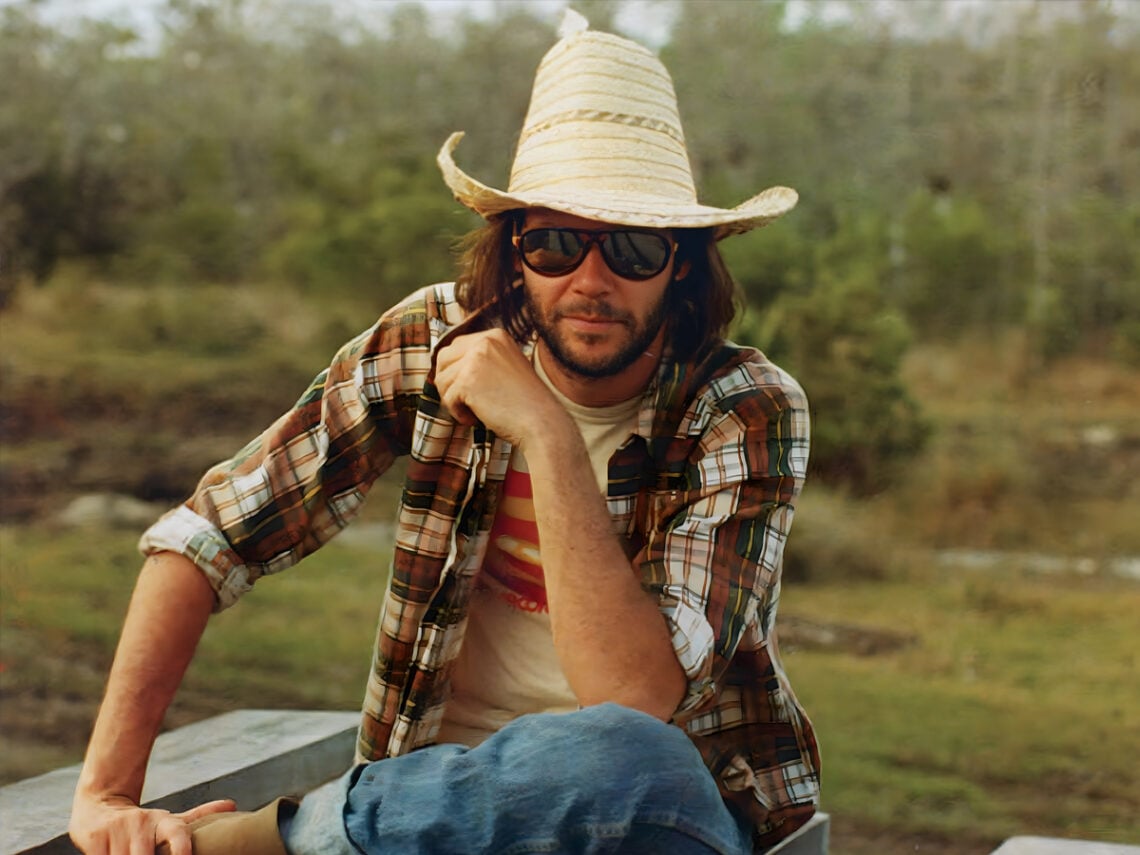
The frontman Neil Young thinks revitalised rock music: “I like what he did to people”

For more than a few decades, Neil Young can be considered one of rock music’s unstoppable agitators.
In recent years, he has found himself at the centre of large-scale disputes with people like Joe Rogan, Spotify and Glastonbury Festival, as he has refused to compromise on his values. But that was just the tail end of his issues. Young has also found himself arguing with his record label and even calling out MTV during the channel’s dominant peak.
The truth is, if you were to pick out a classic rock artist as the ultimate punk, then Young might well be high on your list of candidates. But for young himself, there was another frontman who perhaps takes that accolade, and it is a name you might expect: John Lydon, or as he is more professionally known, the Sex Pistols’ own Johnny Rotten.
They might seem poles apart, but Neil Young and Johnny Rotten have far more in common than you’d think. While their sonic sensibilities are on opposite sides of the rock ‘n’ roll spectrum, with the Sex Pistols’ high-octane brand of punk casting sneering looks at Young’s folk balladry from across the great divide, both Rotten and Young have always regarded music with the same kind of reverence, treating it as an essential aspect of societal development and political upset.
When Rotten burst onto the scene with the Sex Pistols, he made his raison d’être perfectly clear: he was here to destroy. By the mid-1970s, the hippie idealism of the countercultural age had been reduced to its most superficial aspects – the optimism that had once motivated young people to take to the street and seek change had been replaced by contentment and entitlement.

All around him, Rotten saw apathy and placidity. Nowhere were these traits more noticeable than in the world of music, where the leading figures of the rock ‘n’ roll age had grown fat on their own bloated egos. Like Rotten, Young never had much time for the posturing of his contemporaries, so when the likes of Sex Pistols came stumbling through the metaphorical door, outing members of the rock establishment for the sluggish oafs they were, he found himself quietly applauding their efforts.
After the punk age dissolved, crushed by its own destructive sensibilities, Young looked back on the essential role Johnny Rotten had played in revitalising the world of rock ‘n’ roll: “I never met Johnny Rotten, but I like what he did to people,” he began. “He pissed off a lot of people who I think needed waking up. Rock ‘n’ roll people, who in the ’70s were asleep and thinking they were just so fucking cool and they knew what had to happen. They were telling me why don’t you make a real record.”
For Young, the brilliance of Rotten was that he bought music back to the bare essentials, trimming away the glamour and excess that had come to define the rock scene to leave a lean cut of pure musical expression. In this sense, Rotten helped to bring music back to the “four chords and the truth” mentality that Young and other folk musicians of the early ’60s had lived and breathed.
“People became aware that there was more to it than perfection and overdubs, and fucking equipment and limousines back and forth to Studio B, and the other group down the hall and getting high in the bathroom with the other group that’s going in and singing on their record,” Young recalled with no small hint of disgust. “That’s not intense enough for me”.
So while he was more than capable of changing pace on his contemporaries, it took someone like Rotten, a fresh-faced and foul-mouthed newbie, to come in and really shake up the rock spectrum. While the Sex Pistols would only release one record, their influence would shape countless bands and send reverberations across the musical world. After he scowled and sang, it was clear, nothing would be the same again.
Young paid tribute to Rotten with his song ‘My My, Hey Hey (Out of the Blue)’. In the track, Young sings, “The king is gone but he’s not forgotten,” before backing vocals quietly chant “Johnny Rotten, Johnny Rotten” — which can be linked to the death of Elvis in 1977 and how Johnny Rotten was the new face of music in the months that followed. The next line sees Young ask, “Is this the story of Johnny Rotten?” which is deliberately open-ended and, of course, can be interpreted in numerous different ways. This is then followed up by Young delivering the infamous line of, “It’s better to burn out ’cause rust never sleeps,” before repeating that, “The king is gone but he’s not forgotten”.

Never Miss A Beat
The Far Out Punk Newsletter
All the latest Punk content from the independent voice of culture.
Straight to your inbox.