


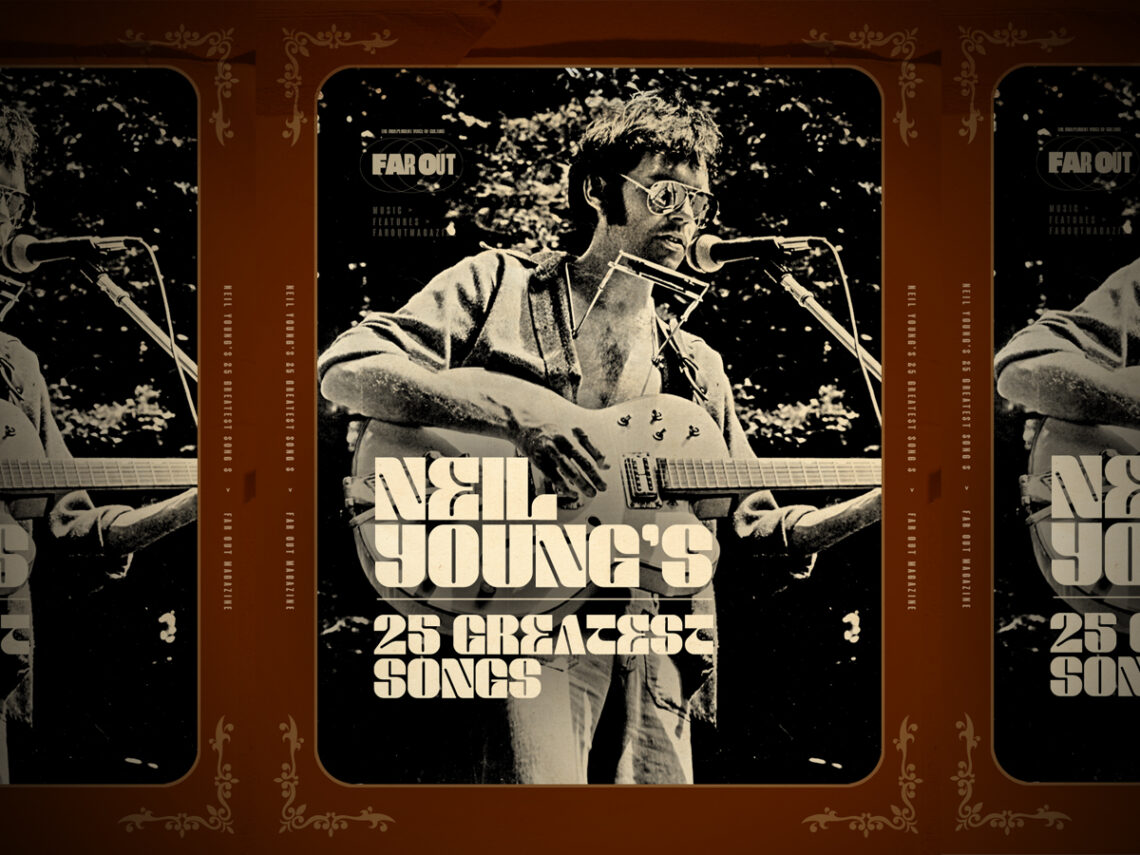
The 25 greatest Neil Young songs

“The thing about my music is, there really is no point.” — Neil Young
To have spent over five decades at the top of the rock world is a feat not many artists can achieve. Neil Young has done it not with gimmicks or pop prowess but by continuously writing songs which are deliberate, artistic and authentic. There are few artists that feel as genuine as Neil Young.
His willingness to sacrifice himself in the pursuit of what he defines as the only avenue for his work is worth celebrating. Whether it is MTV, BBC, Glastonbury Festival or even his own record label, Young has rarely allowed anyone to control his music. It is a reminder for all artists to allow their work to speak for itself.
Hardly any artists have been as prolific as Neil Young in their career. Never deterred by workload or expectation, Young has always been his own master and has made sure that everything he has done has been an accurate reflection of him. Whether that’s being involved with Farm Aid from the beginning or working hard for The Bridge School, Young is normally the ageing rocker who makes you feel good about rock and roll.
“I don’t like to be labelled, to be anything. I’ve made the mistake before myself of labelling my music, but it’s counter-productive,” Young once said in a quote which typifies his approach to music. “The thing about my music is, there really is no point,” he added, nonchalantly. “I just do what I do. I like to make music.”
Taking a look at his back catalogue and you can see both how and why Young garnered so many fans during his time in the limelight. Neil Young has become a legend all on his own work, and below we’ve got the 25 songs which act as the greatest of his career.
The 25 best Neil Young songs:
‘Hitchiker’

As with every icon of the 1960s, as the decades passed, it became harder and harder for Young’s new albums to be as revered as his previous LPs. However, when he released Le Noise in 2010, Young powered out some of his best work, including ‘Hitchhiker’. Built out of echoing vocals and a killer lead line, the song is blended with alt-rock sensibilities and acts as one of his most visceral stories.
A song about Young’s life, and the drugs he’s taken along the way, the track was originally conceptualised in the 1970s before being shelved for decades. Often thought of as the blueprint for ‘Like An Inca’, the song is a bellowing reminder of Young’s powerhouse beginnings.
‘Stringman’
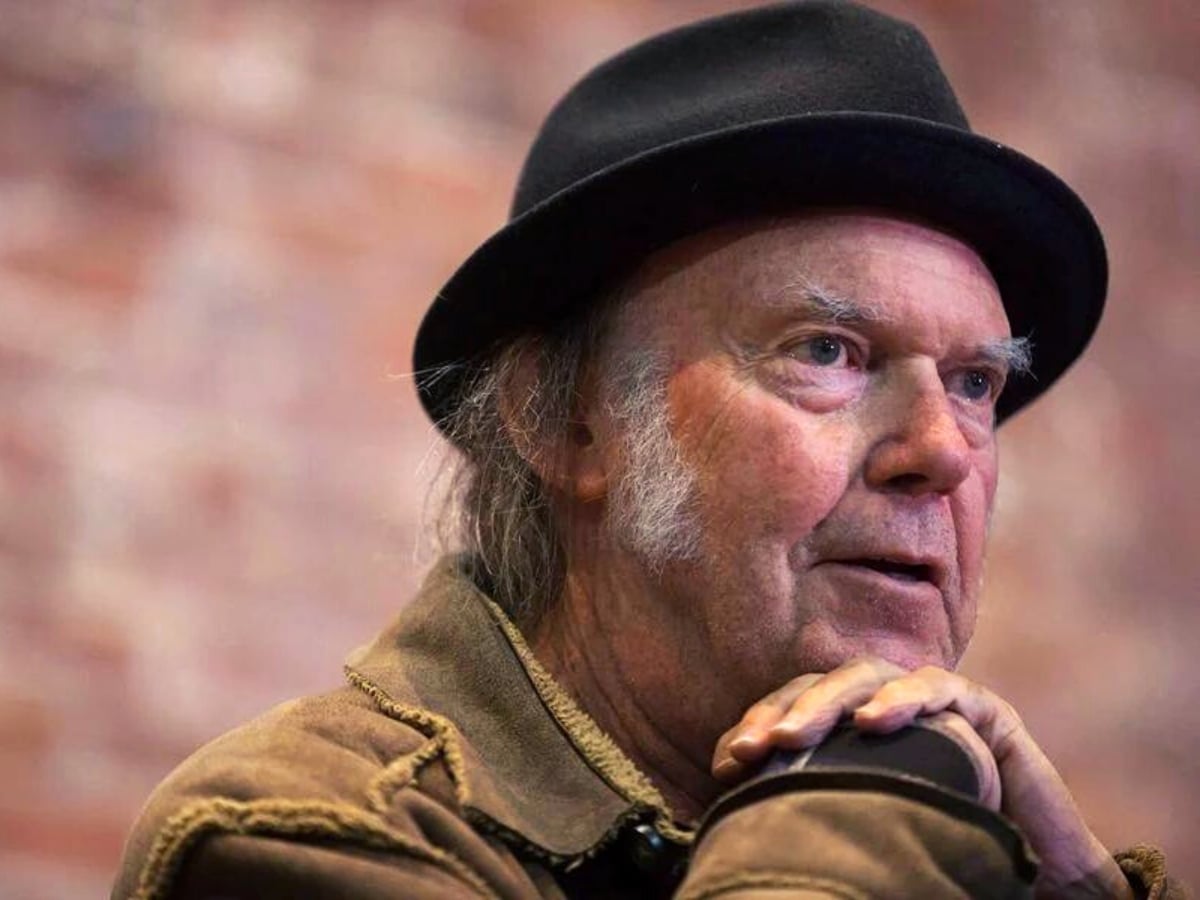
First delivered as part of his 1993 Unplugged session, Young’s song ‘Stringman’ is an undoubted fan-favourite. Written for bandmate and friend Jack Nietzsche during the dissolution of his marriage, Young was rarely in a better pocket for songwriting than when despair entered the room. A simple piano ballad, the tenderness of Young’s lyrics and the broken, shallow softness of his vocal are what triumph here.
The song was given a proper home in 2007 as part of Chrome Dreams II — a sequel to another unreleased record Chrome Dreams from 1977 and has been widely adored ever since, despite being only aired on the rarest of occasions in a live forum.
‘Tired Eyes’

Taken from Tonight’s the Night from 1975, ‘Tired Eyes’ is one of Young’s lesser-known tracks but its volatile exorcism of Young’s past demons means it is an integral piece of his iconography.
The song also acts as a celebration of the life of Bruce Berry and Danny Whitten both of whom Young had a connection that was now lost. Another condemnation of the drug culture that was sweeping away his friends so easily. Vocally, it is one of Young’s very best.
‘Ordinary People’

A long-time live staple for Young fans ever since the late 1980s the track ‘Ordinary People’ finally got its full release in 2007 and took up much of side three of Chrome Dreams II doing it.
At 18 minutes long, the length of the track is somehow more than justified. It sees Young open fire on several areas of society, most notably, Ronald Reagan. Young takes aim at the former President’s administration over nine verses of visceral imagery which depicts ordinary people coping with the financial hardship his administration presided over.
Between these real stories, Young comes alive with his powerful and shaking guitar solos. It’s like the songwriter is using his instrument to fire lasers across the waves toward the White House. Young sings proudly, “I got faith in the regular kind/ Hard-workin’ people/ Patch-of-ground people,” and you believe every single word of it.
‘L.A.’

Neil Young loves to canonise a city within a song. Some are odes to the people who inhabit them, and some of them, including ‘L.A.’, are just pure acerbic wit. This track featured as part of Young’s famed, disastrous 1973 tour and is now locked away in the classic live album Time Fades Away as one of the record’s highlights.
Despite being rarely given an outing on the live circuit, save its appearance a the Los Angeles Forum in 2015, the song has become a deep-cut worth diving for. Written about a locationally specific apocalypse affecting the “city in the smog”, the track has divided fans. Whether you believe in Young’s musings or categorise them as self-righteous ramblings, it’s hard to deny the potency of the song within which they are contained.
‘Alabama’

Neil Young has never been afraid to throw a few haymakers every so often and he took aim at America’s deep south on this track. Accompanied with ‘Southern Man’, these two songs, a scathing indictment on the South, became inspirational singles.
The songs are deep and cutting, but they also helped to inspire Lynyrd Skynyrd’s song ‘Sweet Home Alabama’. Though the feud between them was overhyped, it’s clear that for a brief period, some strict battle lines were drawn. Thankfully, both sides of the conflict laid down their arms fairly quickly, but we do have some great tracks to enjoy because of it.
‘Don’t Be Denied’

Time Fades Away is full of classic tracks. At the time, the 1973 tour, was derided for being too full of new songs, leaving audiences angry at the lack of attention paid to the hits. However, where they may have lost out, the live album that followed the tour is positively brimming with the roughest of diamonds. ‘Don’t Be Denied’ is one of those gems that need a little polishing but, soon enough, shines brighter than most.
A track as brutal as the divorce it describes, it ranks as one of Young’s most heart-achingly honest songs. Written about his parents’ divorce, the track is authentic and painful at every turn. The visceral imagery is mirrored in Young’s usually sweet vocal souring with every new line. Few artists are able to turn youthful frustration into a timeless classic, but Young achieves it here with aplomb.
‘Cortez the Killer’

While the destruction of the Aztec Empire may not be the first pool of content one drinks from, the way Neil Young presents the story is simply magnetic. One cannot pull away from the epic storylines Young creates with his guitar.
Often thought of as an allegory for Young’s wild lifestyle of the time, the song is famous for cutting itself off after a circuit blew seven minutes into the legendary jam. But we’d say that the break was the perfect climactic ending.
‘Like a Hurricane’

One of Young’s most underappreciated weapons in his arsenal is his canny ability to find a groove and stick in it. On ‘Like A Hurricane’ he does just that as he and Crazy Horse going riding off into a tornado of feisty tunes and expert licks.
The band are the real winners here as they take this otherwise somewhat banal track and turn it into a show-stopper. Crazy Horse at full gallop were not an animal to be messed with and, just to top it off, Neil Young then arrives on his own stallion to deliver a guitar solo for the ages. Truly magnificent stuff.
‘Harvest Moon’

The sequel to Neil Young’s seminal album, 1972 classic Harvest, saw the songwriter welcome back the same studio band who had helped him cultivate his sound some twenty years prior. He even invited Linda Ronstadt and James Taylor to contribute backing vocals as they had done before.
Not often cited as one of Young’s greatest tracks, we’ve picked it in his most definitive songs because of the moment of reflection it provides. Allowing Young to look back at his previous work provides a powerful and succinct statement, the singer couldn’t have done it without the love of his friends and family.
As such, the song is dedicated to his then-wife Pegi Young. The video sees he and Pegi dancing in the middle of a bar and works as the perfect moment of respite in Young’s back catalogue.
‘Cowgirl in the Sand’

One of the songs Neil Young wrote while struggling with an incessant fever, ‘Cowgirl in the Sand’ is a true tour de force despite being a comparatively unknown song. It is a searing moment of Neil Young’s repertoire, largely because of the wrenching guitar from Danny Whitten.
“Nobody played guitar with me like that,” Young says of the guitarist, who passed away after a heroin overdose in 1972. “That rhythm, when you listen to ‘Cowgirl In The Sand’, he keeps changing. Billy and Ralph will get into a groove and everything will be going along and all of a sudden Danny’ll start doing something else.
“He just led those guys from one groove to another, all within the same groove. So when I played those long guitar solos, it seemed like they weren’t all that long, that I was making all these changes, when in reality what was changing was not one thing but the whole band. Danny was the key. A really great second guitar player, the perfect counterpoint to everything else that was happening.”
‘Rockin’ in the Free World’

Quite possibly one of Young’s most famous compositions came about in curious circumstances. Young had spent the previous decade being deliberately obtuse, even provoking his record company to sue him for releasing music that was “un-representative of Neil Young”.
Naturally, as the singer tends to do, he bounced back and delivered one of his standout albums of all time, Freedom and his most commercial single too in ‘Rockin’ in the Free World’.
It’s not his finest work, and certainly has the distinct vibe of a divorced dad about it, but his Glastonbury performance in 2025 proves it’s hard not to tap along. Really, that’s what music should be about, too, right? It doesn’t have to make a lot of sense, so long as it gets you moving as one.
‘Sugar Mountain’

Even when Neil Young was a young man he was worried about getting old. This one is a bittersweet affair which laments the loss of innocence and the fleeting expression of youth. What’s more, Young wrote the song when he was only 19.
It helped to inspire another Canadian by the name of Joni Mitchell who, in turn, wrote ‘The Circle Game’ about her pal Neil Young. Mitchell would also be integral in introducing Young to a future bandmate by the name of David Crosby.
The song remains a triumph and a tribute to youth. A young man lamenting his passing years feels all the more powerful now when sung by the octogenarian.
‘On the Beach’

The title track from 1974’s On The Beach is one of the most gorgeously understated pieces of Young’s canon. Lilting and delicate, his guitar adds a reflective tone that is unmatched in any of Young’s other work and does a fine job of running parallel to his unique vocal.
“I need a crowd of people, but I can’t face them day to day,” sings Young, showing the deep disillusionment he was suffering from. The music industry had taken a lot from Young over the prior ten years, and it is clear he was exasperated but still incredibly talented.
It’s a fuller sound than he had delivered previously and captured Young as he began a descent into the depths of his artistic endeavour. But as the world got a little darker for Young, he delivered some of his shining work.
‘Down by the River’
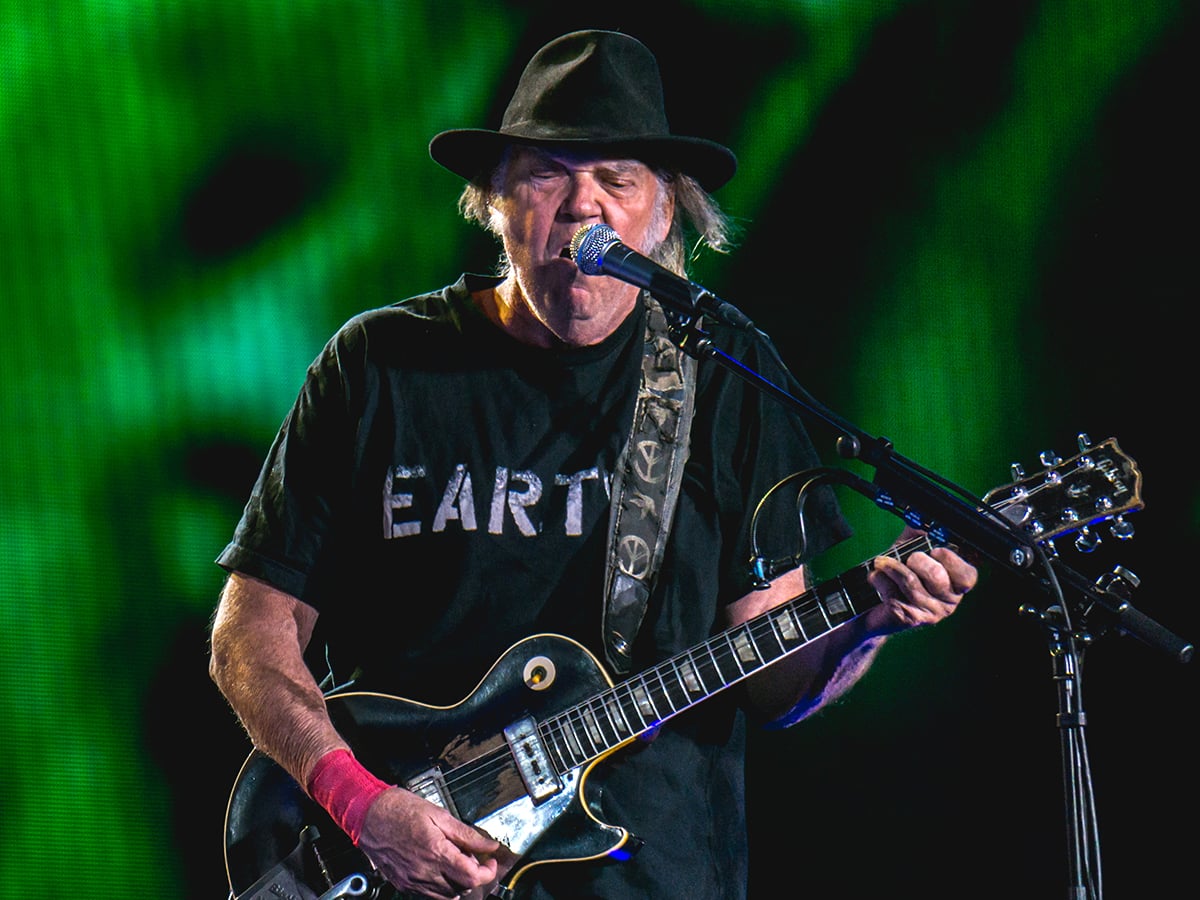
One of Young’s most arresting pieces, ‘Down By The River’, taken from Everybody Knows This Is Nowhere is a nine-minute murder ballad and sees Young beginning to flower properly as one of the finest songwriters of his generation.
It’s also one of Young’s finest moments on guitar, too. Using ‘Old Black’ a faithful Les Paul, Young delivers some laconic yet searing licks and completes a fantastic track with it. It’s a reminder of just how purposeful a player can be.
In the decadxes to come their would be better guitarists, but Young has always managed to keep a sincerity to his performances that make his tone one of the most coveted around. It’s typified in this tune, excellently embellished by his lyrical dexterity.
‘Hey Hey, My My (Out of the Blue)’

When critics began to claim Neil Young was past his expiration date in the late-1970s, the singer wouldn’t take it lying down. Instead, he sharpened his pencil and scrawled one of his most vicious songs.
Or should we say most Rotten? The song was certainly inspired by the Sex Pistols frontman Johnny Rotten and even included the line “It’s better to burn out than fade away,” something Kurt Cobain would later include in his suicide note.
While it’s iconic status has often seen it placed within the top categories of Young’s work, it shouldn;t be forgotten that the structure of the tune is equally as impactful as its legacy. It’s Young incarnate: delicately balanced between heaven and hell.
‘Needle and the Damage is Done’

Taken from 1972’ Harvest, this is quite possibly the greatest anti-drug song you’ll ever hear. Potent, poignant and poetic in every note, the track is wreathed with heartfelt expression. Considering it was written in the early seventies, the idea of such a track was a dicey affair. Inspired by Danny Whitten’s heroin addiction.
Young has often claimed Whitten to have been his musical soulmate but Whitten’s addiction got the better of him and he succumbed to an overdose on the night Young fired him from his touring band.
That pain that must have coarsed through Young’s body is perfectly capturd within this tender track. Aside from that emotion, the tune really showcases Young;s ability to write about a wide range of subjects with a veracious poignancy.
‘Only Love Can Break Your Heart’

Unlike many of his contemporaries, Young never really tried to put on the air of a rock and roller. Largely because he inherently was one.
When you’ve been moulded by the shape of rock then you don’t find the need to try and match up to it. That fact allowed Young’s vocals to remain delicate and vulnerable, even when he was singing songs he had written for other people, like the beautiful ballad he penned for Graham Nash.
It also allowed for songs like the beautiful ‘Only Love Can Break Your Heart’ from the 1970s After The Gold Rush to be given the charming performance they deserved. One of Young’s most widely covered songs, the track has risen beyond his rock star status and is fast becoming an American standard.
‘Powderfinger’

It’s not often that rock and roll can create songs about such unattainable things as Neil Young consistently does. On ‘Powderfinger’, somehow, Young takes us all on a vivid and imagined trip to the bootlegging backwaters of old America and the frightening feeling of isolation.
The premise of the song is that the family of bootleggers, living out near the river, can see a police boat making its way to their house. A Young man is expected to lead the family because “Daddy’s gone” and “brother’s out hunting in the mountains” while “Big John’s been drinking since the river took Emmy-Lou.” The young man stands on the deck when the boat begins firing at him as he raises his own rifle to shoot the gun backfires and kills him instantly.
The fact that Young can seamlessly integrate such a vibrant and unusual story into his music and still wrap it up in one of the most vulnerable and touching melodies is proof of his unstoppable talent.
‘The Last Trip to Tulsa’

In many ways, Neil Young is a traditional songwriter. His viewpoints may have seemed challenging at times, but the construction of his songs is comparatively timeless. However, that all changed with ‘The Last Trip to Tulsa’. The song ranks as one of Young’s most unusual compositions.
Featuring on his 1968 self-titled album, Young is in an experimental mood as he sings, “So I unlocked your mind, you know/ To see what I could see/ If you guarantee the postage/ I’ll mail you back the key”. It is here that comprehension of the song ends. Young seems to refer to many past lives he’s led, with perhaps subtle references to LSD also finding their way into the lyric sheet. However, it’s on our list because it provides a unique view of Young — for an artist so keen to wear his heart on his sleeve, this remains one of his most indistinguishable numbers.
‘Ambulance Blues’
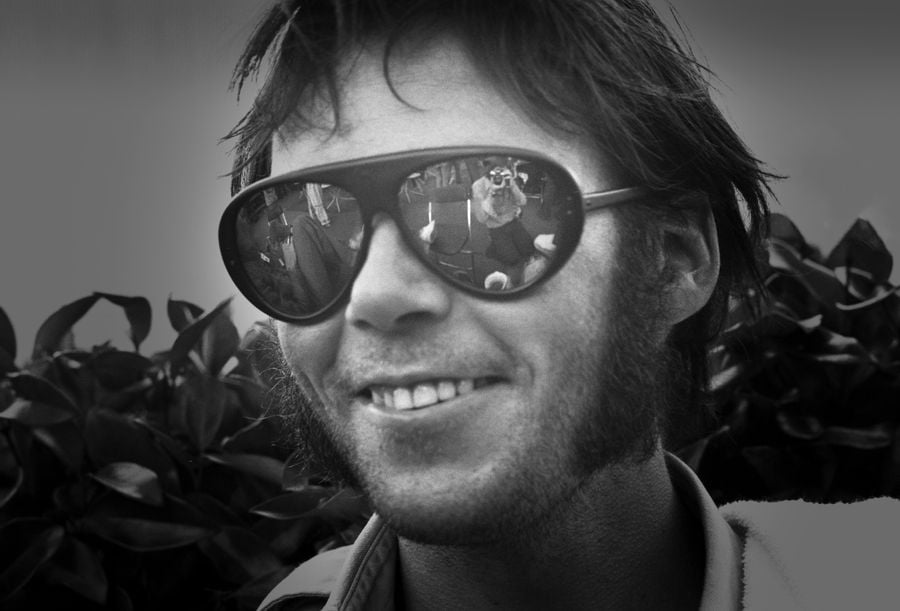
Sometimes music can be heavily constructed and mapped out, it can often achieve the fullest sound possible. But sometimes you just have to let a genius run off with their own thoughts and come back with their song. That’s exactly what happened on 1974’s ‘Ambulance Blues’.
Young goes on a rambling run around the houses with his acoustic guitar on this one. Speaking about his early bands as well as the critics who tried to stop them, the singer begins to detail the world around him with a curious incision. Singing about president Richard Nixon, he sings: “I never knew a man could tell so many lies/ He had a different story for every set of lies”.
It’s clear that Young was at his peak, able to deliver the kind of cut-through that only flaming blades could achieve.
‘Heart of Gold’

If one song sealed Neil Young’s transformation from counter-culture stalwart to a new rock and roll poster boy then it has to be ‘Heart of Gold’. Another brilliant song from the Harvest album, which could have easily dominated this list, sees Young transcend rock and roll and turn pop, if only for a short while.
Featuring backing vocals from none other than James Taylor and Linda Ronstadt, the song shot Young into stardom and was later despised by the songwriter. It’s a song that Bob Dylan saw as purposely copying him: “The only time it bothered me that someone sounded like me was when I was living in Phoenix, Arizona, in about ’72 and the big song at the time was ‘Heart of Gold’,” he once commented.
“I used to hate it when it came on the radio. I always liked Neil Young, but it bothered me every time I listened to ‘Heart of Gold.’ I think it was up at number one for a long time, and I’d say, ‘Shit, that’s me. If it sounds like me, it should as well be me’.” It’s a sentiment Young shared in his famous 1977 liner notes for compilation album Decade, saying: “This song put me in the middle of the road. Travelling there soon became a bore so I headed for the ditch. A rougher ride but I saw more interesting people there.”
‘Old Man’
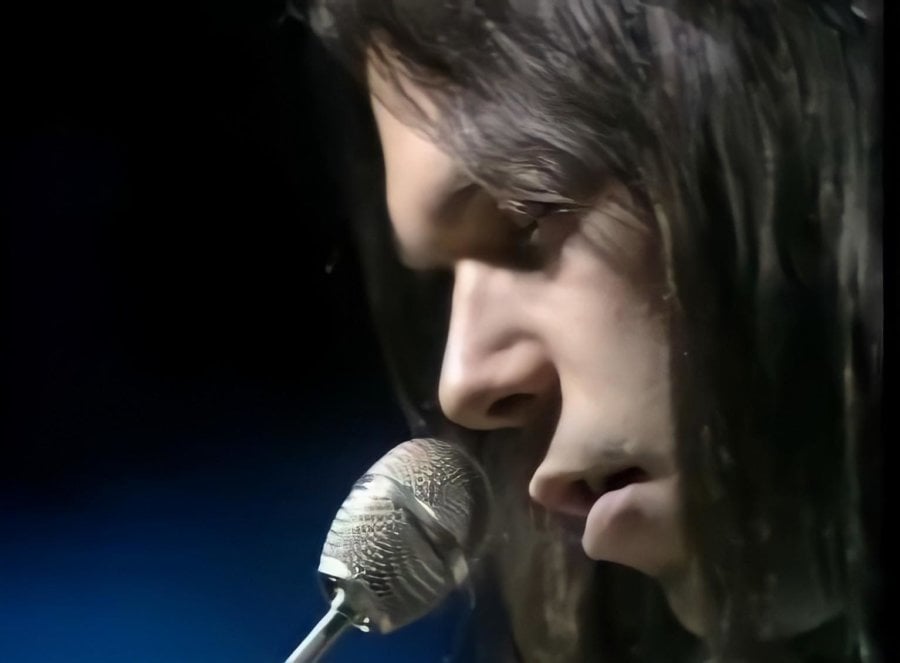
By 1970, Young had shaken off the shackles of working within Buffalo Springfield and was quickly marking himself out as a contender for the title of America’s songwriter. It was during this time that Young made the move and bought a plot of land in Northern California and turned it into Broken Arrow Ranch, where he still lives to this day.
When he was buying a plot of land he met Louis Avila, who showed him around the estate: “Louis took me for a ride in this blue Jeep,” Young said in 2005.
“He gets me up there on the top side of the place, and there’s this lake up there that fed all the pastures, and he says, ‘Well, tell me, how does a young man like yourself have enough money to buy a place like this?’ And I said, ‘Well, just lucky, Louie, just real lucky.’ And he said, ‘Well, that’s the darndest thing I ever heard.’ And I wrote this song for him.”
Despite Young now being older than Avila was in the song, the track still feels as ageless and timeless as when he first wrote it. This is pure Youngian lyricism at its finest.
‘Cinnamon Girl’
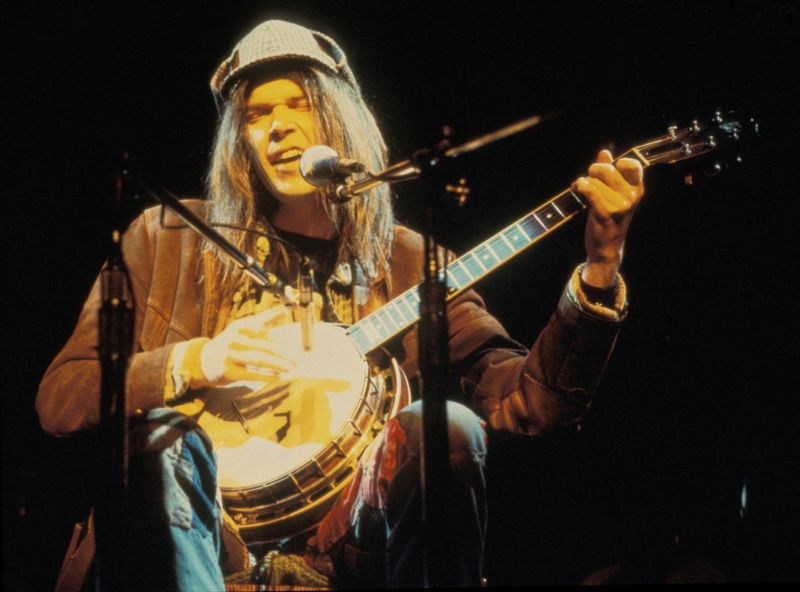
Only a songwriter like Neil Young could pull off a song like ‘Cinnamon Girl’. The track has long been touted as one of the tracks he wrote while suffering from a fever and it begs the question—what kind of incredible songs was he writing when he was well?
‘Cinnamon Girl’ was the first track to be recorded of the fever four that also included ‘Down by the River’, ‘Cowgirl in the Sand’ and ‘Everybody Knows This Is Nowhere’ and it is one of Young’s most beloved and covered tracks.
In the liner notes for Decade, Young said of the song: “Wrote this for a city girl on peeling pavement coming at me through Phil Ochs’ eyes playing finger cymbals. It was hard to explain to my wife.” The song is one of Young’s finest, complete with searing guitar and untethered vocals, it’s the distillation of what makes Neil Young an artistic hero.
‘After the Gold Rush’
‘After The Gold Rush’ may well be one of Young’s most well-known songs but there’s a very good reason for that—it is easily understandable and digestible, providing the perfect distillation of Young’s talent.
The songwriter here uses purposefully baffling lyrics aligned with a simple piano-led tone to create an all-encompassing sound that feels both captivating and inescapable. The song is actually built on three different motifs. “[It’s] about three times in history,” Young once said. “There’s a Robin Hood scene, there’s a fire scene in the present and there’s the future… the air is yellow and red, ships are leaving, certain people can go and certain people can’t… I think it’s going to happen.”
The lyrics may have become more clear if the project they were originally intended for came to fruition. Sadly, Dean Stockwell’s project never got off the ground. Nevertheless, we have one of Young’s finest compositions as compensation, despite its confusion.
