


The Cover Uncovered: The mystery man on ‘Whatever People Say I Am, That’s What I’m Not’

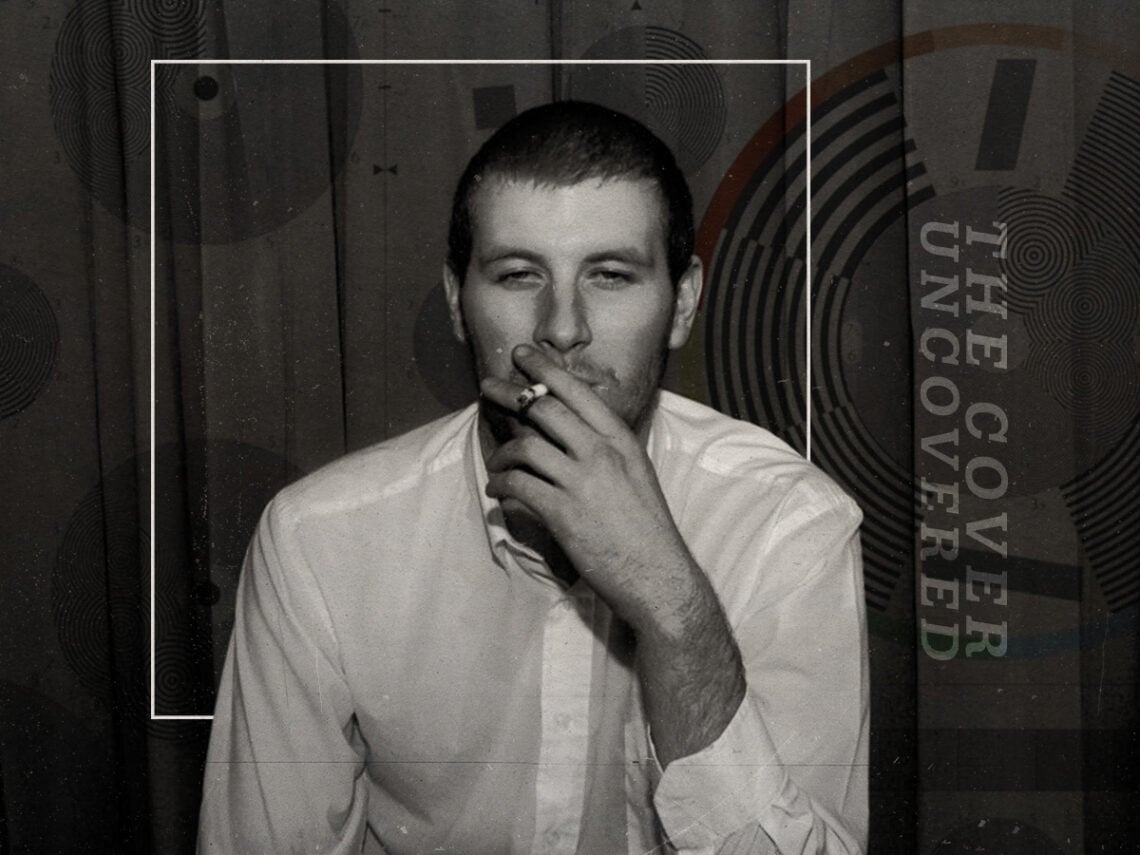
On the forehead above the steely gaze on the face from Arctic Monkeys‘ debut album, Whatever People Say I Am, That’s What I’m Not, you can see glistening beads of perspiration. The kind we’ve all experienced sat inside a stuffy room, between crumpled cans and your layabout mates. The mere sight of that face and forehead incites an onslaught of clammy palm sweat that immediately puts me in the mindset of the album.
Somewhere between angsty adolescence and intellectual pronouncements, it was an album that captured the growing pains of middle-class British life at the turn of the millennium. Snappy references of branded drinks were mixed with teenage romance and weekend hooliganism to create one of music’s most vividly observational records.
Yet somehow, the myriad of references and poetic quips were succinctly packaged and portrayed in the standalone image of an unknown man staring at the camera. The scuffy haircut, inebriated eyes and half-burnt cigarette cut the picture of someone who was slowly digesting all the stories the album had to offer and would be able to relay them once his smoke had gone out.
Naturally, upon the glowing success of the album, the intrigue around this mystery purveyor grew with fervour. Who was he? Was he an exiled member of the band? Did he know this would be the cover? It was as close to salacious tabloid news as the band would be involved in during those early days, for they were about the music, not the papers. But the vested interest was in the tunes combined with a very real desire from fans to get to know this symbol of the everyman, someone they identified with as they soaked up every word of Alex Turner’s painfully relatable lyrics.
Well, the man was Chris McClure, brother of Reverand and The Makers’ frontman, Jon McClure. The two bands were dwellers of the thriving Sheffield scene at that time, with The Makers delivering some of indie’s standout hits at the time. But it was the lesser-known brother whose face was unexpectedly thrust into the limelight, and the story of how that scrappy picture came to be is as real as it looks.
“I’m sure it was going to be called A Weekend With, originally. And it was meant to [be] based around the notion of a weekend of this young guy and his view of the world, ” McClure told Northern Chorus.
He elaborated: “So they wanted some photographs from Friday evening, clocking off work, to Sunday night reflecting. We took some in Sheffield around five in the morning, it was a summer’s morning. And then we went to Liverpool to take some shots. And while I were in Liverpool, the guy asked me if I would just pose with a cigarette for a portrait, but there were no mention of it being a cover.”
The sort of nonchalant attitude with which McClure approached his task was fitting for the album itself. The narrative of the record is warts and all; feigned replicas of a drunken delinquent smoking on a freshly lit cigarette wouldn’t cut it for an album that speaks of running from the “riot van” and hiding in the bushes. But perhaps what’s more interesting is the shift in album titling. While A Weekend With would have been appropriate, there’s something more hostile and confrontational about Whatever People Say I Am, That’s What I’m Not, that was surely apparent upon viewing the first draft image of McClure.
“And then I thought that was job done,” he admitted. “And then I got a call off Andy Nicholson, who was bass player at time, and he said, ‘Look, we’ve seen this image. They like it. We want, we’d we want it to be authentic, though. Would you would you be happy for us to pay for you to have a day out, and we can recreate that image?’ So, week after, I was sent to Liverpool, I were given about £700, and I had three friends with me, and I were told not to come back to this bar until every penny was spent. So you can imagine the day I had,” McClure added.
He lived the very real experience that the band sought to portray with the songs and lyrics. The scrappy journey between bars in urban Britain, where the stories told aligned with those from Turner’s imagination. It was at the end of McClure’s night that the shot was captured, and when you take into account the record’s track listing, it feels fitting.
‘A Certain Romance’ brings Turner’s story to a close, paying homage to the characters’ good despite their obvious sense of bad, remarking how formative they are to the authentic British experience. “They might overstep the line”, and maybe McClure did that night, but there’s something about how true he is to a record we all hold dear. One that makes us romanticise, as Turner does, these loveable rogues.
McClure concluded, “I rolled back into the venue around half ten, 11, essentially, I had a joint, I’ll be honest.” It was at this point that the now iconic shot was captured. Untouched authenticity staring down the barrel of the camera, with a scowl expected of the characters so vividly described in song. “They just sat me on this stool and just clicked,” McClure offered offhandedly.
What was left was an iconic cover that has stood the test of time. That simple image throws light on the myriad of emotions packed into the album. It’s provocative, tender and beautifully tarnished, carrying the appropriate attitude to stand along the title and raucous opening note of the first song. It’s a shining example to all future creatives that beauty isn’t in perfection, but honesty.
