


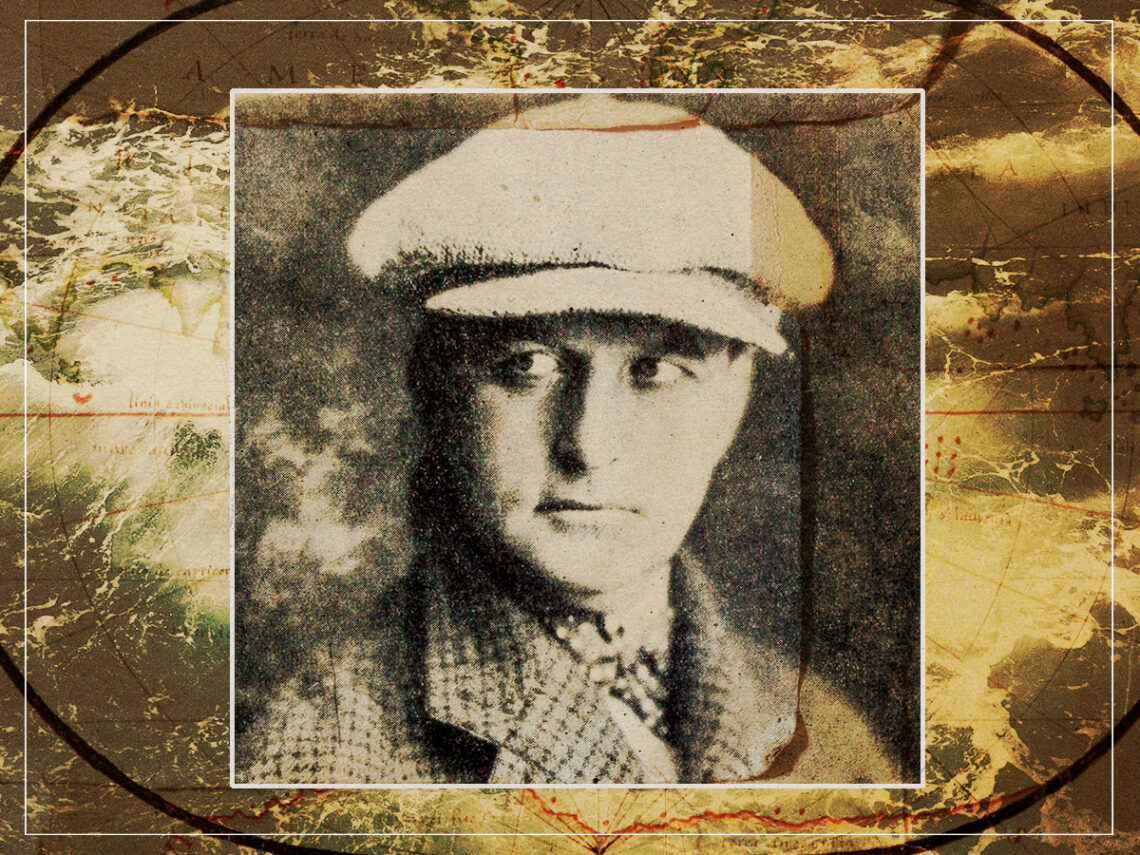
A conspiracy at sea: The mysterious death of Hollywood pioneer

If one of the most important and influential figures in Hollywood were to die under suspicious circumstances onboard a yacht owned by one of the planet’s most powerful media magnates in the modern age, then the internet would have a field day. Things weren’t quite the same 100 years ago, but cries of murder nonetheless ran rampant when Thomas H. Ince mysteriously perished at sea.
It’s not even hyperbolic in the slightest to call the filmmaker a founding figure of cinema as everyone knows it today, and not just because he was dubbed the ‘Father of the Western’ for popularising what would soon become the most consistently popular genre in the business.
Ince created the first major studio facility in Tinseltown, with the Miller 101 Bison Ranch Studio that he purchased being colloquially dubbed as ‘Inceville’. It was here that he introduced the assembly line model to filmmaking, which assigned specific tasks to all of the major players on a production that began with development and scripting, continued through shooting, and was finished in post-production. It’s been the norm for a century, but at the time, he was viewed as a revolutionary.
One of the most powerful people in film at the peak of his power, Ince also helped define the role of a producer, another template that’s been standard practice ever since. As the owner and head of his own studio, he oversaw the planning stages, casting process, budgetary costs, marketing campaigns, and distribution models, adding another ground-breaking string to his bow.
Having completely changed the face of cinema and altered the course of the medium forevermore, Ince became seriously ill aboard William Randolph Heart’s yacht before passing away at the age of only 44 on November 19th, 1924. The official cause of death was listed as heart failure, but there are many people adamant that’s not where the truth really lies.
The pair had been negotiating a deal where Hearst’s Cosmopolitan Productions would be using ‘Inceville’ as its base of operations, with the media mogul inviting Ince to traverse the open waters to both celebrate his impending birthday and hammer out the terms and conditions of their agreement.
Ince ended up suffering acute indigestion and was treated by various medical professionals before he died at home the following day. However, conspiracy theories ran rampant, including one that alleged Hearst had shot Ince in the head, believing him to be Charlie Chaplin, who was also part of the passenger list for the fateful voyage.
Chaplin’s associate Toraichi Kano allegedly told his wife Ince’s head was “bleeding from a bullet wound”, while the nephew of Hearst’s long-time paramour Marion Davies – another person onboard at the time – informed Orson Welles that it wasn’t heart failure, but murder most foul. Welles subsequently told this to Peter Bogdanovich, which eventually materialised on-screen as 2001’s The Cat’s Meow, where Cary Elwes played a very murdered Ince.
Adding more fuel to the speculative fire, the body was cremated just 48 hours after his death, heightening suspicions of a cover-up. Hearst even made a point of publicly denying the accusations, telling an interviewer years later that “not only am I innocent of this Ince murder, so is everybody else”. Still, the fact he felt compelled to distance himself from the scuttlebutt was seen as curious by some.
The most obvious explanation is that Ince really did suffer heart failure and died shortly afterwards. On the other hand, believing he was shot execution-style by Hearst after the ruthless businessman set out with the intention of putting a bullet between Chaplin’s eyes is decidedly more salacious.
