


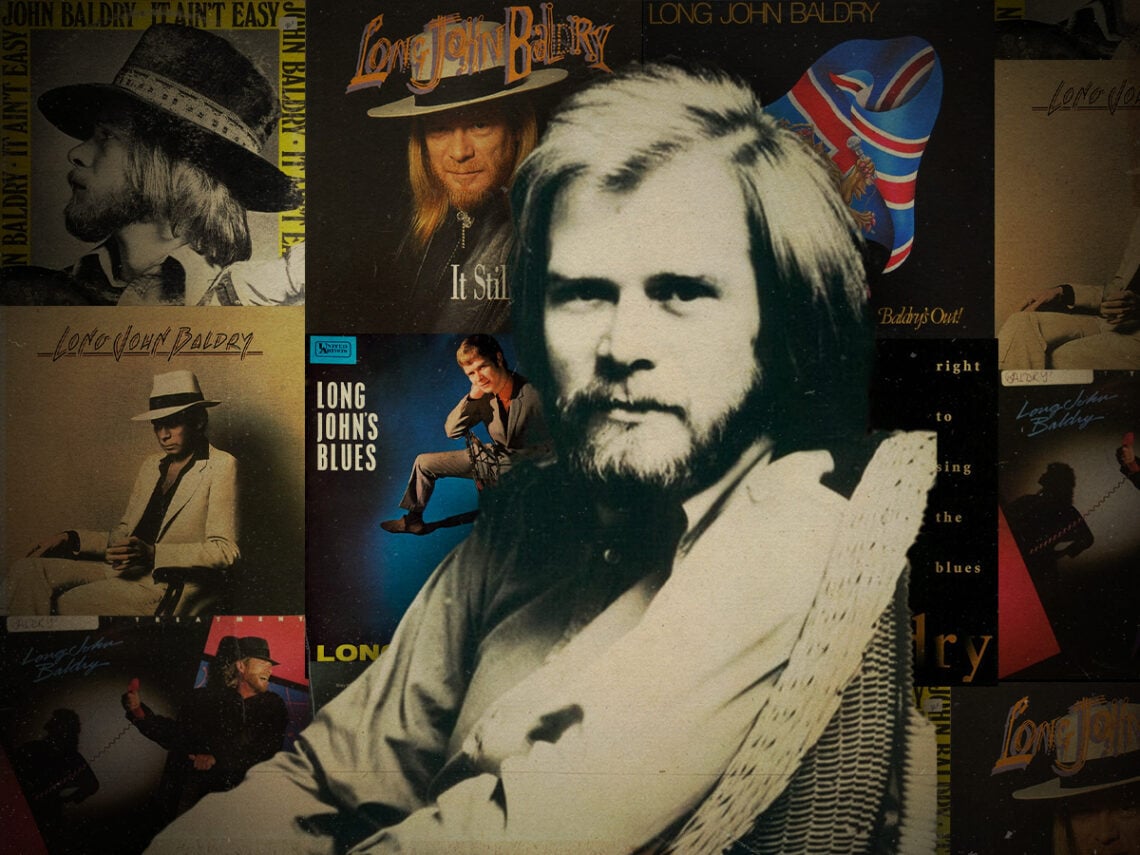
Long John Baldry: The forgotten 1950s musician who helped launch two of Britain’s biggest solo stars

Across the shared songbook of Elton John and Bernie Taupin, ‘Someone Saved My Life Tonight’ remains one of their most moving and heartbreaking stories.
Written in the late 1960s, before John achieved fame and was engaged to be married to his girlfriend, Linda Woodrow, the song looks back on this time when the musician was trapped in a loveless relationship, yet to fully realise his sexuality.
He contemplated taking his own life in 1968, just one year after homosexuality was only beginning to be decriminalised in Britain. John confided in his friend, a blues musician named John William ‘Long John’ Baldry, who convinced him to leave his relationship and abandon plans of marriage to save his career and himself.
Baldry, who later ‘formally’ came out himself with his 1978 album Baldry’s Out!, is the titular “someone” in ‘Someone Saved My Life Tonight’, with Taupin also naming him “Sugar Bear” in the song. “That song is about John Baldry at the Bag O’ Nails [nightclub] saying, ‘You’ve got to call the wedding off’,” John recalled in the 2007 biography, It Ain’t Easy: Long John Baldry and the Birth of the British Blues.
“Without that, it could have been an entirely different story. He really did change the course of my life, bless his heart.”
Baldry was born in East Haddon, Northamptonshire, and raised in Edgeware, Middlesex, in a middle-class family. He sang in his grammar school choir and perused his neighbour’s record collection filled with jazz and blues, taking a particular liking to the American folk and blues virtuoso Lead Belly. In turn, Baldry picked up his first guitar at the age of 14, teaching himself to play in Lead Belly’s signature style.
By the time he was 16, in the late 1950s, Baldry had grown to a staggering six-foot-seven, earning him the nickname ‘Long John’, which caught on as he immersed himself in Soho’s folk scene. He became a central figure not just for his literal height, but for his talents on the 12-string guitar. He started performing as a regular at the Gyre & Gimble coffee lounge near Charing Cross, folk sessions hosted by Ewan MacColl and Peggy Seeger, and the blues club of Alexis Korner, a founding father of British blues, and Cyril Davies, one of England’s first blues harmonica players.
It was with Korner and Davies’ group, Blues Incorporated, that Baldry assumed the role of lead singer, recording the first British blues album, R&B from the Marquee, in 1962, and becoming Britain’s first amplified blues group. The band played sessions at the Ealing Club in west London, where members of The Rolling Stones could be found in the audience.
“The road that we’ve travelled has been a lot easier than the road that BB [King] travelled, or John Lee Hooker, or Muddy [Waters] or all the other greats,” Baldry noted, in an interview from 1998, “Their road was a lot more painful, a lot more suffering than anything we could ever, ever even think of…for the obvious reasons. The way society was, still is, to a degree, and socioeconomics. A lot of those guys didn’t get the full credit for all the things they had done, or receive any financial remuneration, sometimes not right until the last minute.”
After playing at the Cavern Club in the early ‘60s, Baldry became friends with Paul McCartney, who offered the singer an invitation to perform on The Beatles’ 1964 television special, Around the Beatles. There, he sang the blues song ‘Got My Mojo Workin’ and a medley with The Vernon Girls, as The Beatles sang along among the crowd.
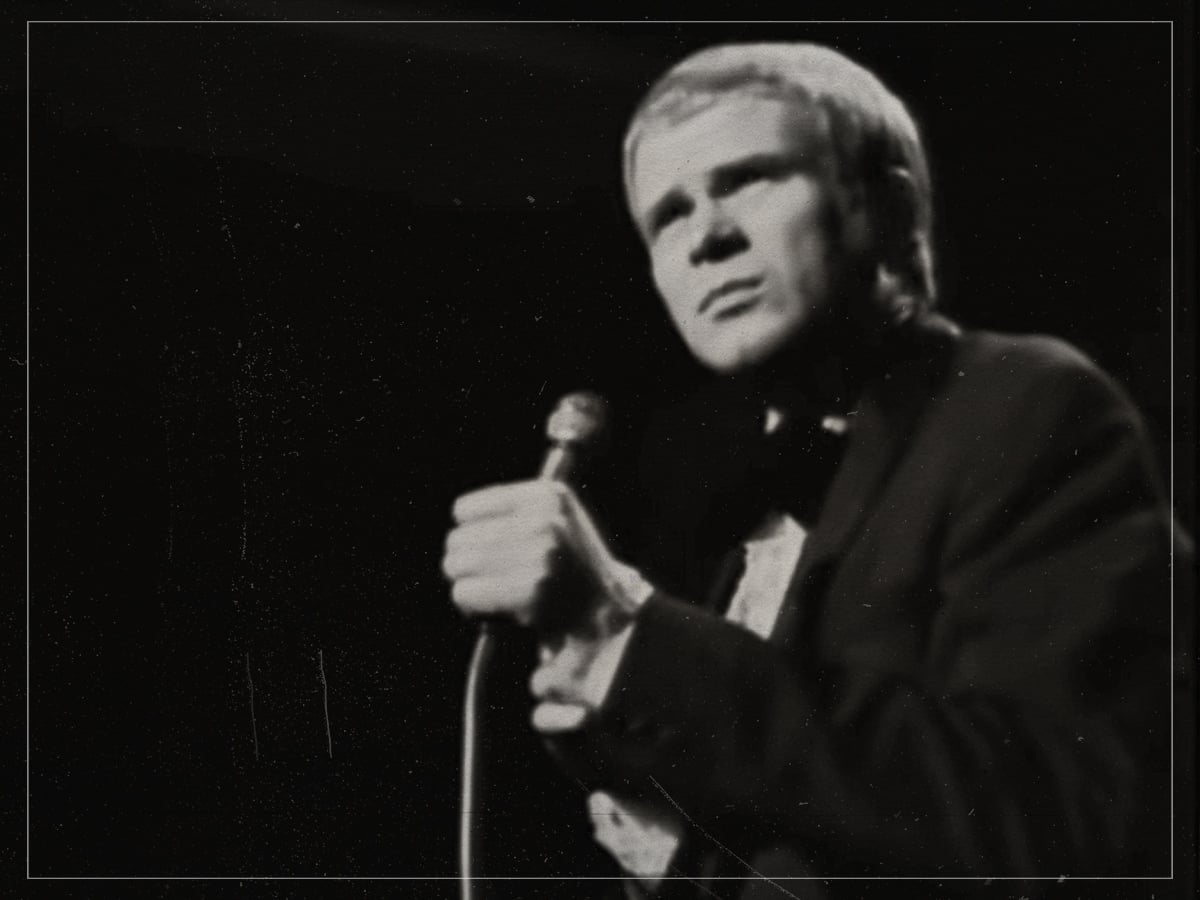
When Korner and Davies split, Baldry eventually chose to join Davies’ band, The Cyril Davies All Stars, but after Davies’ sudden passing in early 1964, Baldry became the band’s leader, renaming the group The Hoochie Coochie Men and enlisting a 19-year-old Rod Stewart as second vocalist, offering him £35 a week, with the approval of Stewart’s mother. He has heard Stewart busking at Twickenham Station, playing Howlin’ Wolf’s ‘Smokestack Lightnin’ on the harmonica; the latter has been waiting for his train, after seeing Baldry and the All Stars at Eel Pie Island.
“For me, just shaking his hand, knowing all the great musicians whose hand he’d shaken before, was mind-blowing. But so was John,” Stewart later reflected, in Reader’s Digest in 2004, “John taught me so much, things that apply to my life and things that made me the human being I am today… See me onstage today, and you’re seeing what John taught me.”
With Stewart quitting his day job, The Hoochie Coochie Men soon became Steampacket in 1965, including Julie Driscoll on vocals and Brian Auger on Hammond organ, only to break up the following year. Baldry then formed Bluesology, with Elton Dean (later of Soft Machine) on saxophone, Caleb Quaye on guitar, and Elton John, then still known by his birthname, Reginald ‘Reg’ Dwight, on keyboards.
Dwight, when beginning to record as a solo artist, adopted the two first names from his bandmates and reinvented himself as Elton John, an initial homage to his mentor, as he saw Baldry. Once John and Bluesology departed, Baldry soon embarked on a solo career, one that spanned 32 releases, from studio albums to compilations, EPs and live albums.
His first single, a pop song called ‘Let the Heartaches Begin’, went to number one in Britain and placed on the US Billboard 100 after its release in 1967. His most well-known album, 1971’s It Ain’t Easy, was co-produced by Stewart and John (each taking one side, respectively), and the duo would also co-produce its follow-up, 1972’s Everything Stops For Tea. His fifth studio album, It Ain’t Easy, was Baldry’s return to form in its blues sound.
The musician eventually settled in Canada in the 1980s, living in Ontario before moving to Vancouver, and he became a Canadian citizen, touring the west and east coasts, alongside the United States. Later, by 1986, Baldry began to experience a number of health issues that saw him in and out of hospitals over the last two decades of his life. When a case of crippling gout resurfaced in 1999, it was Stewart who admitted him to the London Clinic. Tragically, his condition worsened, and he passed on July 21st, 2005, at 64 years old.
“I’ve had a lot of fun in my life,” Baldry reflected in 1998, “I think [that’s] what I set out to do, even as a schoolboy, thinking, ‘I want to have fun in my life,’ and I think I’m still having fun… I can only assume that what I’m doing is right and people enjoy it. Otherwise, would I still be around? Would I still be able to make a living doing what I do? I’m not rich, but I make a living.”

Never Miss A Beat
The Far Out Beatles Newsletter
All the latest stories about The Beatles from the independent voice of culture.
Straight to your inbox.