


The musician Lou Reed called the son of a God he doesn’t believe in: “The cult of the celestial choir”

He is one of the most impressive songwriters of his generation, but Lou Reed would be absolutely disgusted with the idea of the title. While he is now routinely seen as one of the more important craftsmen of the modern musical era, Reed enjoyed his position as a serial abgitator and unqualified tough nut to crack.
Lou Reed might have been subversive, but that doesn’t mean he didn’t recognise the beauty in the commercial artists. During his lifetime, Reed covered Peter Gabriel and John Lennon, not forgetting his startling duet with Brandon Flowers on ‘Tranquilize’, and even had a hand in some of the cheesiest pop songs of the early 1960s.
Reed has routinely shown himself to be one of the more candid appreciators of pop music. He knew what made a heartbeat and a soul sing, and it allowed him to be a fierce critic of all types of music, especially pop. Even in the 1960s, he demonstrated a fondness for pop, The Beach Boys especially.
What The Beach Boys brought to The Velvet Underground wasn’t melody, nor melancholy, but technique, particularly when it came to the harmony vocals. Simply listen to ‘White Light/White Heat and try to refute Brian Wilson’s influence on the band. I would even go as far as to say that Wilson’s influence can be felt on ‘Heroin’, although there is no way in hell the bassist would have written such an aggressive lyric.
In 1966, Reed made his admiration known through an article he wrote for an art magazine. The publication bore the name Aspen Vol 1 No 3 Section 3 (no, me neither!), while the publication bore a convoluted title, the piece reads breezily, accessibly and with trademark dark wit: “California plastic people came up with California plastic chord changes. Which meant sticking in a Bb before your G, and after your C. Jan and Dean, the Beach Boys, as opposed to Negro cooings in the East with shiny saxophones, California plastic concentrated on white twirps and falsetto chirps,” he wrote.
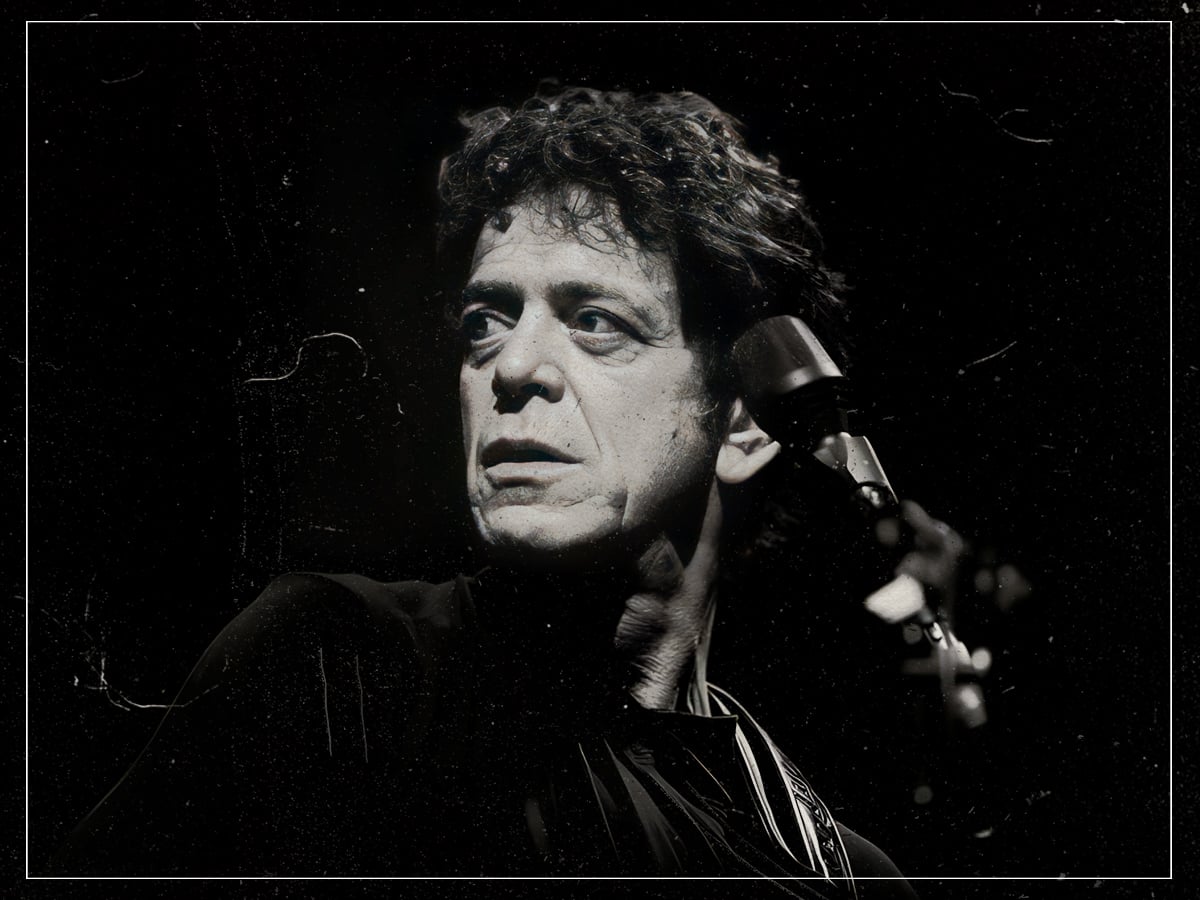
He might have been a cantankerous participant in interviews, but Reed knew what made good music criticism. The answer being: mystery. Reed continued: “(Sidewalk Surfin – the angel chorus- ‘shake your B. . .uns.’) The cult of the celestial choir. There is no god and Brian Wilson is his son.”
“Brian Wilson stirred up the chords,” Reed continued. “Deftly taking from all sources, old rock, Four Freshman, he got in his later records a beautiful hybrid sound, (‘Let Him Run Wild’, ‘Don’t Worry Baby’, ‘I Get Around’, ‘Fun, Fun, Fun — and she had fun, fun, fun till her daddy took her t-bird away’). Like demented unicorns the East went West, and, it, all, made, it. It wasn’t really a long cry from such early classics as ‘Peppermint Stick’ by the Elchords (in N.Y. there are stores which sell old rock records for as much as $500).”
So, in one almost tantric address, he mocks the records blaring across the airwaves and equates Wilson to a God he doesn’t believe in. There is also the matter of uncomfortable racial stereotyping. What it does hold is his kaleidoscopic view of the world, in the form that suited him best: the written word.
Given his unique viewpoint that was often misconstrued, U2 frontman Bono once revealed: “His deadpan humour was easily misunderstood as rudeness, and Lou delighted in that misunderstanding”. Then, the frontman added: “It’s too easy to think of Lou Reed as a wild creature who put songs about heroin in the pop charts, like some decadent lounge lizard from the Andy Warhol Factory. This couldn’t have been further from the truth.”
There was more to Reed than met the eye, and when it suited him to be kind to other artists, he was. With that, Wilson was one of the musicians who made an impression on him.
