


Peter Kyle, Secretary of State for Business and Trade: ‘People from all backgrounds shouldn’t have to struggle to explore their potential’

The UK government has announced that it will be opening applications for its Music Export Growth Scheme (MEGS). It has been confirmed that £1.6 million will be distributed to bands across the country in a bid to help them with touring and marketing.
In an exclusive interview with Far Out, Peter Kyle, Secretary of State for Business and Trade, confirmed that he was proud to support the government initiative and confirmed that he hopes it will make the arts more accessible for musicians across the country.
To date, there have previously been 23 rounds of MEGS funding, which are said to have generated £73.5 million in returns. The money is distributed to different British bands in a bid to support them as they try to take their music overseas and market themselves towards bigger audiences.
Comparatively, in the same way that The Beatles wouldn’t have become the biggest band in the world had they not gone to America, many successful British bands in the modern age would have struggled to reach the level they did if their music were only popular in this country.
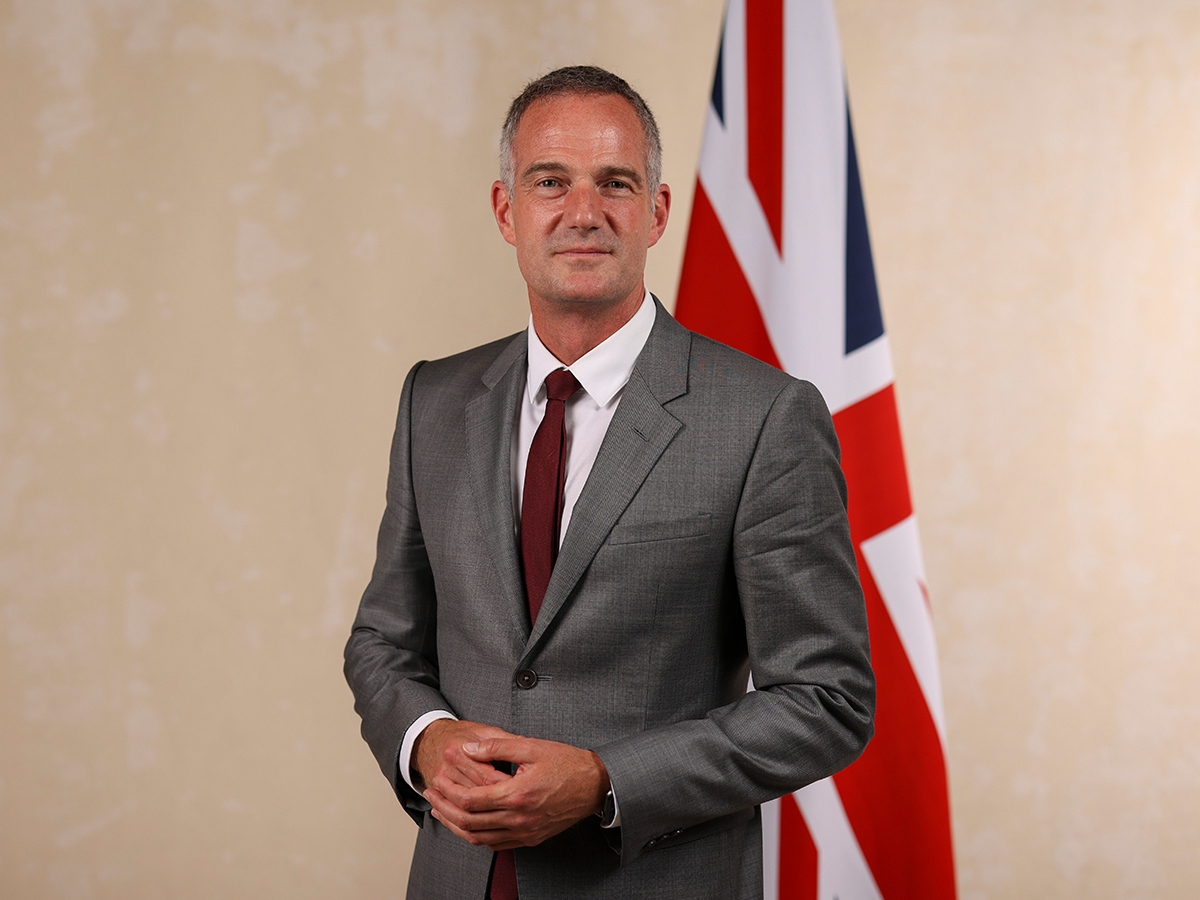
While the economic benefits of the scheme are evident, when discussing the new MEGS applications, Kyle, a self-confessed Raye and Fred Again fan, focuses predominantly on the opportunity it can provide for artists of all calibres.
“Well, it’s clear that the scheme has benefited so many bands in the past, and it’s benefited the country because it’s enabled so many bands to be seen by people around the world, and that means a lot to me,” he told Far Out. “I love music, I love live music, although I don’t get to see it so much these days. The experience of being able to perform, and to be able to see British performers, I think, is just one of our key treasures as a nation.”
A number of bands have benefited from the scheme in the past, including artists who have proceeded to win coveted awards such as the Mercury Prize. The Secretary of State makes specific reference to Ezra Collective (whom he mistakenly calls ‘Ezra Collection’) when celebrating the positive benefit that the scheme can have.
Kyle explains, “When you see what it’s done for Ezra Collection, who went over and won a Mercury Award, you sort of think, well, if the government can do this kind of hands-on support for bands like that and performers like that, then why would you let this sort of treasure go?“
Ezra Collective won the Mercury Prize in 2023 and had previously received funding from the government-backed scheme. There is no escaping the fact that the initiative can benefit UK bands, but when we consider the comments of the most recent winner of the Mercury, how much does it get to the heart of what is a glaring class divide within the music industry?
Sam Fender lifted the sought-after trophy this year in his hometown of Newcastle. The People Watching singer has been outwardly critical of the music industry recently, specifically the inequality which exists throughout it. In an interview with the Sunday Times in February 2025, Fender criticised the music business for favouring the privately educated and not allowing opportunities to working-class artists.
Fender said: “The music industry is 80%, 90% kids who are privately educated […] A kid from where I’m from can’t afford to tour, so there are probably thousands writing songs that are ten times better than mine, poignant lyrics about the country, but they will not be seen because it’s rigged.”
Far Out put Fender’s quotes to the Secretary of State and asked two things: Did he agree with the musician’s comments? And how will the continuation of the Music Export Growth Scheme go about rectifying the class divide?
“I do recognise his comments, but not just in music,” said Kyle. “It’s also the same in other performing arts. So, in acting, for example, we’ve gone through a spate where we’ve had a lot of very successful actors emerging, and quite a significant number of them have gone to Eton, and it’s become quite noticeable.”
Adding, “You know, I’m never going to be anti-talent, talent emerges everywhere, I just want everybody from every background to have the same opportunities, to explore their potential and to succeed. Whether that be in business, whether that be in science, or whether that be in performing arts, but it is something I notice.”
Kyle continued, “You know, I’m part of the first cabinet in history where every member of it went to state school, and that’s something which is notable. It’s notable because it’s the first time it’s happened, but I’m very aware that people like me, in my background, very often don’t make it into the jobs that I have, so I have an affinity for other people who have to struggle to get to where they get to.”
Concluding, “But I really wish we lived in a world where people from all backgrounds didn’t have to struggle to explore their potential, and that’s certainly what schemes like this can take steps towards tackling.”
During a time when the current Labour government is constantly under scrutiny, credit can be given for their decision to continue this round of funding. The costs associated with touring and marketing are at an all time high, and without this vital influx of cash, a lot of bands will struggle to break the boundaries that come with domesticity.
Of course, the costs of touring and making music are much more troubling for some artists than others. As bands are awarded funding, it would be worth considering how much the allocation goes towards addressing the current class bias that seems to exist in a music industry dominated by the upper class. Government schemes such as this, in theory, are a great opportunity to level the playing field and offer assistance to the promising artists who need it most.
Time will tell if it is used in such a way, but for now, applications are open until December 15th.
