


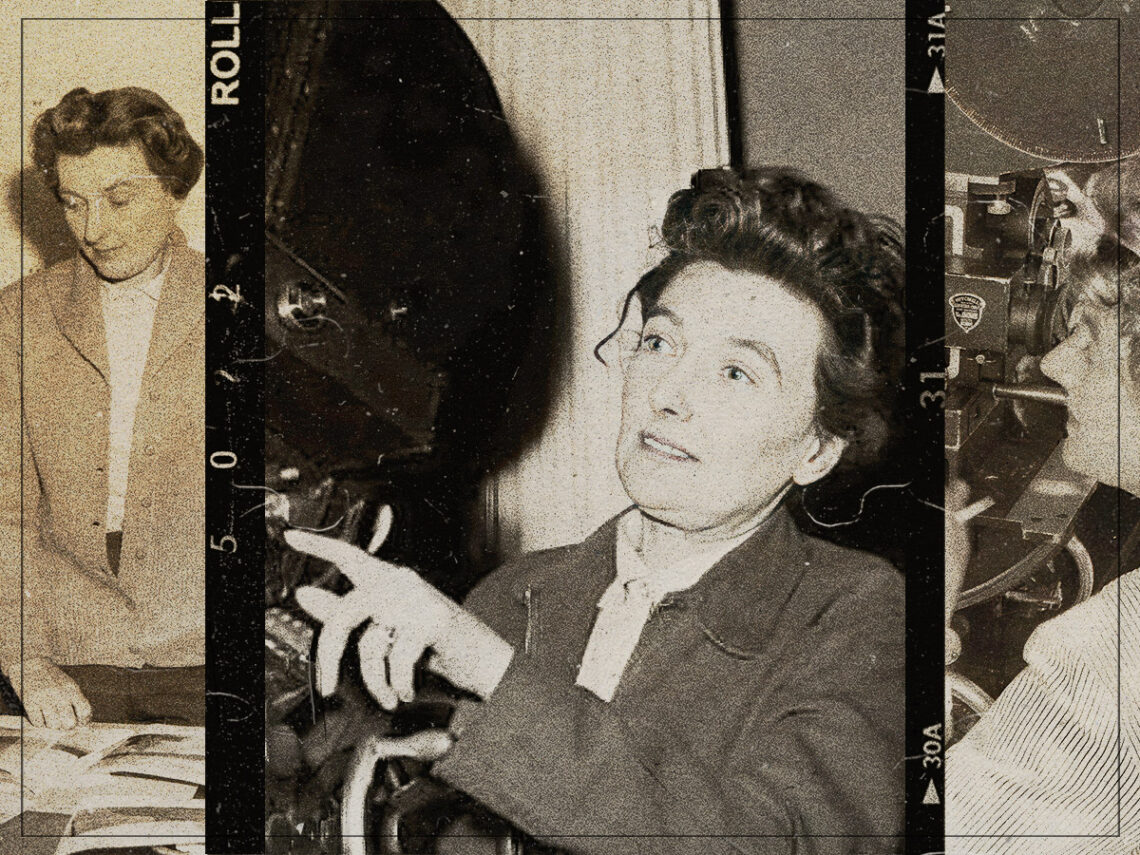
Muriel Box: an overlooked female pioneer of British cinema

Although the first narrative film was created by a woman – French filmmaker Alice Guy-Blaché – women have had a notoriously difficult experience establishing themselves in the film industry. Through the silent era and the Golden Age of Hollywood, there were very few female filmmakers, and those who were active have been consistently overlooked.
For many years, Dorothy Arzner was the only female filmmaker working in Hollywood’s Golden Age. However, she eventually retired, citing rampant sexism and homophobia (she identified as a lesbian) as reasons for distancing herself from the industry. Meanwhile, in the United Kingdom, female directors were equally hard to come by, with women finding themselves relegated to roles such as script assistants or, if they were lucky, editors. Yet, directing was typically reserved for men, with the widespread belief being that women simply couldn’t take charge of a whole production.
During the 1940s and 1950s, one woman excelled as one of the only female filmmakers working in Britain: Muriel Box. After joining British Instructional Pictures in 1929, Box moved on to minor behind-the-scenes jobs, such as continuity consultancy, building up her experience in the industry. However, she soon began writing plays before making propaganda films, establishing herself as a capable director. Box penned the film The Seventh Veil with her husband, Sydney Box, in 1945, winning them both the Academy Award for ‘Best Original Screenplay’.
By 1949, Box had received her first co-directing credit on The Lost People with Bernard Knowles. This set Box on her path to becoming a prolific film director, releasing The Happy Family, about a working-class family who attempt to save their house from destruction, in 1952. With a wealth of screenwriting credits to her name, Box entered the decade with plenty of experience and expertise. Yet, she repeatedly experienced sexism as people looked down upon her capabilities, questioning whether she had what it took to become an adequate director.
At the heart of Box’s work is her feminism, and she often explored themes of womanhood and misogyny within her movies, even tackling taboo topics like abortion. After making Street Corner, she wrote in her diary, “As a lifelong feminist, I frequently hear people asserting that we ladies cannot work together amicably without trouble brewing. This I am happy to say I was able to refute when I came to make Street Corner. Far from being male-dominated, the technical crew that I assembled to make it was predominantly female. Never did I enjoy a happier or more carefree film.”
Box continued to make movies for several years before releasing her last film, Rattle of a Simple Man, in 1964. Her work was often unfairly criticised, and her movies have faded into relative obscurity. Yet, with comedies such as Simon and Laura, Box poked fun at the early days of television and with Eyewitness, the director tried her hand at a female-led thriller. She didn’t confine herself to one genre, although her dedication to feminism and forward-thinking ideas defined each project.
After the dissolution of her marriage, she pooled her efforts into the creation of the first feminist publishing house, Femina, which was an outlet for her feminist novels and memoirs. These days, Box’s name is routinely sidelined, yet her revolutionary contributions to cinema, propelled by her dedicated feminist ethos, deserve to be celebrated.
