


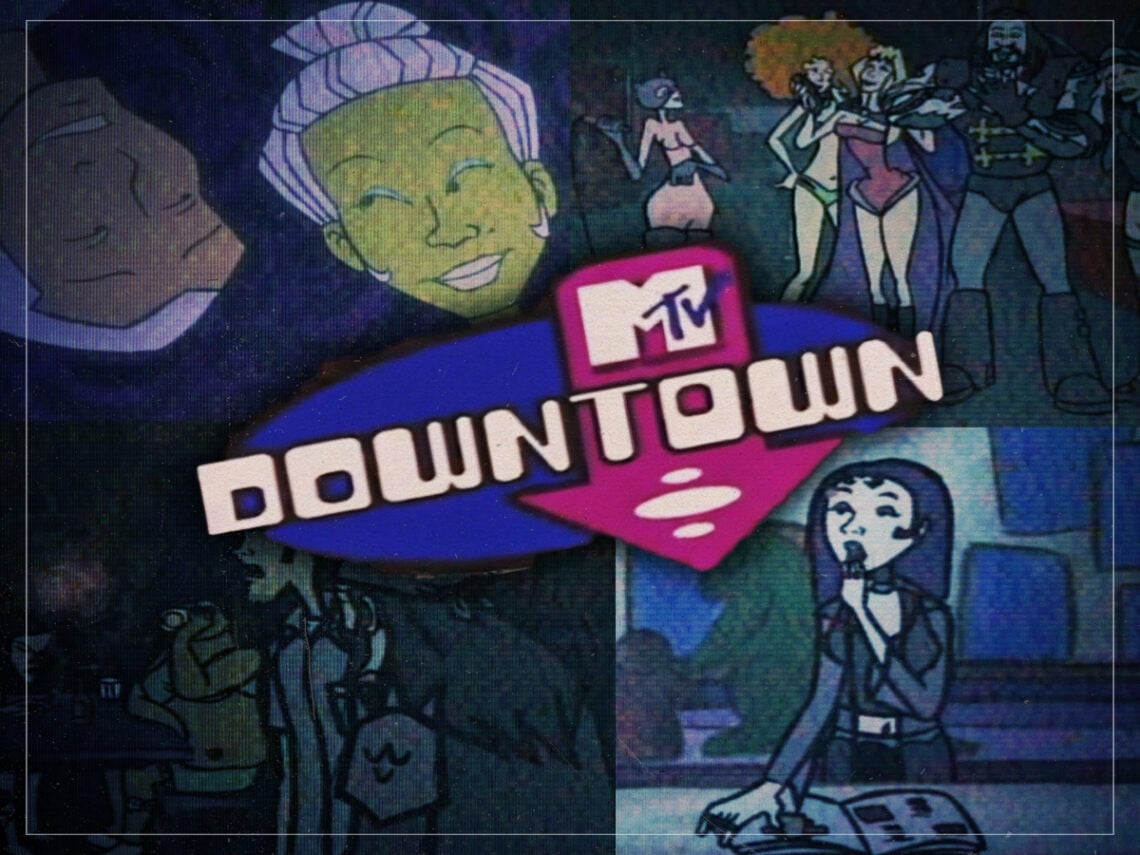
MTV’s ‘Downtown’: the ultimate grunge time capsule

In the final episode of MTV’s Downtown, perpetual geek Alex is hopelessly trying to flirt with Serena, the mysterious goth girl of his dreams, while photographing her in a cemetery.
He compliments her look – hues of purple in her hair and makeup, piercings galore and an all-black duster skirt and top – to which she responds, “Thanks, but it gives people really weird ideas about me…”
The animation suddenly spirals from the cemetery into fantastical visions of Serena dancing with the devil in the fiery pits of hell, morphing into a vampire as she lies in a coffin and setting a cross ablaze, all soundtracked to Alice in Chains’ ‘Grind’.
The scene has become a definitive glimpse into the world of Downtown, the short-lived, now cult classic animation series that aired for three months in 1999. The show is a time capsule of late-1990s New York City youth culture. With dialogue captured through interviews with real people on the streets, the show acts as an innovative personification of the everyday lives of teens and early 20-somethings just before the new millennium. Whether they’re gamer nerds, the resident goth girl, or high school stoners, there is an authenticity to each character that you can’t help but feel charmed by. The show was (unjustly) cancelled by MTV (despite an Emmy-nominated season), but in its short-lived 13-episode run, its cult status proves a yearning for something real in an increasingly robotic world.
Creator Chris Prynoski was clever enough to centre Downtown’s appeal on its use of music to propel the characters forward. As a product of MTV, each episode features numerous snippets from some of alternative rock’s biggest acts of the era, with free rein over anything that aired on the channel in the last five years, without having to pay a licensing fee. The result is a grunge-fueled soundtrack for the ages.
The show’s theme song is a sped-up sample of Incubus’ ‘Glass’, sparse throughout each episode. The first-ever song played on the show is Garbage’s ‘Push It’, set to an animation of Alex literally ripping his heart out of his chest to give to Serena. Thinking back to when I first watched Downtown two years ago, all I needed was a Shirley Manson needle-drop to be instantly hooked.
Nirvana’s blistering ‘Aneurysm’ while Alex and his best friend, Jen, tear the teeth off of an animatronic dinosaur. Kula Shaker’s ‘Govinda’ spirals into a dinner scene between Serena and Alex’s sister, Chaka; both are tripping out at the thought of eating plated snails and frogs. The show is bizarre, with as much thanks to its strange animation style as to its music curation. While rooted in alternative and grunge to suit the cast of artists, Downtown’s soundtrack is unafraid to juxtapose genres. Oasis’s ‘Cigarettes and Alcohol’ is set against Rage Against the Machine’s ‘Bulls on Parade’; Megadeath’s ‘Trust’ against Massive Attack’s ‘Teardrop’.
When instantly recognisable needle drops aren’t filling the space, trip-hop beats by Kimson Albert are. Today’s obsession with ‘lo-fi’ compilations on YouTube is no match for Downtown’s score. Slinking into the dialogue, Albert’s beats make you feel as though you are floating along with each character as they get up to all sorts of trouble and mishaps. Further, they help soundtrack an era of New York that is now long-gone, overtaken by gentrified streets and mass consumption. The eccentric Downtown cast could not survive in New York today, but the show allows us to travel back in time to when the freaks and weirdos with good taste roamed the streets.
Downtown accomplished what few shows have managed to do: it captures a distinct vibe. Whether you binge the show for yourself or listen to the dozens of Spotify playlists comprised of every song played in its episodes, Downtown is worthy of praise for its ability to bring back a prime era of alternative culture, even if only for a 20-minute-long episode.
