


‘Mr Garfield’: the Johnny Cash song that tells the same story as a new hit Netflix series ‘Death By Lightning’

When screenwriter Mike Makowsky first pitched the idea of adapting a novel about the assassination of US President James Garfield into a television mini-series, there wasn’t exactly a wild, exuberant response from Hollywood. Garfield, who only served in the White House for a few months in 1881, was one of the most obscure and least “bankable” names among the 45 old white men who’d held the office.
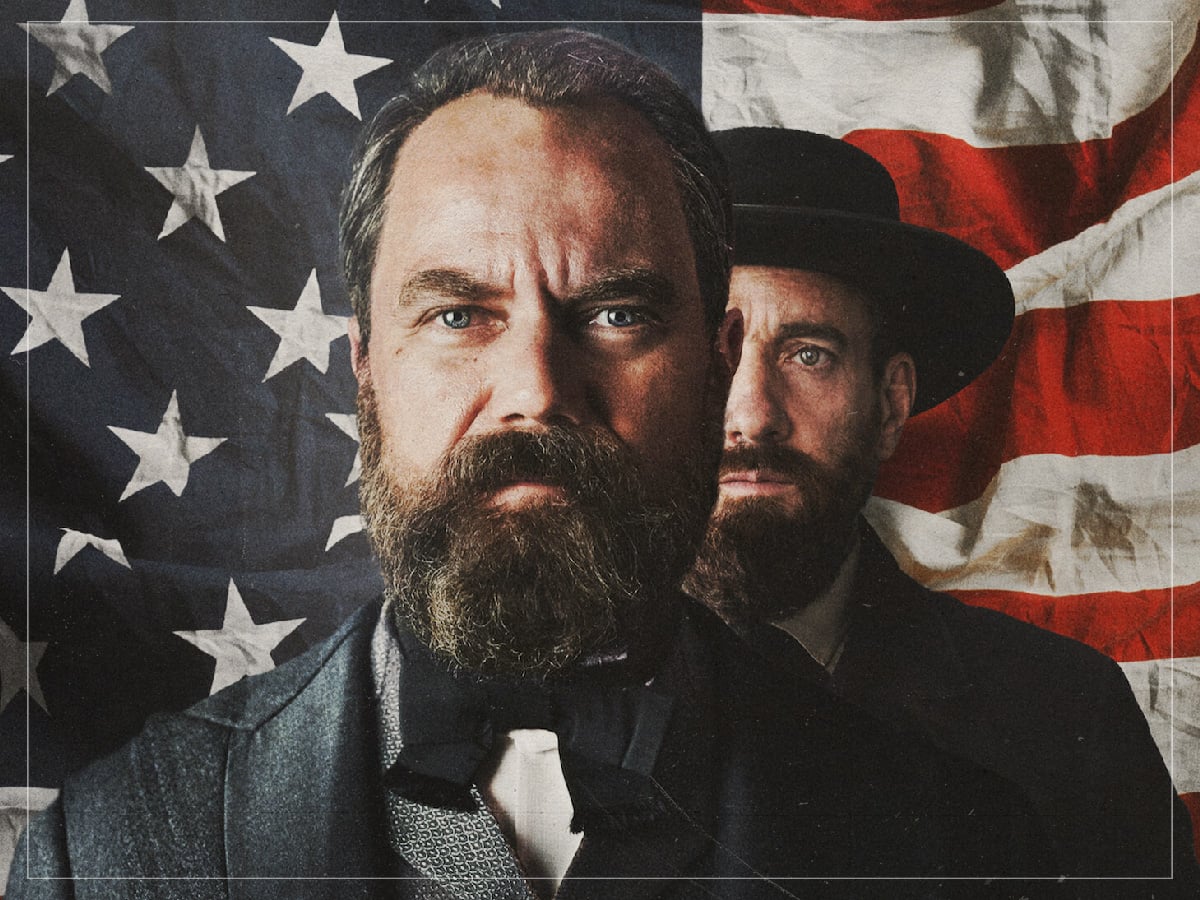
After about five years of steady effort, though, Makowsky finally got his project greenlit by Netflix, and with the aid of some incredible casting – including Michael Shannon as Garfield, Betty Gilpin as the First Lady, Nick Offerman as Vice President Chester Arthur, and Matthew MacFadyen as the pathetic assassin Charles Guiteau – the four-episode series Death By Lightning was released last month to sterling reviews and big viewing numbers.
As the opening title of the show established, Death By Lightning was ostensibly “a true story about two men the world forgot”. Very few Americans, including Makowsky himself, have grown up learning about this period in American politics – after the Civil War and before the turn of the century – in much detail. Aside from Garfield’s place as a footnote and pub quiz answer, his story was largely unknown to even the most ardent lovers of Gilded Age period-piece dramas.
That said, there have been at least a few previous moments over the past 150 years when the story of President Garfield’s tragic demise did break back into popular culture, and I’m not just talking about the fact that the reanimated corpse of Garfield has apparently been a recurring character on the cartoon American Dad.
Both Garfield and Guiteau were featured in Stephen Sondheim’s cult-favourite 1990 musical Assassins, as well as a 2017 episode of the TV comedy Drunk History (the UK version). My own personal awareness of these two ill-fated souls, however, came from my longstanding fondness for the oft-overlooked 1965 concept album Johnny Cash Sings the Ballads of the True West.
One of the standout tracks on that marvelously crazy double-LP is ‘Mr Garfield’, a murder ballad of sorts, adapted from an original tune Cash had learned from the great Ramblin’ Jack Elliott. It’s possible that Ramblin’ Jack, himself, had heard an earlier version of the song from some of the old timers he’d grown up with in New York – some of whom would certainly have remembered the events in question.
In any case, ‘Mr Garfield’ serves as a pretty good introduction to the big climactic scene and denouement of Death By Lightning, recounting the shooting of Garfield at a Washington train station from the perspective of a young onlooker: “Me and my brother was down close to the depot / When I heard the report of a pistol / My brother run out and come back in all excited / And I said, ‘What was it?’ and he said / ‘It was the report of a pistol,’ and then he said that: Mr Garfield been shot down, shot down, shot down / Mr Garfield been shot down low!'”
The narrator, who speaks quite casually but also acknowledges being mighty sad and shaken up about the whole affair, continues to describe the aftermath of the shooting, including Mr Garfield’s survival of the initial attack and slow, fading health over the weeks that followed, concluding with his death: “Gonna lay him in that cold, lonesome ground down low.”
Cash includes some terrific dialogue overheard between the dying Garfield and his wife, Lucretia (“he called her Crete”), as well as a direct callout of the assassin, the man supposedly doomed to be forgotten for all time: “Charlie Guiteau done shot down a good man, good man / Charlie Guiteau done shot down a good man low.”
Surprisingly, Johnny Cash’s ‘Mr Garfield’ wasn’t resurrected for a needle-drop in Death By Lightning, but for people who enjoyed the series, the song will now likely deliver a bit more of a meaningful punch than it would have before; a sad witness account of the death of one of the great “what if?” characters in American history.
