


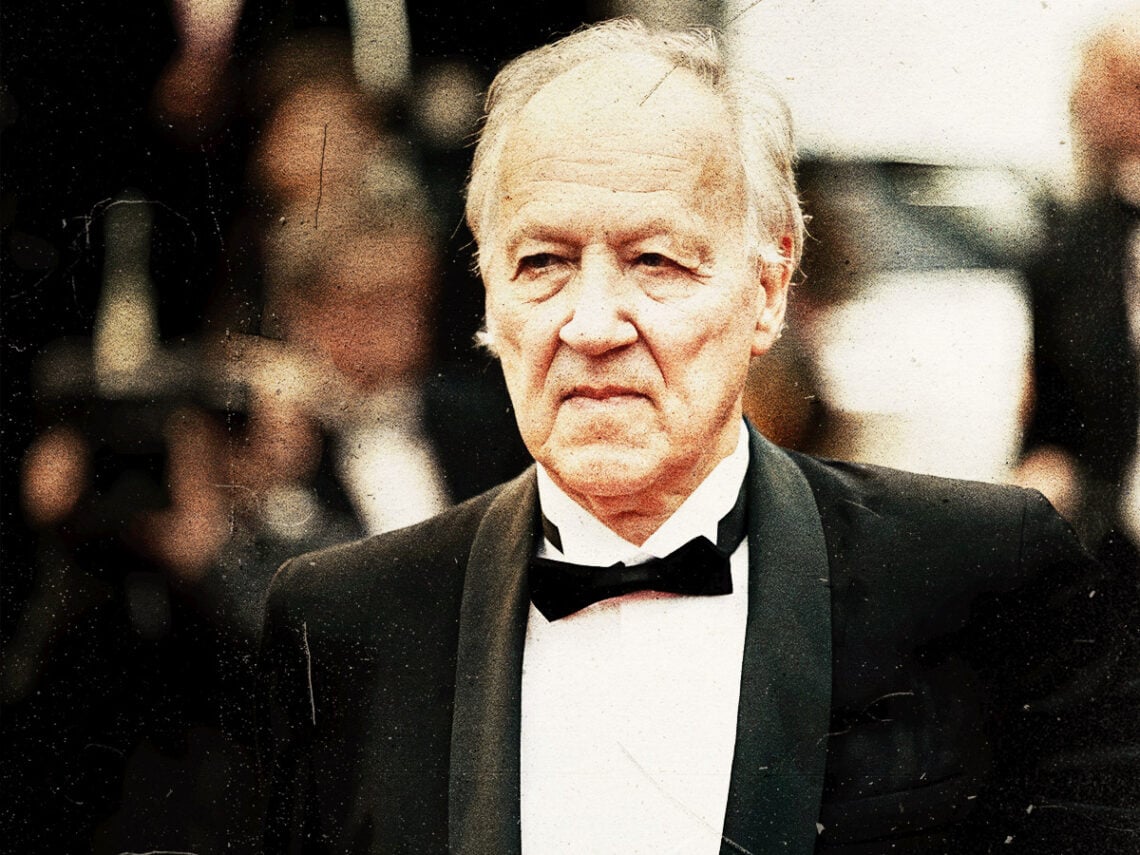
How making movies became life or death for Werner Herzog

Some films simply seem cursed. If there is a God up above who concerns himself with creativity, dropping ideas down into artists’ laps like gifts or granting them some higher way of dreaming up history-changing concepts, he also smites people down, throwing every possible hurdle in an artist’s way. In the 1980s, Werner Herzog was the victim.
The making of Fitzcarraldo is considered to be one of the most difficult productions in cinematic history. As Herzog attempted to tell the historical tale of rubber baron Carlos Fitzcarrald, who transported a disassembled steamboat over the Isthmus of Fitzcarrald, it seemed like everything that could go wrong on set did go wrong.
First, there was the simple fact that the story he was attempting to tackle was a difficult one. It required the crew to work in the difficult location of the Amazon and to essentially try to redo the trials that their subject matter struggled with. At one point, they had to figure out how to get a 320-ton steamship over a hill in the rainforest. While refusing to use any visual or special effects, Herzog demanded that they find a way to do that in real life, pushing his cast and crew to their limits. When they pulled it off, the director declared himself the “Conquistador of the Useless” for seemingly making history by pulling off a feat no one else would likely ever try.
But as the shoot went on, things only got worse and worse. While trying to capture scenes of the ship being caught in rapids, Herzog decided that clips should be filmed from onboard the boat, once again essentially getting his crew to endure these trials in real life. During one particularly rough bout of rapids, three of the six people involved in filming the sequence were injured.
There was still more. As well as these physical challenges, the movie required recasts as its stars got ill or dropped out, often causing Herzog to have to rewrite the script to get rid of whole roles. There was also major tension on set as the director and his lead star and regular collaborator, Klaus Kinski, fought terribly. Later in the documentary My Best Fiend, Herzog even shared that one of the natives surrounding the set offered to kill Kinski for him having heard their arguments, but the director declined, keen not to add another issue on top of everything else.
It hit a point where absolutely no one believed that this film would be finished. It seemed too cursed to ever pull through into anything useable. But Herzog would never give up. “They said to me, ‘How can you continue? Do you have the strength, or the will, or the enthusiasm?’” he revealed, addressing people’s doubt. But he was set on finishing this project, claiming there was simply no other way for him: “I said, ‘How can you ask this question?’ If I abandon this project, I would be a man without dreams, and I don’t want to live like that.”
In fact, Herzog was so committed to finishing this movie that the drive to do so became a matter of life or death, as he declared, “I live my life, or I end my life with this project.” Displaying the defiance and bravery that made him a legend, he made it work, releasing the cursed movie in 1982.
