


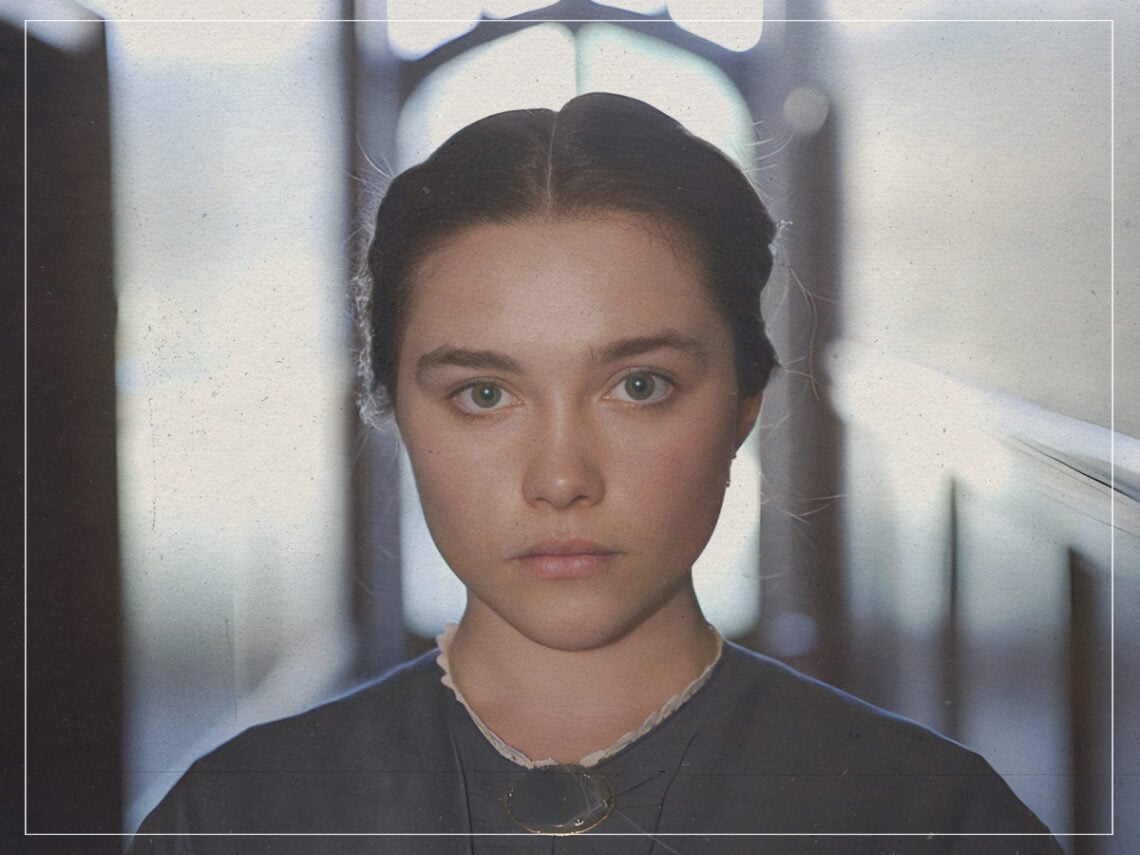
The movie that made a jaded Florence Pugh fall back in love with cinema

Few young actors in the past few decades have burst onto the screen with such decisive force as Florence Pugh. Though still in her 20s, the Oxford-born actor has shown her formidable talent for playing complicated characters with an astonishing emotional range. From a tormented, grieving college student in Ari Aster’s homage to classic folk horror Midsommar to a young chef battling cancer in the tear-jerker romance We Live in Time, she throws every inch of her indomitable skill into her projects, regardless of the quality of the script or the success awaiting it at the box office.
Even in Pugh’s earliest work, she has the aura of a fully-fledged star, making it seem inevitable that she would become a respected Hollywood A-lister. In her feature debut in Carol Morley’s 2014 period drama The Falling, she plays a troubled teen at an all-girls boarding school who has a magnetic hold on her classmates. She was just 17 when the movie was made and had never had any formal training, but her commanding performance is the most memorable part of the film, even though she is ostensibly only a supporting character.
After receiving a nomination for ‘Best British Newcomer’ at the London Film Festival, it was clear that her talent had not gone unnoticed, but her rise to A-list status almost didn’t happen. Following her experience working on The Falling, Pugh travelled to Hollywood, hoping to break into the business. Like many young actors before her, she started by auditioning for television pilots. When she won the lead role of a pop star in a new show called Studio City, her career looked like it was off and running.
“I felt very lucky and grateful,” she told The Telegraph in 2022. “And couldn’t believe that I had got this top-of-the-game job.”
But just as soon as she attained the Hollywood dream, she discovered that it came with a catch. Now that she’d secured the role, the showrunners wanted her to transform herself into something unrecognisable. “All the things that they were trying to change about me – whether it was my weight, my look, the shape of my face, the shape of my eyebrows – that was so not what I wanted to do, or the industry I wanted to work in,” she said. “I’d thought the film business would be like [my experience of making] The Falling, but actually, this was what the top of the game looked like, and I felt I’d made a massive mistake.”
In a paradoxically lucky turn of events, Studio City never made it past the pilot stage, and Pugh returned to the UK, her acting bug seemingly cured. But then fate stepped in: she landed an audition for a small British movie called Lady Macbeth. Directed by William Oldroyd, the film is set in the mid-1800s and centres around a teenage bride who is stuck in a cruel marriage to a gruff older man. It’s a dark movie devoid of the romance and sumptuous settings that might be expected of a period drama about a young woman moving to a manor house in the British countryside. The central character is also remarkably unpredictable. Abused, traumatised, and alone, she finds a way to stake her claim over her new household in a chilling manner that goes several steps too far.
“That made me fall back in love with cinema,” Pugh said of her time working on the film, “The kind of cinema that was a space where you could be opinionated and loud, and I’ve stuck by that. I think it’s far too easy for people in this industry to push you left and right. And I was lucky enough to discover when I was 19 what kind of a performer I wanted to be.”
Following her ferocious performance in the film, Pugh has had no trouble landing similarly complex roles that showcase the vast extent of her abilities, even in Hollywood.
