


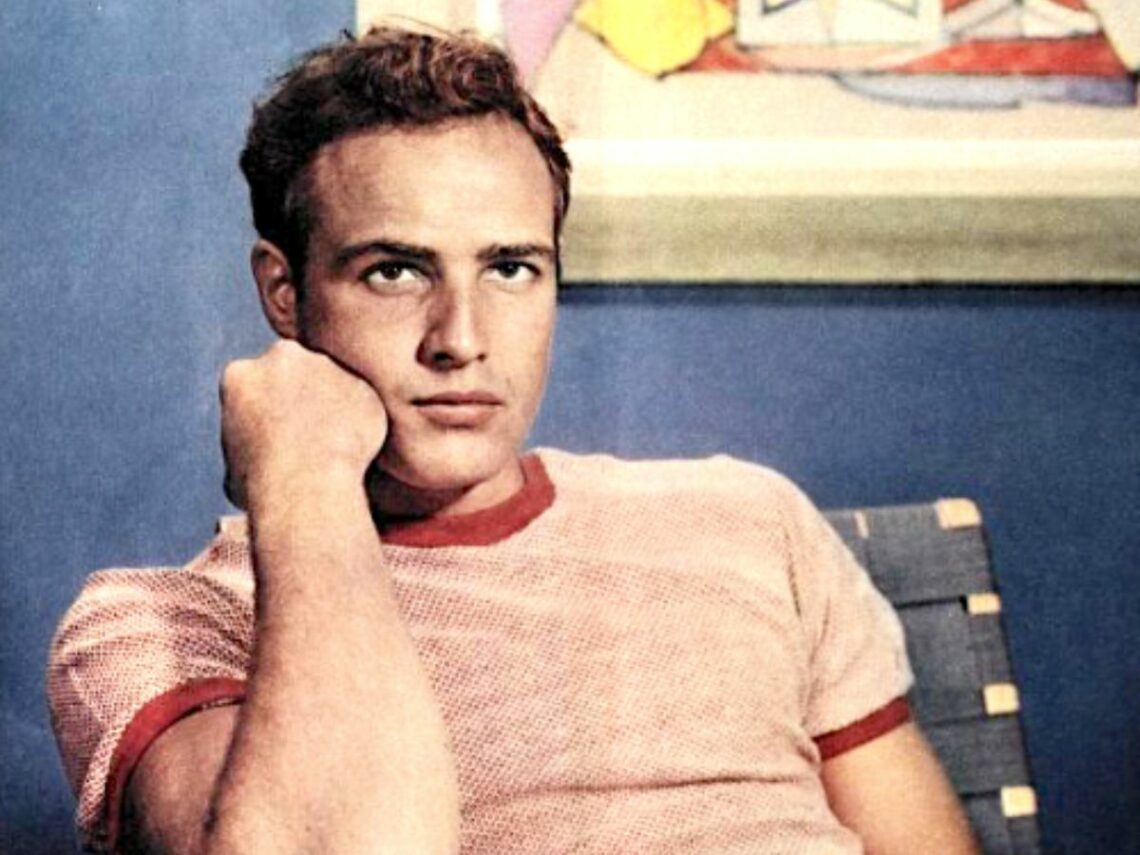
The movie that left Marlon Brando “depressed” by his own performance

The current public opinion of Marlon Brando is somewhat divided. His career has ebbed and flowed unlike any other actor’s in history, and over time, the general consensus on Brando’s acting has shifted. Is he a genius method actor? A lacklustre diva phoney? Or just overrated? Perhaps he was all of these things at various points during his illustrious journey in front of the camera. However, there is no denying that at the peak of his powers, Brando was a tremendously powerful performer.
Brando was the first to bring the ‘method acting’ technique onto the big screen. His raw and naturalist approach brought a far more humanistic style of performance into Hollywood during the 1950s. A brilliant example of this is Brando’s turn in the masterpiece On The Waterfront, a performance that won the actor an Academy Award for ‘Best Actor’. However, what’s surprising is that after the film’s first release, Brando was apparently “so depressed” after seeing his performance.
On The Waterfront, directed by Elia Kazan, is a gritty slice of urban poetry that follows the tale of Terry Malloy, played by Brando, as a tough prize fighter and longshoreman trapped in a state of moral crisis as he is torn between the corrupt mob-like union he works for and his love for Edie Doyle (Eva Marie Saint), the sister of a man he helped the union assassinate. It’s an exceptional performance from Brando, both charming, heartfelt, and tender, with a potential edge for violence simmering underneath, and there is a strong case for it being the finest role of Brando’s entire career.
It was surprising to learn, therefore, that Brando, despite his Oscar win, was so disheartened after seeing the film. Brando revealed the experience in his autobiography, “On the day (Elia Kazan) showed me the completed picture, I was so depressed by my performance I got up and left the screening room. I thought I was a huge failure and walked out without a word to him. I was simply embarrassed for myself.”
The film also features one of the most famous lines in cinema history, “I coulda been a contender”, a line that Brando says to his brother, played by Rod Steiger, while he holds a gun to Brando’s chest. But during the shooting of the scene, Brando had a problem with the dialogue. His issue was that he didn’t believe his character would realistically communicate the line to his brother, considering he had a gun pointed at his ribs. Instead, Brando would improvise alternative lines such as “How’s Mom?” or “Do you think the Yankees are going to win it this year?”
Elia Kazan apparently responded, “Buddy, cut the crap,” from behind the camera. Kazan has gone on to admit that he did let the two actors direct themselves in the scene and took a back seat role. However, the famous line that was originally written did make it into the final cut, and the rest is history.
Brando’s pain at seeing the picture for the first time and his investment in bringing truth to the movie and character alludes to his dedication as an actor at this time. When you compare this story with the one in which Brando turned up on the nightmarish set of Francis Ford Coppola’s Apocalypse Now, having gained a tremendous amount of weight, unknown to Coppola, and had also not read the script, forcing Coppola to halt the production for a couple of days just so he could explain to Brando what he needed to do – so, it’s no surprise there is such mystery and scepticism that surrounds Brando’s career. But it’s undeniable that his performance in On The Waterfront is one of the greatest cinema has ever seen; it’s just a shame it took Brando a while to realise it himself.
