


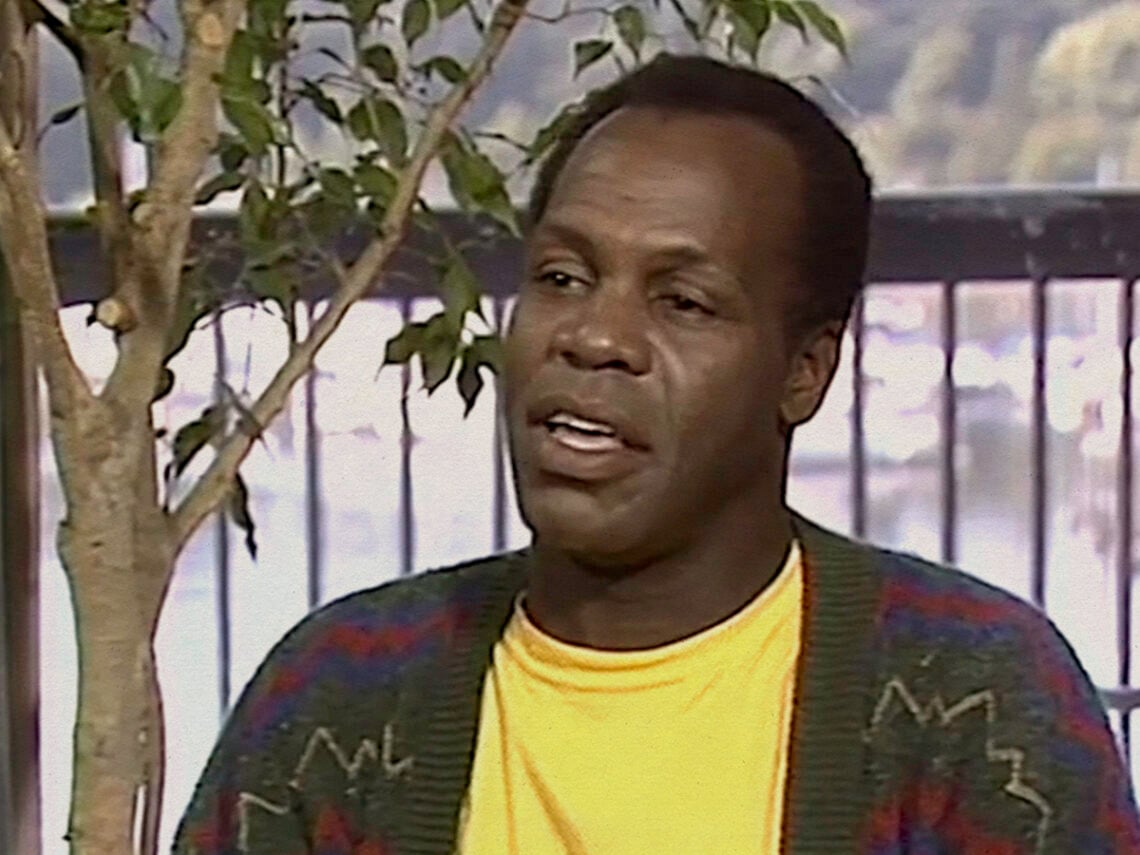
The movie Danny Glover will always regret never making: “The film that we always missed”

Every actor has a role they regret playing, but far fewer carry the weight of a movie they spent decades trying to make, something Danny Glover does, and the project that has never stopped haunting him is about the Haitian Revolution’s leader Toussaint Louverture, which he described less like a failed production but more like a historical epic that slipped through Hollywood’s fingers.
While Glover became immortalised as Lethal Weapon’s Roger Murtaugh, grumbling that he was “too old for this” as he chased down criminals, he was actually chasing a very different kind of epic. For years, Glover imagined bringing Toussaint Louverture to the big screen on a scale Hollywood had never attempted. The story of enslaved people rising up against French colonial rule and creating the first independent Black republic in the modern world was, in his eyes, one of the great untold cinematic stories.
For him, Louverture’s story represents a global symbol of resistance, as he explained, “Imagine a revolt where all those who had been enslaved and dispossessed around the world heard what had happened. You imagine what that meant to them?”
Glover found out about the Haitian revolution that ran from 1791 to 1804, led by Louverture, in the early 1970s when he read The Black Jacobins by CLR James, and it made a huge impact on him and inspired his lifelong ambition to bring the influential leader’s story to the screen. In 2006, he planned a cast including Wesley Snipes, Angela Bassett, Chiwetel Ejiofor and Mos Def for it, the project receiving a major boost in 2007, when Venezuela’s then-President Hugo Chávez granted Glover’s production nearly $18million in the hopes of mobilising “world public opinion against imperialism and western oppression”.
However, despite securing initial international funding and having a script co-written by Joslyn Barnes, Glover ran into severe financial and political hurdles, and the film never made it to full production. Regardless, after six years of the production never getting underway, Glover remained determined, telling The Guardian at the time, “We’ll get the film done. We came so close so many times, you could almost taste it, man. We came that close, and we’re going to do it”.
Years later, when asked about Louverture’s biopic again, the disappointment was unmistakable. It was not a casual project; Glover’s commitment to the revolutionary leader runs so deep that in 2005, he co-founded a production company named Louverture Films with Barnes in order to give voice to underrepresented filmmakers.
“The film that we always missed is a movie on the Haitian revolution and Toussaint Louverture,” Glover told Filmmaker back in 2015, “The company is fortuitously named after him, and that was the movie that I wanted to do. We’ve developed a script. We thought we were going to get it done four years ago. We thought we were going to be making it right now.”


When asked whether he would direct or act in the biopic, he said his priority was ensuring the project reached the screen, even if that meant handing the director’s chair to someone else: “There are several directors that I have in mind who’d be interested in the possibility. I think Steve McQueen’s 12 Years a Slave just opened up the possibility of another space for filmmaking.”
Whether the project is truly dead remains unclear; Glover did not say it had been abandoned, only that it had not happened when expected. In Hollywood, dormant projects sometimes re-emerge years later when financing, politics or audience appetite changes, but if it never happens, Glover has already identified it as the great ‘what if’ of his career, “The film that we always missed”.
