


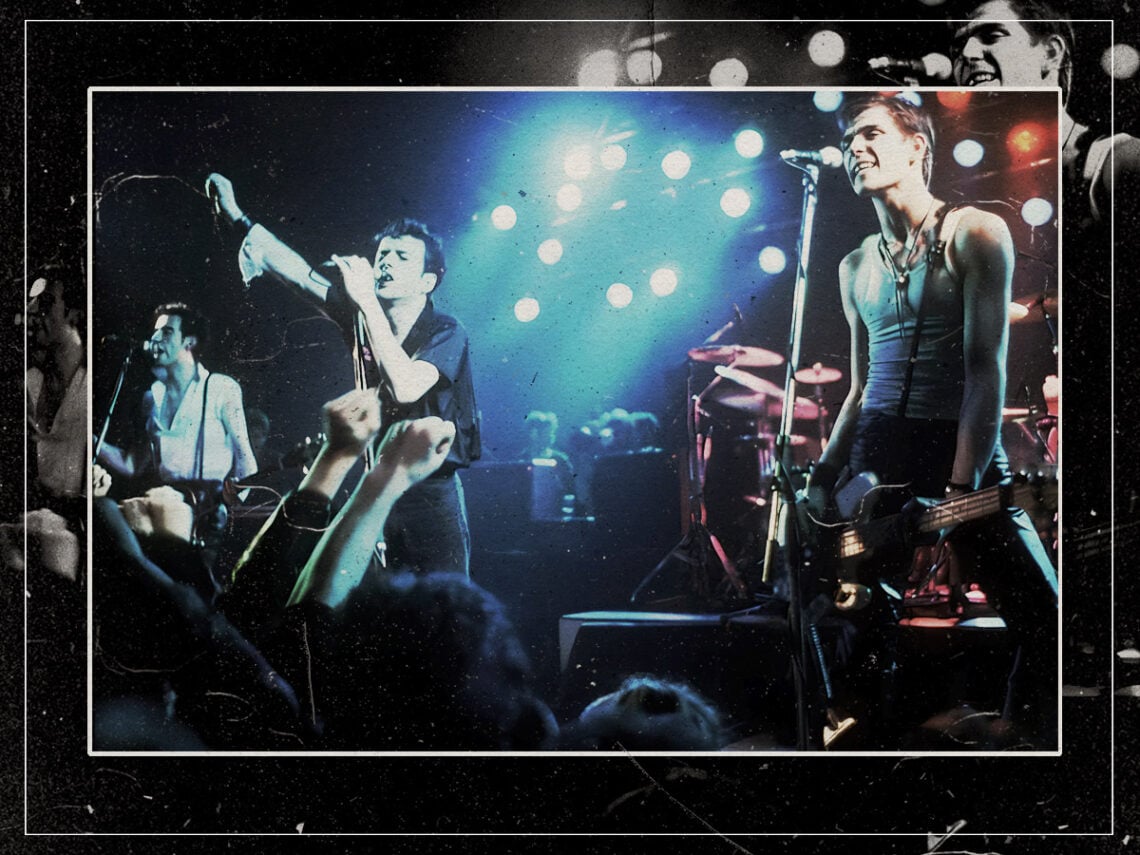
The only band that matters: The 10 most underrated and overlooked songs by The Clash

During the mid-1970s, punk rock spread through the towns and cities of the United Kingdom like wildfire. From its roots in The Roxy Club, the infectiously abrasive attitude and grassroots nature of the movement meant that anybody with enough passion and anger could have their say. The Clash took full advantage of that fact, using the punk movement to discuss everything from police brutality and societal racism to the end of the world and Apocalypse Now. Originally formed by Mick Jones in 1976, the band quickly escaped the tight confines of the genre, becoming one of the most beloved groups in the country.
A huge part of their enduring appeal was their adaptability and intense sonic diversity. Whereas other groups of the punk age stuck religiously to buzzsaw guitar and simple song structures, The Clash consistently reached for something more inventive and expansive. Each member of the band brought their unique influences to the proceedings, from Topper Headon’s jazz training to Paul Simonon’s ingrained adoration of reggae and Joe Strummer’s appreciation of political speeches.
Even on their early releases, like the band’s 1977 debut album, the compelling anti-authority message of Strummer’s lyricism was backed with instrumentation drawing heavily from dub, reggae, and rocksteady. Those influences only seemed to expand as the band grew. Their infamous stint in New York City in 1981 inspired Mick Jones, in particular, to explore the blossoming world of hip-hop and graffiti culture—something which he would continue doing in his post-Clash days with Big Audio Dynamite.
The downside of having such an extensive, diverse discography is that it is easy for certain masterpieces to fall through the proverbial cracks. After all, The Clash released six albums during their tenure, many of them being double—or even triple-albums in the case of Sandinista!. Fear not, though, as we have kindly collated ten of the most criminally overlooked and underrated tracks ever recorded by ‘the only band that matters’ for your listening pleasure.
The 10 most underrated songs by The Clash:
‘Pressure Drop’ (1979)
One of the many things that set The Clash apart from the rest of the fledgling punk rock scene was their deep-rooted interest in Jamaican ska and dub music. The band first established this love on their debut album, which contained a captivating cover of Junior Murvin’s legendary track ‘Police and Thieves’, but their similarly faithful cover of ‘Pressure Drop’ rarely gets the same recognition.
Originally recorded by The Maytals back in 1969, the song boasts an extensive history as an anthem for the skinhead subculture and a highlight from The Harder They Come soundtrack. In fact, the track is often credited with bringing Jamaican ska to the global masses, which makes it a natural choice to be covered by The Clash, whose distinctly punk rock version was released in 1979 as the B-side to ‘English Civil War’. Mick Jones’ backing vocals are a notable highlight of the recording, bringing new life to the iconic track and introducing it to the punk generation.
‘This Is England’ (1985)
Before you get your pitchforks out, The Clash’s final album is an obvious blemish on their otherwise largely spotless discography. Recorded with an entirely new band line-up without Mick Jones or Topper Headon, the 1985 record barely counts as a bona fide album for the band. However, the disappointing nature of the record often means that ‘This Is England’ is unjustly thrown out with the bathwater. It might mark a departure from the previous sounds of the band, but it also features some of Strummer’s greatest lyrics.
A stark reflection of the state of Thatcher’s Britain, the song is a masterclass in social realism, contrasting the seemingly patriotic cry of “This is England” with the bleak reality of society at the time. Violence, war, racism, and social deprivation are all laid bare in the lyrics of the song, which sees Strummer at his most impassioned and politically active. Admittedly, the dated synths and instrumentation do little to accompany the lyrics, but ‘This Is England’ is nevertheless worth revisiting as a reminder of Strummer’s often darkly political songwriting.
‘Spanish Bombs’ (1979)
London Calling is undoubtedly The Clash’s defining album, but with 19 tracks in total, there are more than a few inclusions on the album which rarely get the praise they deserve. ‘Spanish Bombs’ is one such track, often written off as a catchy pop-rock parody with little substance. However, if you dig a little deeper into the songwriting and performance, it is arguably one of the album’s key highlights.
Inspired by the ETA’s bombing of tourist resorts on the Costa Brava during the 1970s, the song is loosely told from the perspective of a tourist in Spain, interspersed with images from the Spanish Civil War and a random string of Spanish words and phrases which Joe Strummer once referred to as “Clash Spanish”. This culminates in a masterful reflection of the ignorance of tourists to the historic plight of people and communities in these regions dominated by overseas visitors.
<strong>’Hatef</strong>ul’ (1979)
Another unjustly ignored track from London Calling is the second track, ‘Hateful’. Admittedly, following on from the album’s title track is no mean feat, and ‘Hateful’ does lack the kind of hard-hitting punch as the opener. However, the upbeat, high-energy delivery of the song masks one of the darker themes The Clash ever explored. Written shortly after the death of Sex Pistols’ bassist Sid Vicious, who had been a friend and collaborator of Mick Jones, the song tackles the murkiness of drug addiction and dealing.
The Clash, of course, had their own struggles with drug addiction, with Topper Headon’s heroin habit being one of the main factors in his dismissal from the group. Still, the band’s willingness to try and tackle such a complex topic within the space of a three-minute track speaks to their determination and desire to address their listeners directly. Nevertheless, even the band itself seemed to abandon this song, only playing it at a total of three shows.
‘Broadway’ (1980)
Looking back, the band’s 1980 album Sandinista! is among the most inventive and ambitious rock records ever released…and it’s also very long. The vast majority of audiences never made it to the end of side four, meaning that the mellow jazz-influenced offering ‘Broadway’ never found the recognition it so richly deserved. Blending elements of rock and reggae with a late-night jazz club atmosphere, the song stands out from the rest of the band’s high-energy hits, and its roots in New York City certainly reject the band’s earlier message of ‘I’m So Bored with the USA.’
Fittingly, the song was introduced into the band’s live set during their residency at Bonds International Casino in New York back in 1981, and it drifted in and out of their live sets in the years that followed. Yet, it never seemed to find the right audience. Perhaps its experimentation and jazz-tilt was simply too different for Clash fans at the time, but, upon reinspection, the innate quality of the songwriting and instrumentation is undeniable.
‘Remote Control’ (1977)
A key theme of the UK’s punk scene in 1977 was a feeling of rebelling against the establishment, and The Clash’s eponymous debut album did just that. One of the greatest anti-authority records in musical history, the band held a mirror up to the oppression faced by working people in the UK, and ‘Remote Control’ is among their most brutally honest. Attacking the establishment and their desire for citizens to conform, the shared vocals of Mick Jones and Joe Strummer paint a picture of an oppressive police state, which must be destroyed.
Due to the sheer volume of protest anthems penned by the band over the years, ‘Remote Control’ often gets lost in the chaos, eclipsed by tracks like ‘Clampdown’, ‘Guns of Brixton’, or even ‘(White Man) in Hammersmith Palais’. What’s more, The Clash themselves largely disowned the track, owing to CBS’s decision to release it as a single against their wishes, which forever soured it for the band.
‘Gates of the West’ (1979)
Released in 1979, between Give ‘Em Enough Rope and London Calling, The Cost of Living EP marked a pivotal moment in the existence of The Clash, as they developed the punk anger of their earlier work into something more expansive and rock and roll-influenced. Although the EP is often overshadowed by the band’s legendary cover of ‘I Fought The Law’, the B-side is also well worth a revisit. Opening up that B-side is the Mick Jones-led ‘Gates of the West’, which takes its cues from Springsteen-esque folk-rock and the sounds of American R&B artists like Booker T & the MG’s.
Complex both in a musical sense and a lyrical sense, the song is among The Clash’s most ambitious offerings, but those complexities were also the downfall of the track, in a way. Due to its expanse and the fact that it sounds so different from the rest of the band’s work, The Clash never actually performed ‘Gates of the West’ during their live shows, making it easy for the track to succumb to obscurity as the years went by.
‘Red Angel Dragnet’ (1982)
Featuring some rare vocals from Paul Simonon, alongside a guest appearance from Kosovo Vinyl, reading out dialogue from Taxi Driver, ‘Red Angel Dragnet’ does not fit in seamlessly with the rest of Combat Rock, or indeed with the rest of the band’s discography. Inspired by the 1981 shooting of Guardian Angel Frank Melvin by New Jersey police, the song is a fantastic blending of political defiance and criticism, with elements of satire and an infectious funk bassline to boot.
Often written off as a cheesy, misguided studio outtake in comparison to the polished mastery of Combat Rock, the track is actually among the band’s most inventive and speaks to their desire to develop and expand their repertoire over the years. Plus, there are multiple different recordings of the song available, including a particularly compelling demo recorded with The Beat’s energetic frontman, Ranking Roger.
‘The Prisoner’ (1978)
In 1978, The Clash released their magnum opus: ‘(White Man) in Hammersmith Palais’, but the B-side to that storming non-album single is just as worthy of attention. An adrenaline-fueled jaunt through the surreal and politically turbulent landscape of London during the 1970s, ‘The Prisoner’ sees Mick Jones namedrop rude boys, The Muppets, and The Slackers’ rocksteady rhythm ‘Johnny Too Bad’, in one of the guitarist’s finest vocal performances.
Perhaps more so than any track of that period, ‘The Prisoner’ perfectly encapsulates the appeal of The Clash during their early years—the driving intensity of the rhythm accompanying socially conscious and often satirical lyricism. Still, it is easy to see how the song slipped through the cracks, released only as the B-side to a non-album single, which only reached number 32 in the charts.
‘Straight to Hell’ (1982)
The Clash’s Combat Rock-era single ‘Straight to Hell’ is far from being their most obscure track. In fact, the guitar riff that accompanies the entirety of the song is perhaps one of the most recognisable from throughout their discography, though not necessarily as a result of ‘Straight To Hell’ itself. MIA famously sampled those guitars for her smash-hit single ‘Paper Planes’ in 2008, the global success of which completely overshadowed The Clash’s original. As such, you’re unlikely to have any conversation about the song which does not, in some way, loop back to the British rapper.
While it is difficult to denounce the quality of ‘Paper Planes’, ‘Straight to Hell’ certainly deserves more praise in its own right. Tackling an impressively wide range of injustices, from the decline of British industry, to the unjust alienation of immigrants, and even the war crimes of the Vietnam War, Strummer reportedly wrote the track in a mad burst of creativity, and the results might just be one of his finest songwriting efforts of all time. Although his mellow delivery marks a stark departure from the typical sounds of The Clash, his performance perfectly suits the hopelessness of the track’s lyrics.
