


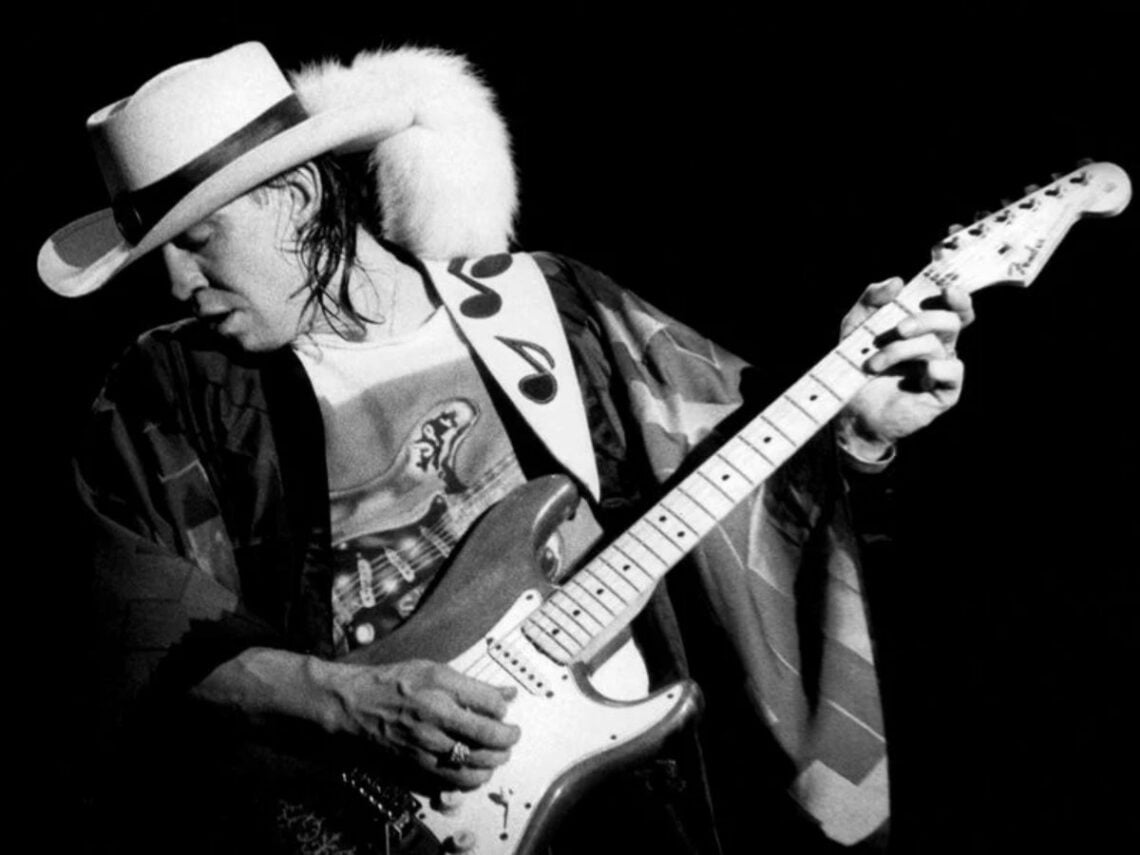
The most underrated guitarist ever, according to Stevie Ray Vaughan: “He’s just incredible”

Many musicians cite others as direct influences, but Stevie Ray Vaughan was a true student of the art. His list of favourites is a long one and includes names like Jimi Hendrix, Johnny Winter, Howlin’ Wolf, Chuck Berry, Muddy Waters, and many more. Although many of Vaughan’s favourites were among some of the biggest names in the industry, there remained one that he felt didn’t get enough credit.
Vaughan had a relatively brief career despite the considerably explosive impact he had on the blues rock revival. Growing up in Dallas surrounded by a musical family meant that his path to greatness was laid out from an early age, a suspicion confirmed when he caught the attention of David Bowie, who then asked him to lend his hand at playing blues guitar for his album Let’s Dance.
Vaughan got caught up in the heat of it all, succumbing to drugs and alcohol, which almost completely destroyed his mental and physical health until, one day in 1986, he finally adhered to the doctor’s orders and checked into rehab. However, Vaughan’s story ends in unexpected tragedy, as he died in 1990 in a helicopter crash after performing with Eric Clapton’s entourage in Wisconsin.
Nonetheless, the story of Vaughan’s life and short-lived career is filled with musical excellence and legendary anecdotes. His position as one of the leading figures of the 20th-century guitar scene speaks highly of his indelible contribution to the sonic landscape from which it is built, considering the comparatively short time he had to provide it.
Vaughan’s legacy remains unmatched in that regard and is therefore heralded alongside some of music folklore’s greatest stories. Following the release of his debut with Double Trouble, Texas Flood, Vaughan injected the Texas music scene with an excitement it thought it had lost while elevating blues rock to new heights within the mainstream.
Although many of his favourite guitarists shared the limelight at the same time, Vaughan named one in particular who failed to gain the recognition he felt they deserved. Denny Freeman may not necessarily be a household name, but in Vaughan’s eyes, it should be. “I know he’s got some recognition lately, but he’s still underrated,” Vaughan told Michael Corcoran in 1989, a year before his death.
Expanding further, he described the guitarist as “incredible”, adding that “the main thing” he learnt from the musician was “how to really play rhythm.”
Describing the way he conducted his craft and his approach to guitar playing, he continued: “He’s also a great example of a player who has a thread that runs through his solos. He’s always thinking ahead when he’s playing.”
Looking at Vaughan’s various influences, it’s clear that he appreciated guitarists who were able to appear seamless and effortless while always thinking ahead. Although many of his beliefs would have likely been considered ahead of their time, it’s all a testament to Vaughan’s artistry and legacy as someone who possessed immense guitar-playing skills and unparalleled musical intuition.
