


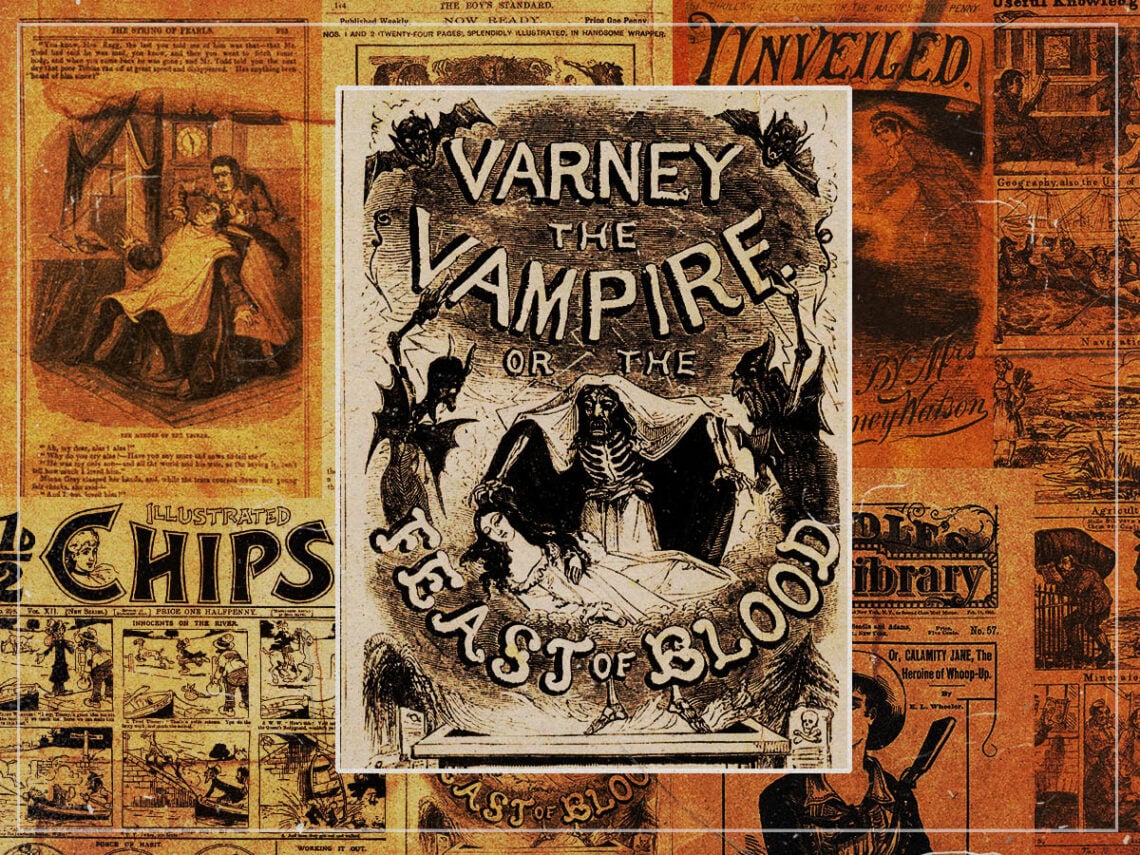
The ‘Penny Dreadful’ serials: moral panic and gothic horror

Gothic fiction has always occupied a special place within the landscape of horror, bolstered by a rich literary tradition that can even be linked to William Shakespeare. One of the major contributors to the evolution of the genre was the 19th-century serials collectively referred to as the penny dreadfuls. Named because of their low costs as well as their pulpy nature, they played a significant role in reshaping the dimensions of the gothic imagination.
As the publishing industry swiftly adapted to increasing literacy rates and the demand for mass entertainment, penny dreadfuls filled the gap in the market. Featuring reworks of classic tales as well as new pieces on infamous criminals, these cheap periodicals were not only sought after by adults but also teenagers who were curious about the morbid stories and wanted literature that was different from the kind that was recommended by education boards.
The penny dreadfuls became central to the popular culture at the time, widely discussed by school students as well as the working class, which was their primary demographic. However, it was their appeal to the youth that also raised alarms amongst social commentators as well as policymakers. According to them, the proliferation of such “immoral” entertainment was symptomatic of the country’s decline and the rise of juvenile delinquency.
Many investigators set out to link acts of suicide and other crimes with penny dreadfuls, hoping that such connections would prompt the government to permanently ban their publication. But as is the case with contemporary discourse linking the popularity of violent video games to mental health issues in children, these connections were tenuous at best. With time, the phenomenon morphed into something entirely different, but its legacy is omnipresent.
Some of the iconic penny dreadful characters like Varney the Vampire and Sweeney Todd are widely known and are still featured in various films and shows. However, the real impact of the serials can be analysed through the types of horror content that are routinely promoted by social media algorithms. Ranging from true crime podcasts to YouTube horror videos about internet lore and Reddit mysteries, the penny dreadfuls are still alive.
While the stories themselves have inevitably changed, pulpy horror entertainment has become instantly available. Instead of paying in pennies for easily disposable pamphlets, audiences pay with their time and implicitly agree to be bombarded by advertisements. Capitalising on the massive demand as well as the easy accessibility, some content creators dedicate hours of each day to trawl online archives so that they can maintain a regular supply for their viewerships.
By the end of the 19th century, penny dreadfuls were phased out and replaced by other publications, such as Alfred Harmsworth’s periodicals, which initially claimed the moral high ground. But the core principle that resulted in their explosive boom is simply undeniable. There will always be a market for stories that deal with transgressions of both natural and societal orders, and right now, it seems to be larger than ever.
