


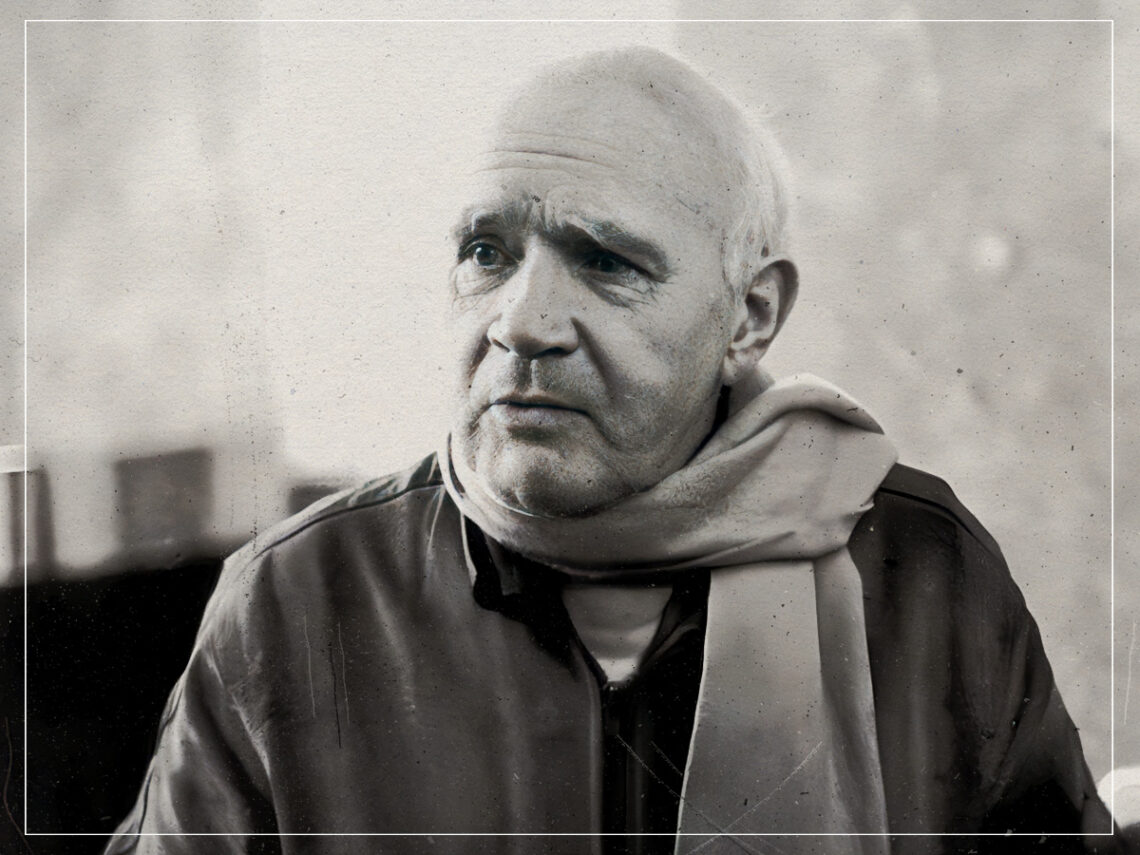
The real ‘Jean Genie’: the monumental impact of Jean Genet on popular culture

Jean Genet was an extraordinary writer – a revolutionary figure who truly defined the meaning of rebellion, perseverance and dedication. Born in France in 1910, Genet’s uneasy start to life loomed over his childhood. He was born to a prostitute who attempted to keep her baby for as long as possible, inevitably placing him up for adoption before he’d even turned one. Genet developed a rebellious sensibility from an early age, perhaps due to the feeling of disconnect he felt towards his blood relatives, whom he never knew.
As a teenager, he was sent to a reformatory institution because of his tendency to steal, which led him to join the army as a means of finding purpose and a sense of security. However, Genet was quickly exposed to the horrors of war and oppression, and it wasn’t long until he was discharged from the army due to his homosexuality, which he refused to hide. Thus, he was back to square one; only this time, he carried the terrors of inhumane acts of violence and colonialism with him.
In order to survive, Genet engaged in many illegal activities, including sex work, resulting in a prison sentence. Yet, his time behind bars was a radically creative period for Genet, who began writing about his life and experiences of poverty, oppression and other controversial themes. He was fearless, penning stories about taboo topics with expert technique, releasing his experimental and transgressive first novel, Our Lady of the Flowers, in 1943.
Over the course of his career, Genet wrote several novels, including The Thief’s Journal, Querelle of Brest (adapted by Rainer Werner-Fassbinder in 1982) and Prisoner of Love, as well as works of non-fiction and plays. He also directed a film called Un Chant d’Amour in 1950, although its explicit homosexual content caused rife controversy. Always fiercely unique and innovative, Genet’s exploration of themes ranging from criminality, vagrancy, and evil to colonialism, homosexuality, freedom and rebellion defined him as one of France’s most compelling and boundary-pushing writers.
Genet seemed to be lit with a flame that couldn’t simply be put out. He was always determined to fight, exploring racism and oppression – particularly in relation to the Black Panther Party and events in Palestine – during the 1960s and ‘70s. Naturally, his restless spirit has inspired countless artists and activists over the years, finding a wide range of fans, from existentialist writer Jean-Paul Sartre all the way to filmmaker Todd Haynes, who was greatly influenced by Genet when making his landmark queer feature, Poison.
Some major figures and pieces of art owe their existence to Genet. Take, for example, Divine, the shocking drag queen who regularly collaborated with controversial director John Waters on movies such as Pink Flamingos and Hairspray. Born Harris Glenn Milstead, it wasn’t until Waters was reading a copy of Our Lady of the Flowers that the filmmaker christened his friend Divine, the name of the novel’s protagonist, who served as Genet’s alter-ego throughout the story.
In an interview with Shelf Awareness, Waters revealed that the book changed his life, adding, “Finally, I had a writer to look up to.” Genet’s fearlessness and propensity for going against the grain hugely influenced Waters’ approach to both filmmaking and life in general. Waters has proudly depicted queer characters and themes in his work, as well as exploring similar themes to Genet, like criminality and evil.

David Bowie also took significant inspiration from Genet, naming his song ‘Jean Genie’ after the writer. In the book Moonage Dream, Bowie revealed that the lyrics were “based on an Iggy-type persona” and “the title, of course, was a clumsy pun upon Jean Genet.” Yet, if you analyse the lyrics of the classic track, it’s not hard to see traces of Genet within the man being described.
“The Jean Genie lives on his back/ The Jean Genie loves chimney stacks,” Bowie sings, referencing Genet’s time as a homosexual prostitute with a not-so-subtle slice of phallic imagery. By blending Genet with Iggy Pop, a musician known for his outrageous on-stage acts and similar tendency to push boundaries, Bowie created the ultimate figure of rebellion and shock. The Jean Genie stalks urban underworlds, witnessing – and engaging in – illegal behaviour.
We can also hardly mention Genet without mentioning Patti Smith, one of the world’s first true punks. Genet embodied punk before it became a symbol of disaffected youth and the ultimate symbol of counterculture, inspiring Smith’s approach to life and writing. She has written about Genet numerous times over the years, but an article for the Paris Review sums up her adoration for the writer, who also inspired photographer Robert Mapplethorpe to take his daring photographs of naked bodies laden with allusions to homosexuality and BDSM.
“For myself, every page was a miracle, and for Robert, a portal into a world he was clandestinely drawn and would eventually immortalise through the image,” Smith wrote. “Genet’s poetry drew me to write; his imagery drew Robert to the camera,” she added. Smith was so enamoured by his work, particularly The Thief’s Journal, that she even visited Saint-Laurent-du-Maroni to collect stones from the location where he was once imprisoned before visiting his grave in Morocco, too.
“Every word written in The Thief’s Journal is conscious, as stone by stone, Genet draws us into his triad of transgression, criminality, and betrayal, transfigured as love through his pen,” Smith surmised.
Genet’s legacy is massive, yet many people know little about him. Rising from prisoner and vagrant to acclaimed, influential writer, Genet allowed his life experiences, no matter how turbulent, to guide his work. As a result, his authenticity and originality have inspired some of today’s most impressive filmmakers, writers and musicians.
