


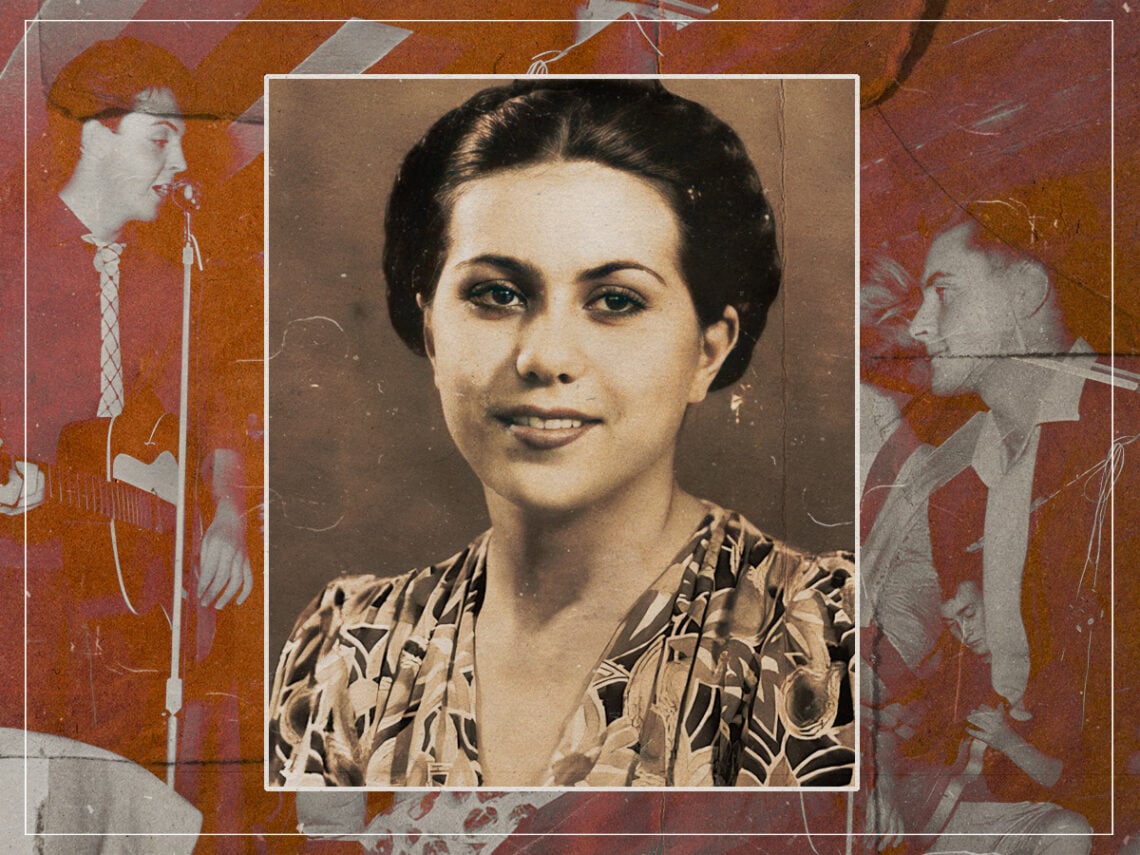
Mona Best: How The Beatles got their start from the ‘Mother of Merseybeat’ and Casbah Coffee Club

Unveiling the layers of The Beatles‘ triumph almost feels like uncovering a goldmine. While many associate the 1960s rock ‘n’ roll scene with the beloved quartet, there’s much more to the story. Beyond the bobbing heads and mop-style haircuts, one figure was the crucial foundation for an enduring legacy that spans decades: The ‘Mother of Merseybeat’, Mona Best.
In the 1800s, years before anyone would utter the names John, Paul, George or Ringo, an unknown builder crafted a Victorian site that the West Derby Conservative Club would eventually take on. This particular house was unique, unlike many other residences in Liverpool. Nestled away from the bustling road, this expansive house boasted 15 bedrooms and sprawled across a lush acre (4,000 m2) of land.
The interiors exuded a cosy yet mysterious atmosphere, with all rooms adorned in deep shades of green or brown. Once a wild oasis, the garden added to the allure, while the cellar served a practical purpose as a coal storage space. Mona Best had been married to John Best for ten years when her son, Rory, told her about the house at 8 Hayman’s Green in 1954.
Recognising the excitement – and sheer power – of owning your own coffee bar, one that would become central to the burgeoning music scene, Mona decked out her own cellar so that her sons and their friends could meet new people and enjoy current music. The Casbah Coffee Club did many things that others, like The Cavern Club, didn’t, such as championing rock ‘n’ roll musicians.
Unlike many other clubs at the time, the Casbah also served cakes, snacks, soft drinks, and coffee made with a coffee machine. On the club’s official opening night, Mona originally billed the Les Stewart Quartet to play with George Harrison on the guitar. However, the band fell through after having a tiff, and Harrison instead suggested two other friends who could join him under the name The Quarrymen.
With 300 memberships already secured, the trio of Paul McCartney, John Lennon, and George Harrison convened at The Casbah to secure their spot. Best, in her characteristic candour, agreed to them performing while acknowledging the incomplete painting in the club. Rather than leaving her to it, the band lent a hand to complete the artwork. Cynthia Powell, who would later become Lennon’s wife, painted his silhouette on the wall — an artistic detail that still graces the venue today.
The Casbah wasn’t just the first rock ‘n’ roll venue in Liverpool; it crafted an entire culture that cemented the city’s place, and later The Beatles’, as world-class entities in the realm of music talent. Moving from India in 1945, Mona landed in a war-torn city, embodying independence and free-spiritedness with her charismatic and unconventional character.

Mona’s son, Pete Best, joined The Quarrymen after his mother bought him a drum kit so he could explore his musical curiosity. His brother, Vincent ‘Roag’ Best, holds the legacy of his mother and The Casbah dear to his heart; his words about her legacy and the world he continues to thrive in coming from him like a vibrant city still reeling from the fires of its rich history.
Speaking to Far Out about his mother’s impact on the music scene, it’s clear that all of her hard work still ripples into the expanding corners of Merseyside. “There was no women promotion, she was the first to do that,” Roag explains. “There’s so many groups that came through The Casbah doors that went on and had success. Obviously, the biggest being the Beatles, and Mo gave them their start.”
Mona possessed more than just an interest in the Fab Four: she believed in them. She also became “business savvy”, as Roag explains, and applied those skills to rock ‘n’ roll in an effort to support the band and other potential talent. “It wasn’t just like a pipe dream for her,” Roag states. “I think she was just initially surprised that it took off so quickly, but she knew she was onto something. She started Casbah promotions and realised that they were the biggest drawing band. So she wanted them to be on the top of the bill.”
The real game-changer arrived when The Quarrymen came back from Hamburg, Germany, as The Beatles. They enlisted the help of Ringo Starr as their drummer in 1962 and played The Casbah Coffee Club almost 300 times. “She felt that they had something, especially when they when they came back from Germany, because she gave John, Paul, and George shows to begin with as The Quarrymen,” Roag explains. “They literally went through Liverpool, and other groups followed. And then the whole thing kept building and building and building, and we know what happened in the end.”
There’s no textbook on how to create the biggest, most popular band in all of music history. Equally, the recipe is hard to put into words. “They’re still the biggest and most popular group in music history,” Roag claims, and he’s absolutely right. Maybe it was the impeccable blend of fortuitous circumstances, an abundance of talent, charisma, and a solid support system that held unwavering belief in The Beatles’ potential. Or it was a sprinkle of fairy dust — a phenomenon where the magic embedded in music resonated most profoundly.
Or, it could very well have been Mona, a genuine force of nature, a beacon of unwavering determination. With her heart firmly fixed on steering the music scene toward its destined trajectory, Mona emerged as the world’s first female rock ‘n’ roll promoter. Her collaboration with unstoppable talents like The Beatles set their trajectory ablaze, propelling them into an era of perpetual and well-deserved hype.

Never Miss A Beat
The Far Out Beatles Newsletter
All the latest stories about The Beatles from the independent voice of culture.
Straight to your inbox.