


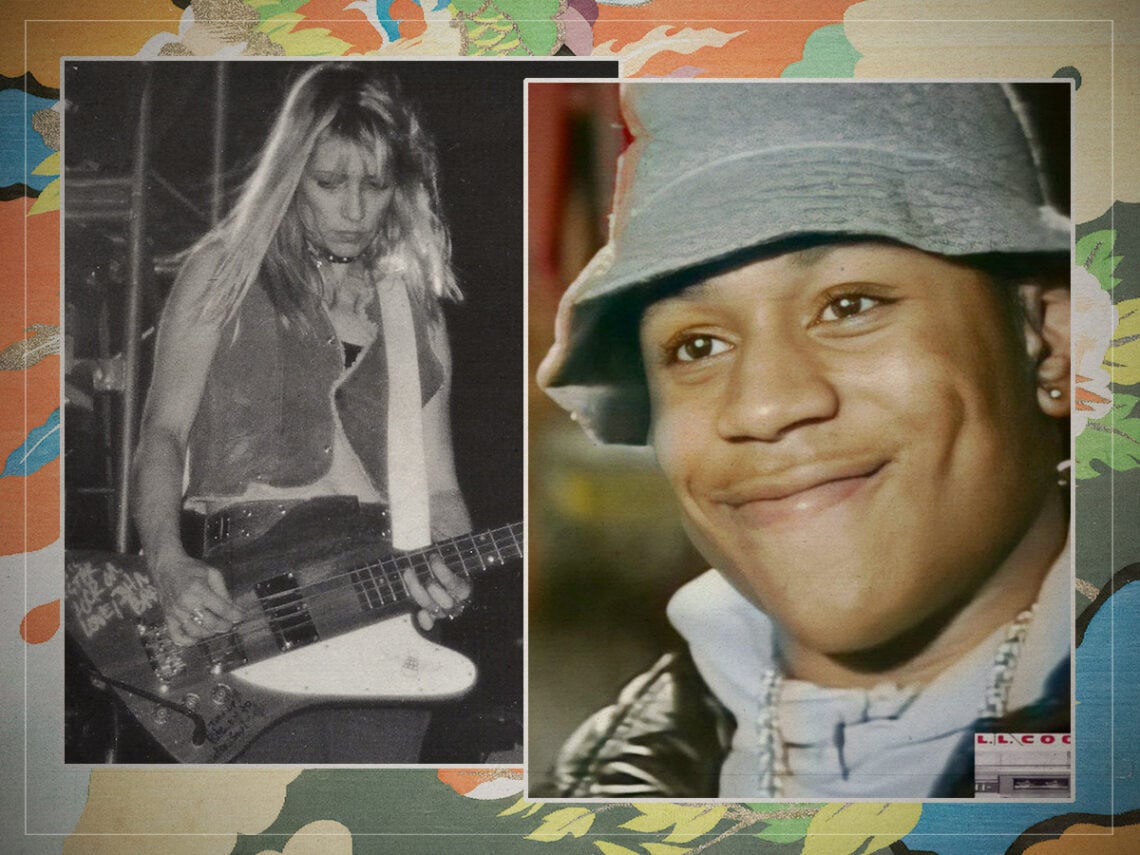
“Walkin’ like a panther”: The disastrous moment Kim Gordon interviewed LL Cool J

Punk rock and hip-hop have something of a shared history. Both scenes are inherently anti-establishment and were born from marginalised communities adopting a staunchly DIY ethos. Nevertheless, these two musical worlds remain very different in a multitude of ways. One of the most bizarre reflections of the difference between these worlds came when Sonic Youth’s Kim Gordon – an undisputed icon of noise and alternative rock – came facet-to-face with hip-hop pioneer LL Cool J back in the 1980s.
One of the only uniting factors between the two very different musical figures of Kim Gordon and LL Cool J – real name James Smith – was their location. Both musicians represented a separate yet equally iconic element of New York City’s music and culture. Going all the way back to the no wave scene of the late 1970s, Gordon and Sonic Youth had their roots in the underground sounds of the concrete jungle. Meanwhile, Cool J was endlessly indebted to the vibrant sounds of hip-hop that had first started in the Bronx.
Despite their geographical similarities, the pair rarely crossed paths. After all, the hip-hop scene was worlds apart from the experimental noise rock being pioneered by Gordon and her gang of merry musical weirdos. Even still, Gordon has regularly spoken of a deep appreciation for hip-hop music and culture, having cited LL Cool J’s Radio album as a particular favourite of hers. So, perhaps in an attempt to bridge the gap between rock and rap or expose the similarities between the two genres, Gordon and the rapper once sat down together for an interview.
The interview, entitled ‘Meaty Beaty Big and Bouncy’, appeared in a 1989 edition of Spin and went down in history among the most flawed article ideas ever drummed up. From the get-go, it became obvious that Gordon and LL Cool J had little, if anything, in common. Early wins came with the fact that the rapper was aware of the hardcore punk origins of fellow Def Jam artists Beastie Boys, but aside from that, the two musicians could not agree on very much at all.
Unsurprisingly, LL Cool J’s regressive views on women and topics of misogyny put him at odds with Gordon. At one point, she asked him, “What about women who are so into you as a sex object that they take a picture of you to bed with them, and their boyfriends or husbands start freaking out?” Without giving much guise to the obvious irony in which the question was asked, the rapper retorted, “It’s not my problem. The guy has to have control over his woman.”
This chauvinistic stance set the tone for the rest of the interview, during which the pair never found any kind of common ground and became increasingly frustrated with one another. Gordon’s explanation of the appeal of punk rock and groups like The Stooges only led to the revelation that LL Cool J is a big Bon Jovi fan – the pair were never going to leave the interview being best friends.
At the time of the original interview, the Sonic Youth songwriter did not overtly call LL Cool J out for his sexist viewpoints. Instead, she channelled her frustration over the interview into a new song entitled ‘Kool Thing’. Featuring guest vocals from Public Enemy’s Chuck D and multiple references to the rapper’s work and attitude, the song took aim at the rapper and his regressive views.
The repeated line of “Kool thing walkin’ like a panther” directly referenced Cool J’s Walking With a Panther album, while Gordon’s self-mocking question, “Are you gonna liberate us girls from male white corporate oppression?” references the doomed interview that first inspired the song. Released in 1990, the song proved to be a commercial breakthrough for the band, reaching number seven on the alternative airplay charts in the US. In the end, at least one good thing came from that bizarre interview with LL Cool J.
