


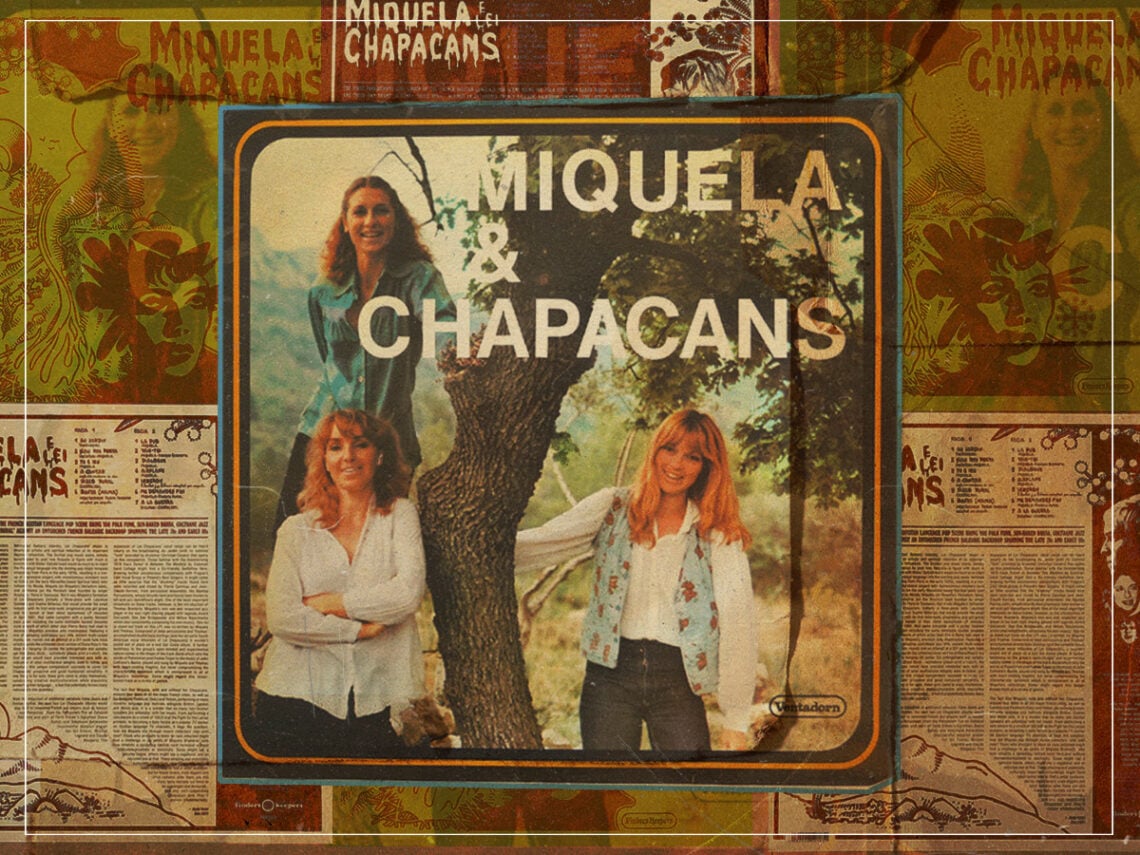
Miquela e Lei Chapacans and the world of Occitan music

A lot of fuss is made about the musical landscape of France in the mid-20th century. Admittedly, it is easy to see why; the intense romance of the French language afforded artists like Françoise Hardy and Serge Gainsbourg an emotional, ethereal quality that few English-speaking musicians could live up to. Far away from the tobacco smoke and Haussmannian architecture of Paris lies an entirely different side to the French music scene, widely overlooked by the world at large: the world of Occitan pop music.
Unless you are from very specific parts of mainland western Europe, you would be forgiven for never having heard of the Occitan language, let alone its music. Occitan is spoken by a small number of people in southern France, Monaco, and the mountainous regions of Italy and Catalonia. These regions are often encompassed as Occitania, a fairly ambiguous region with roots going as far back as the Middle Ages. The language is, therefore, often viewed as pretty mediaeval, and Occitan is not even recognised as an official language in France, despite many people in the south speaking it.
Since the 20th century, many of the regional dialects of Occitan have been in danger of becoming lost, as more and more people living in the region of Occitania favour French, Italian and Catalonian. As such, a handful of pop groups during the 1970s and 1980s sought to bring new life to the mediaeval language by crafting incredible songs imbued with all the romance and catchiness of the Parisian pop scene but with the added intrigue of being sung entirely in Occitan.
Music has always been an important aspect of the Occitan culture, but this music was mostly limited to incredibly archaic folk music. As you might expect, the Occitan music scene did nothing to alleviate the language’s image of being outdated and irrelevant. So, when groups in the 20th century began to incorporate the language into modern pop tracks in the wake of the pop chic movement further north, they inspired something of a resurgence in the language.
Perhaps the greatest product of this strange Occitan pop scene was the all-female outfit Miquela e Lei Chapacans, led by the artistic visionary Miquela Bramerie. Usually referred to as Miquela, the chanteuse had been crafting groundbreaking Occitan folk and pop tracks since the late 1960s, with her first official release coming in 1973 with the EP ‘Oc’, followed some years later by the full-length LP I A De Sers. It was with her group Lei Chapacans (‘The Vagabonds’), however, that Miquela perfected the world of Occitan pop.
Admittedly, the band did manage to release an extensive number of tracks during their tenure, but what they lacked in material, they made up for with the quality of the songwriting. Although their album covers – evoking the art style parodied on Throbbing Gristle’s 20 Jazz Funk Greats – might give the impression of a dreary and outdated sound, their music seems to combine uncompromising free jazz, progressive rock and even occasionally hints at punk. An all-female group operating within France at the time was something of a rarity in itself, let alone one that dealt with difficult topics in the Occitan language.
Perhaps as a result of the increasing obscurity of the language, Miquela e Lei Chapacans never really received much in the way of the widespread attention and acclaim they deserved. For the past few decades, the band has been relegated to the bargain bins of France’s many record stores. For those who have discovered them, though, they remain one of the most exciting, inventive and important groups the nation has ever produced.
