


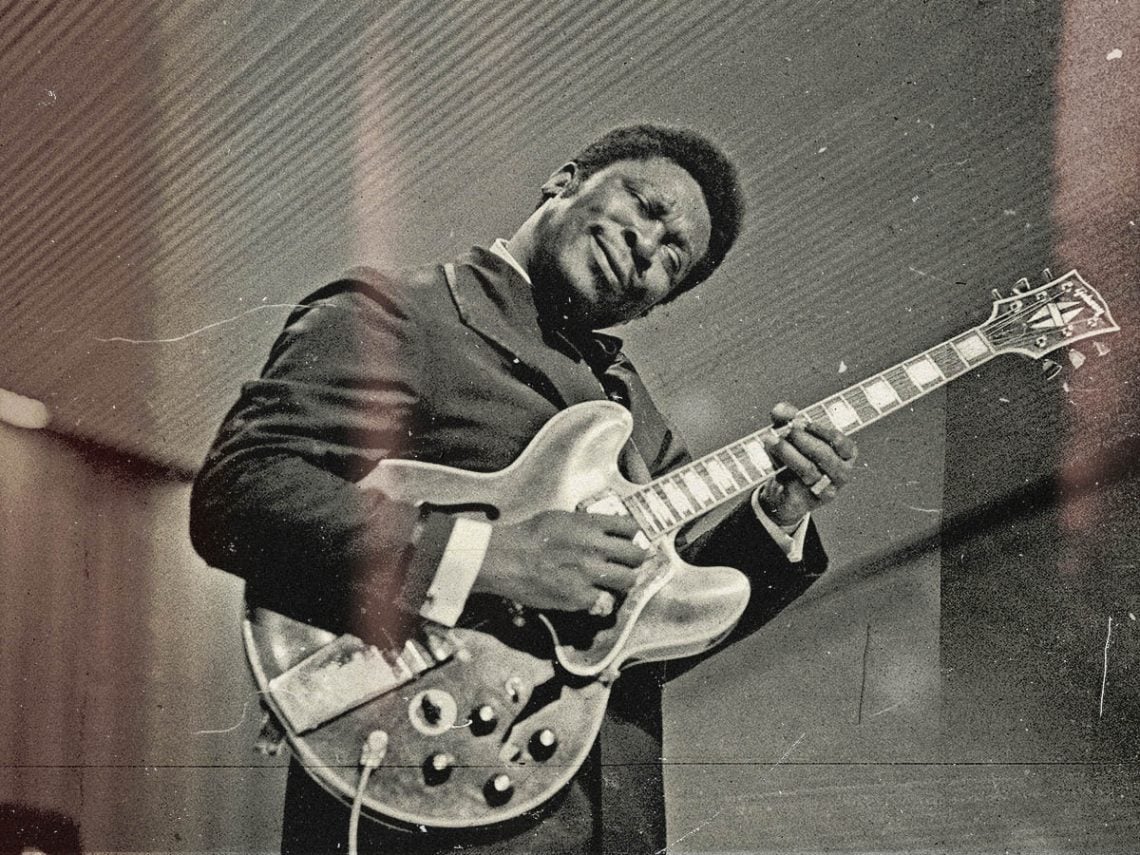
The life changing moment Mimi Fariña and Joan Baez witnessed B.B. King live

Humans embellish and fight their emotional condition every day. Unfortunately, emotions are a part of us from birth right up until our last breath, but at least this gives us the capability to consume the one thing that keeps us going in our darkest hour—music. If it weren’t for music, the world would be a much darker place. Fortunately, Joan Baez and her sister Mimi Fariña witnessed this impact first-hand.
Music’s therapeutic impact has been studied for years, with observers and experts stating that the chemical impact of music that we enjoy can have the same impact as some mental health boosters, like exercise or actual medications. The science is obvious when you break it down because music gives us that “feel good” factor and the serotonin needed to feel enjoyment and happiness.
Fariña first realised the real impact music had on those struggling mentally when she witnessed Baez and B.B. King perform at Sing Sing prison in 1972. Not only did the music uplift those who watched on, but it also enabled certain members of the audience to feel engaged in an otherwise limited state of awareness, proving that music has the ability to break through even the toughest of walls.
Baez also shared the bill that day, and Fariña felt in awe of how such a prolific thing could make discouraged people feel human again – like they were re-discovering their emotions for the first time after years of oppression and loss of self. As King’s keyboardist Ron Levy said of the prison concerts, “If anybody had the blues, it was those people incarcerated. And B.B. really felt compassion for those guys.”
The performances also made Fariña realise that such natural medication isn’t utilised nearly enough. While watching her sister deliver the gift of live music, she was reminded of one special moment in her youth when she performed at a psychological institute. “It was an incredible moment,” she recalled to the San Francisco Chronicle in 1995. “It was probably the first time I saw the impact music could have on a person confined to an institution.”
Her epiphany inspired her to co-found Bread and Roses some years later, a Bay Area company that sought to use the power of music to infiltrate prisons, hospitals, shelters, and other institutions. Although Fariña had inadvertently connected the dots with music and healing from an early age, it was her experience at the prison that pushed the needle further, encouraging her to really evaluate what it all meant and why there weren’t more organisations that existed to create such atmospheres.
Not knowing the potential longevity of such an idea, Fariña helped to launch Bread and Roses with an initial budget of $19,000. However, over the years, many others began to share her vision, and it grew into an organisation requiring an annual operating budget of $1million, partially due to the 500 shows a year it put on in the Bay Area. The power of music also provided Fariña with a gateway to discovering the positive impact of other art forms, as it soon incorporated other acts, like magicians and comedians.
Many big names have donated to the cause, including Paul Simon, Neil Young, Joni Mitchell, Willie Nelson, and Van Morrison. Still, no one expressed a more unwavering dedication to the cause as much as Fariña and Baez. As Baez once explained, “Mimi filled empty souls with hope and song. She held the aged and forgotten in her light. She reminded prisoners that they were human beings with names and not just numbers.”
