


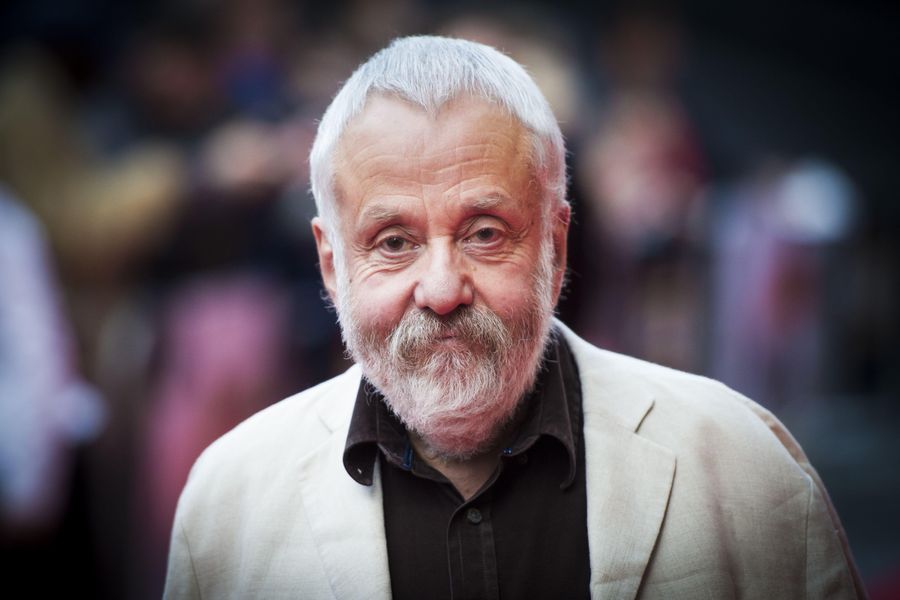
Mike Leigh names the 10 greatest movies of all time

Although many artists start their careers with radical sensibilities, very few of them maintain those convictions throughout their lives. English filmmaker Mike Leigh is definitely in the latter category, having dedicated his life to the development of a unique political cinema. Known for his philosophically rich portraits of contemporary society, such as Naked, Leigh’s brilliant works have dominated the landscape of English cinema for many years.
During a conversation with Variety last year, Leigh noted that many of his projects received suboptimal funding because of his refusal to compromise on his values. According to the director, one of the final career targets he wants to achieve is to make a grand production on a sufficiently large budget without outlining the details of his ideas.
When asked by the interviewer to talk about the political messaging in his films and his hatred for blatant ideological programming, Leigh answered: “My films are all political in some sense, but not overtly so.” He added: “I defy anybody to say what the message is at the end of any of my films. I leave you with stuff to go away and talk about, argue and reflect on when they’re over.”
The filmmaker also opened up about his future wishes: “Now, what I’ve never done, and what I desperately want to do, is to get the interest for that kind of budget but to make an exploratory contemporary film without saying what it is. That’s my chief source of frustration. With quite a sizable budget, I could do something really interesting on a bigger scale.”
Last year also marked the publication of the BFI Sight and Sound poll, where Leigh submitted his selection of the ten greatest cinematic masterpieces in all of film history. Featuring pioneering works by directors such as Stanley Kubrick, Yasujirō Ozu and François Truffaut, these are the movies that influenced Leigh to try and fashion his own vision of cinema.
Check out the full list below.
Mike Leigh’s favourite films:
- How a Mosquito Operates (Winsor McCay, 1912)
- Tokyo Story (Yasujirō Ozu, 1953)
- The 400 Blows (François Truffaut, 1959)
- Some Like It Hot (Billy Wilder, 1959)
- The Gospel According to St. Matthew (Pier Paolo Pasolini, 1964)
- Loves of a Blonde (Milos Forman, 1965)
- HÄR HAR DU DITT LIV (Jan Troell, 1966)
- Barry Lyndon (Stanley Kubrick, 1975)
- SÅNGER FRÅN ANDRA VÅNINGEN (Roy Andersson, 2000)
- MOARTEA DOMNULUI LAZARESCU (Cristi Puiu, 2005)
Compared to some of the other lists curated by prominent directors for the Sight and Sound poll, Leigh’s selections are fascinating because they are truly eclectic. Ranging from Winsor McCay’s 1912 animated work How a Mosquito Operates to more modern entries by the likes of Roy Andersson and Cristi Puiu, this is essential viewing for all film fans.
One notable exception is Ermanno Olmi’s 1978 gem – The Tree of Wooden Clogs – which Leigh once referred to as one of the greatest films ever made. While talking about the dizzying masterpiece, the director described it as “such an incredibly human film, such a fundamental film in terms of what we’re looking at, the whole span of human experience.”
