


‘The Tree of Wooden Clogs’: The forgotten movie Al Pacino and Mike Leigh call one of the greatest ever made

Federico Fellini laid out his very Italian philosophy when he said: “Life is a combination of magic and pasta”. Wade a little further into Italian film, and you’ll see the Cinema Paradiso quote: “Life isn’t like in the movies. Life is much harder.” Somewhere between those two quotes, you find Italy’s ability to alleviate the hardships of life through the magic of art. This is where Ermanno Olmi’s 1978 masterpiece, The Tree of Wooden Clogs, sits. And it’s a sign of its power that it has captured the heart of Mike Leigh and Al Pacino—two very different men.
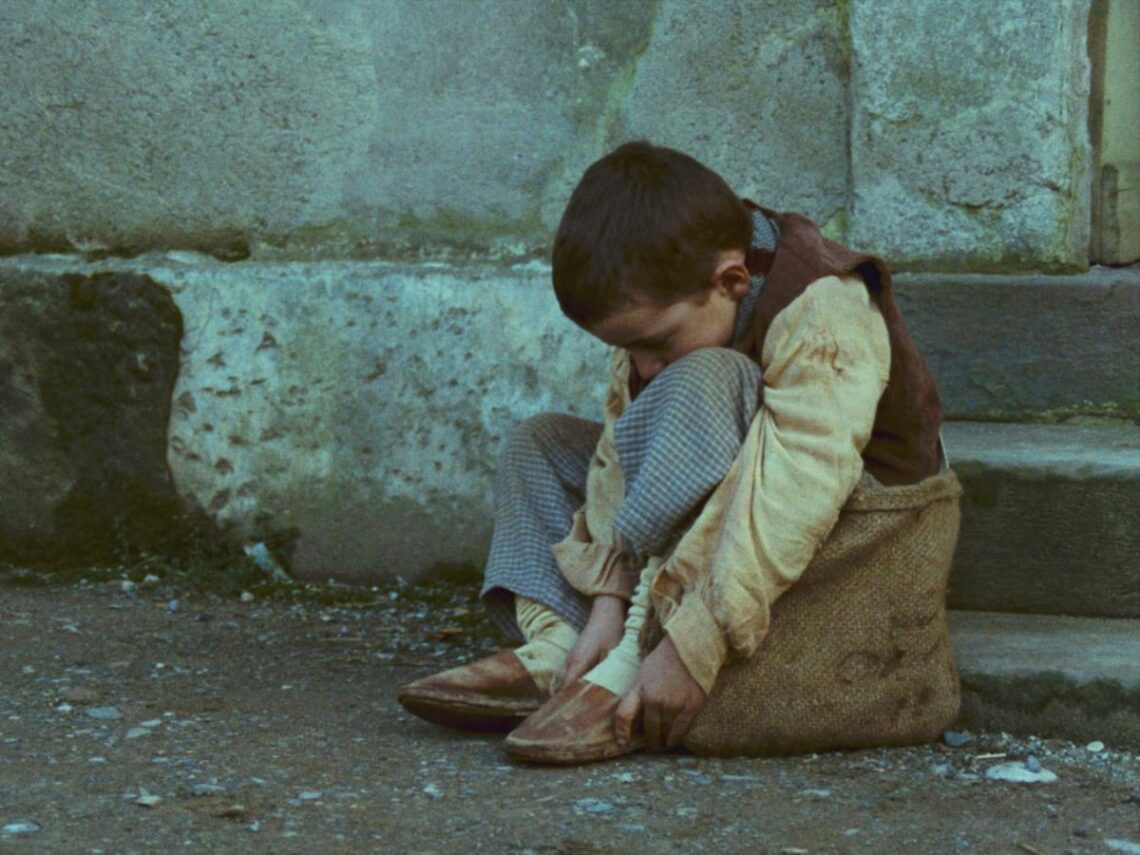
The film comes with the following synopsis: “A painterly and sensual immersion in late nineteenth-century Italian farm life, Ermanno Olmi’s The Tree of Wooden Clogs lovingly focuses on four families working for one landowner on an isolated estate in the province of Bergamo—a towering, heart-stirring work of humanist filmmaking.”
If you strip away the poetry from that, you are left with something like the following: “A depiction of poor people in a feudal farm community in Italy in the 19th century.” So, to some, that might sound dull, but the poetry is the point of it—it takes that simple presence and adds meaning untold.
That is why Leigh riles against the naysayers. “It is horrifying that there are people who find this boring,” he told the Telegraph, “because it seems to me to be such an incredibly human film, such a fundamental film in terms of what we’re looking at, the whole span of human experience. But I suppose some people just want a different kind of film entirely and want to be titillated.”
That is most certainly not the sort of film that The Tree of Wooden Clogs falls into. In fact, it defies a lot of Hollywood film tropes; one of which is avoiding the use of trained actors and instead going with the working descendants of the people it depicts. Then Olmi takes this filmmaking austerity even further by essentially being a one-man crew, writing, directing, editing and more.
“To me, it’s extraordinary on a number of levels,” Leigh asserts, transfiguring amateurishness into high art with total heart is merely one of them. “Olmi gets people being completely three-dimensional and sensual and real, and it’s just phenomenal,” he says of the director’s humbling craft.
“Then, there’s the scale of the thing,” he continues. “The Tree of Wooden Clogs is a film about man and place, environment, seasons, the passing cycle of things; it’s about power, class, religion and faith; love, superstition and journeys; life and death. […] it’s just so true to life,” but such is the Italian way. It’s true to art too, hence why a more ballistic man like Al Pacino also calls it a personal favourite.
After all, for all it might be stripped down to the basics, it still has the magic of film in there. As Leigh concludes: “That is what’s fantastic about it: it’s one of those films that transcends filmmaking without ever degenerating into a kind of pseudo-documentary.” And therein lies the heart of its lustre, the very act of capturing this humble life as a movie is a mark of the poetry that raises it from poor people in the countryside going about their business to an expressionist eulogy of life in all its “warts ‘n all” beauty.
