


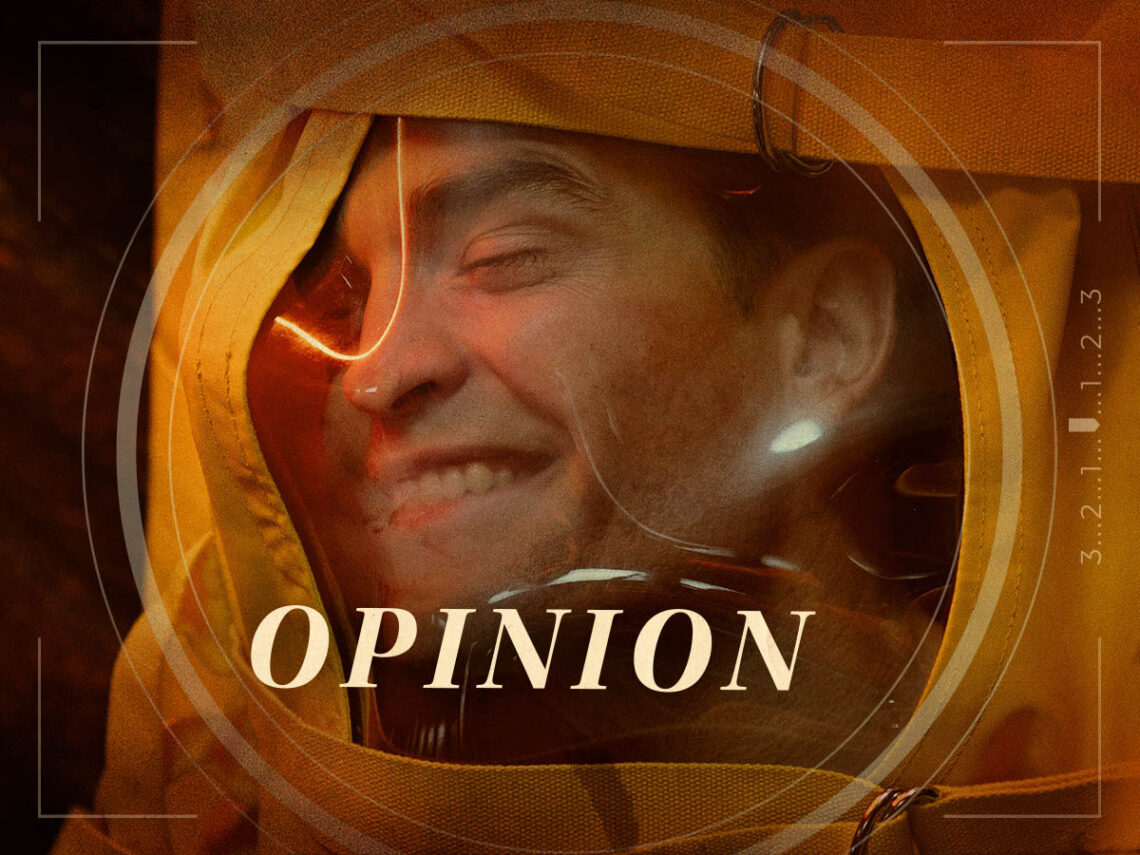
‘Mickey 17’: Money doesn’t buy creative freedom

Time and time again, independent directors have fallen victim to the age-old fairytale associated with commercial filmmaking, believing that more money will be the missing puzzle piece in completing their vision. Whether it be the tragedy of Greta Gerwig and her betrayal of indie filmmaking in order to be a glorified puppet for Netflix, helming their Narnia adaptation with an eight-picture deal, essentially chaining her to the corporate desk for the next decade.
Filmmakers like Christopher Nolan, Barry Jenkins and Chloe Zhao have succumbed to a similar fate, with Zhao being used as a scapegoat for their disastrous 2017 film Eternals and the master behind Moonlight directing a live-action Disney film. It’s a sorry state of affairs and reflects more about the sustainability of independent filmmaking, highlighting how some filmmakers are forced to make this switch as a result of the impossible industry standards that make indie projects so hard to lift off the ground, instead resigning themselves to any job that will pay the bills.
However, this isn’t the case for all filmmakers, and it certainly isn’t for Bong Joon Ho, who was by no means scrambling for funding after the colossal success of his 2019 film Parasite. However, when directors like Joon Ho create rare films that are both artistically and commercially successful, it is the studios that are left scrambling for the chance to capitalise on this success and fund their next project. After Oppenheimer swept at the Academy Awards, Christopher Nolan iconically turned down a seven-figure deal from Warner Brothers to return to the studio for his next project, choosing to instead remain with Universal. And in a fight to own a chunk of their future success, many studios are offering ‘blank cheque’ projects to filmmakers, with Bong Joon Ho accepting such an offer from Warner Brothers to make his recent film, Mickey 17.
While this may sound like any artist’s dream, I would fiercely argue that this so-called ‘freedom’ is actively detrimental to the creative process. Mickey 17 perfectly reflects why an excess of wealth does not nurture but stifle creativity, which is exactly why the film has failed.
In typical Joon Ho fashion, Mickey 17 is an exploration of the themes that have headlined the entirety of his filmography, with a heavy satirical note to his work as he comments on social issues relating to class inequality, the wealth gap and exploitation. His latest venture with Robert Pattinson is an amalgamation of many ideas, centring around a pastry chef who accepts a job on a spacecraft that requires him to repeatedly die for a living. Mickey is classed as an ‘expendable’, meaning that his body is replaced by an exact replica of himself after each death, holding no real value outside of his immunity to destruction.
While it is a fun concept and Pattinson showcases his lesser-seen talent for physical comedy and slapstick humour, the film falls flat due to the overwhelming mesh of ideas that Joon Ho attempts to explore. The premise of the film hinges around the conflict presented by Mickey accidentally being replicated twice, with two different versions of him existing at one time, with both being vastly different in their personality. Initially, the conflict arises from the fact that this will threaten his relationship with Nasha, his true love who adds purpose to his otherwise meaningless life on the ship. However, this is quickly resolved, and the idea of two Mickeys existing in tandem with each other becomes completely irrelevant, with Joon Ho then suggesting that the real threat is the Donald Trump-esque character, who is mad with power and exploiting the people on the ship for his own political gain. But then, this shifts again, with Mickey discovering an unknown monster that may or may not be a threat to humanity as a whole. Eventually, Joon Ho settles on this as the vague focus of the story, with Mickey 18 becoming a pointless addendum to the story that serves as a vaguely entertaining mishap for about ten minutes.
Each threat represents a different idea and social issue that the director is trying to touch upon, and after briefly flitting between all of them, they become entirely obsolete and redundant, leaving me feeling frustrated and unfulfilled by the confusing commentary that was being poked at.
Mickey 17 was first announced after the release of Parasite in 2019, with the project being in pre-production for many years after delays caused by COVID and other global catastrophes. However, it seems as though the combination of too much time and a limitless budget completely destroyed the focus of the film, with the director becoming overwhelmed by the creative possibilities of the story and cramming in as many ideas as possible, without following through on any of them in a satisfying way. As a result, Mickey 17 falls flat in all of its possibilities, existing in the meandering grey area between a sci-fi fantasy/comedy/satire/monster flick.
While the idea of a ‘blank cheque’ project may seem like an enticing offer, money isn’t, and will never be, a prerequisite for creativity. The idea that a limitless budget will expand a director’s creative boundaries is absurd, as true creativity cannot work without genuine risk and vulnerability, and financial freedom cannot make up for the strength and conviction of a truly great idea.
Mickey 17 suffers from a budget that has led the director to become jaded by power, with the messy web of half-formed ideas reflecting the giddy ambitions of an artist who was grabbed by so many ideas and, instead of honing his focus, seemingly thought that because their budget allowed for it, why not explore all of them? Because fuck it, why not add in a fleet of giant slug-like monsters! On a spaceship! With Donald Trump! And a hundred different side quests and timely social issues!
Where Parasite was focused and explosive in its commentary, Mickey 17 fizzles into a hot steaming mess that isn’t really saying anything at all, leaving you wondering that perhaps if the project had more friction and boundaries, then it might be more precise in its vision. Creativity is born from conflict, and a blank cheque is an antidote to conflict itself, seemingly eliminating any risk from the filmmaking process, filling in the blanks until you make something that resembles a film.
