


The only song Mick Jagger likes from the “spoiled” Rolling Stones album: “Frank Zappa used to say he really liked it”

Think about The Rolling Stones in your head right now, and you are probably envisioning a swashbuckling Mick Jagger parading the stage, devouring his audience and spitting out their happy smiles like a tiger with blue suede shoes on.
Alongside him during his ferocious promenading is Keith Richards, the group’s fearsome riff machine. And, as they walk along the boards, making fake eye contact with thousands of singing revellers, they are belting out a plethora of original hits that smack with the suave pomposity of a band who have defined rock ‘n’ roll rebellion for decades. But things weren’t always like that.
Originally led by talented multi-instrumentalist Brian Jones, The Rolling Stones were initially rather weak on their feet as songwriters and, instead, huddled to the easier warmth of tried and tested blues covers. Their early singles covered the likes of Muddy Waters, Howlin’ Wolf and Chuck Berry. In fact, one of the Stones’ first breakthrough hits, ‘I Wanna Be Your Man’, had also been gifted to them, this time by their friendly rivals over the years to come; The Beatles.
The group’s first two albums were swamped with covers, and it wasn’t until Aftermath in 1966 that Mick Jagger and Keith Richards had finally found the confidence, likely fueled by the 1965 number one chart success with ‘(I Can’t Get No) Satisfaction’, to ditch the blues covers for an entirely original album. They would seemingly rise to fame thereafter in the slipstream of The Beatles while maintaining their more marked allegiance to classic blues compositions.
In many ways, Between the Buttons was the line of demarcation between The Rolling Stones’ career as a mainstream pop act and the evolution as rock and roll pioneers. The album represented the final LP produced by manager Andrew Loog Oldham, the logical endpoint for the exotic instrumentation championed by Brian Jones, and the final time when the band’s experimental approach benefited their material.
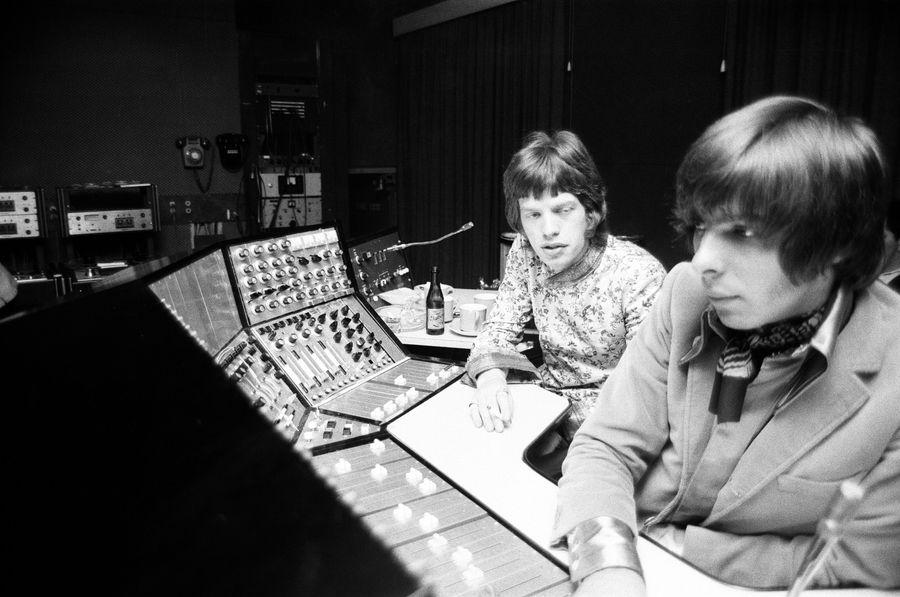
At the time, it was their most contemporary release, but it was also one of their final releases before they began making truly timeless music. While it has always found favour with the band’s fans, it never sat well for Jagger himself.
In an interview with Rolling Stone, Jagger once reflected on Between the Buttons, stating, “Frank Zappa used to say he really liked it. It’s a good record, but it was unfortunately rather spoiled. We recorded it in London on four-track machines. We bounced it back to do overdubs so many times, we lost the sound of a lot of it”.
Elsewhere in the interview, Jagger compared it with the 1967 album, Their Satanic Majesties Request: “It’s not very good,” he said. “It had interesting things on it, but I don’t think any of the songs are very good. It’s a bit like Between the Buttons. It’s a sound experience, really, rather than a song experience”.
When Jagger was asked whether any of the music on Between the Buttons meant much to him, he gave the revealing reply, “No. What’s on it?”. Then, once the interviewer started naming tracks, Jagger appeared increasingly disappointed about how the record had turned out.
On the track, ‘Yesterday’s Papers’, Jagger interjected: “Yeah, the first song I ever wrote completely on my own for a Rolling Stones record. ‘My Obsession,’ that’s a good one. They sounded so great, but then, later on, I was really disappointed with it. Isn’t ‘Ruby Tuesday’ on there or something? I don’t think the rest of the songs are that brilliant. ‘Ruby Tuesday’ is good. I think that’s a wonderful song”.
Jagger continued, explaining why he liked ‘Ruby Tuesday’ so much. “It’s just a nice melody, really,” he opined. “And a lovely lyric. Neither of which I wrote, but I always enjoy singing it. But I agree with you about the rest of the songs — I don’t think they’re there. I don’t think I thought they were very good at the time either”.
So, where does that leave Between the Buttons now? When paired up against their entire discography, it sits in a grey area: highly entertaining but somewhat alien and strange. That view becomes as grey as a Dartford morning on the river when you take into account the conflicting opinions of Zappa and Jagger. The real decision is, of course, yours.

Never Miss A Beat
The Far Out Beatles Newsletter
All the latest stories about The Beatles from the independent voice of culture.
Straight to your inbox.